


Seeing Beyond the Bollywood’s Camera
How many times has Bollywood portrayed India as a land of extraordinary wealth, extravagant lifestyles and endless luxury? From palatial homes and million-dollar weddings to designer wardrobes and...

How many times has Bollywood portrayed India as a land of extraordinary wealth, extravagant lifestyles and endless luxury? From palatial homes and million-dollar weddings to designer wardrobes and expensive cars, its films have created a world where prosperity appears almost universal. But if this is the India being presented to the world, what does the India beyond the camera actually look like? The answer lies not in another film, but in overcrowded neighbourhoods, inadequate sanitation facilities and the everyday struggles of millions that rarely make it onto the screen.
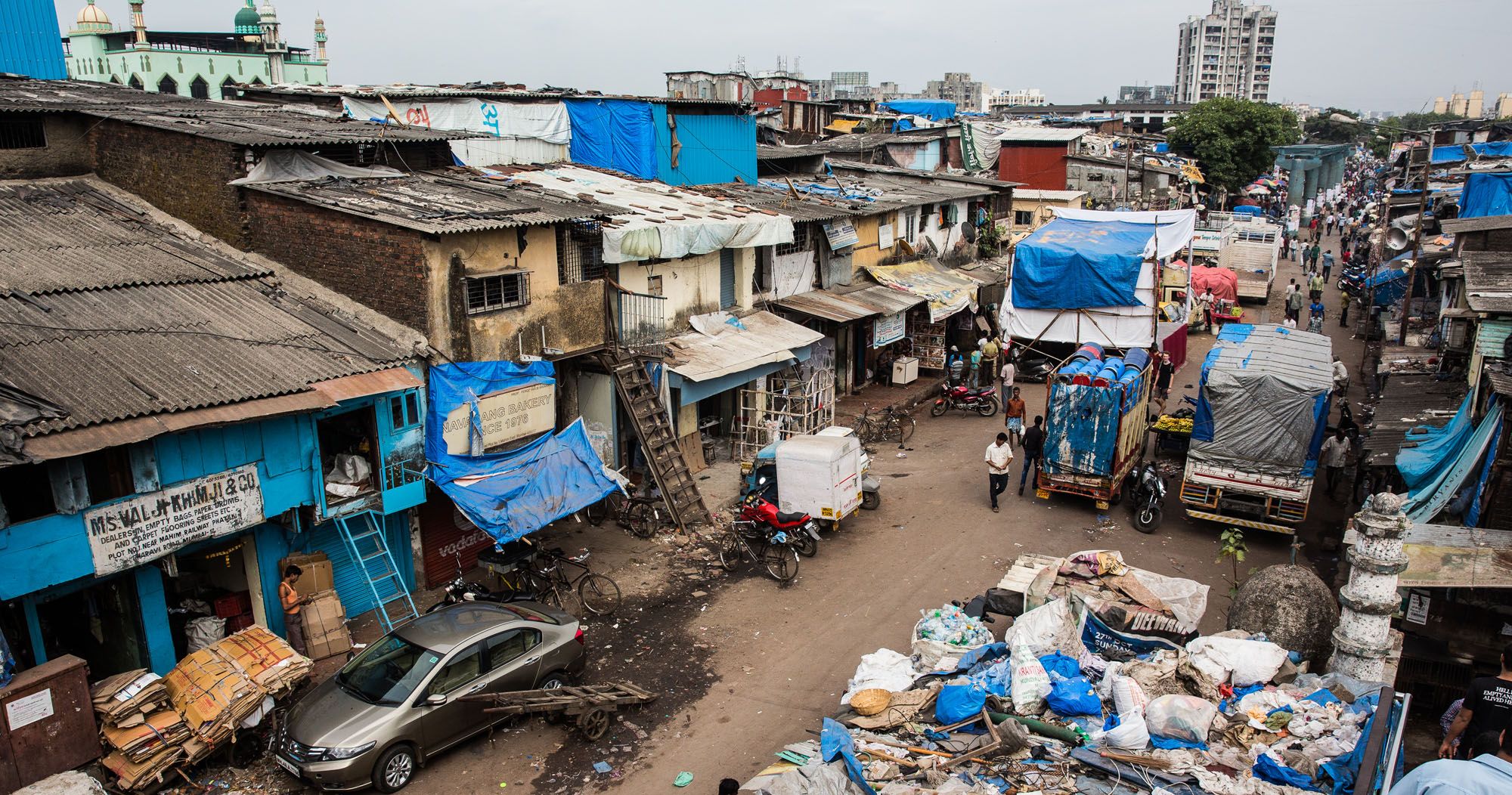
The contrast becomes particularly difficult to ignore in Mumbai, the very city that houses Bollywood’s biggest stars, production houses and extravagant film sets. Often celebrated as India’s city of dreams, Mumbai is also home to Dharavi, one of Asia’s largest informal settlements. While Bollywood films routinely portray the city through luxurious apartments, expensive lifestyles and glittering skylines, approximately 42% of Mumbai’s population is estimated to live in slums, according to Praja Foundation’s 2024 civic report. The distance between these two versions of Mumbai is not simply geographical; it reflects a much wider divide in living conditions.
And the difference is visible in something as basic as access to toilets. Praja Foundation’s research, based on Right to Information (RTI) data, found that 69% of Mumbai’s 6,800 community toilet blocks lacked water connections, while 60% had no electricity in 2023. On average, one community toilet seat served 86 men and 81 women, against the Swachh Bharat Mission’s recommended norms of 35 male and 25 female users per seat. In certain areas, the shortage was even more severe: Bandra West and Khar had just one community toilet seat for every 443 residents. These figures raise an uncomfortable question: how can a city celebrated internationally for its entertainment industry and economic opportunities continue to struggle with such fundamental civic infrastructure?
The problem, however, is not confined to Mumbai. India’s national sanitation record presents another contradiction between the image of development and the conditions experienced by ordinary citizens. In October 2019, the Indian government declared the country open defecation-free under its flagship Swachh Bharat Mission, launched in 2014. The announcement was celebrated as a major national achievement. Yet, questions about the accuracy of official sanitation claims had already emerged months before the declaration.
In May 2019, Reuters published an investigation titled Modi Proclaims a Cleaner India, but the Reality May Be More Murky. Its reporters visited villages in Haryana and Karnataka, documenting discrepancies between official sanitation figures and conditions on the ground. In one Haryana village, a local official estimated that 400 out of approximately 1,600 households still lacked toilets. Researchers involved in a World Bank-supported sanitation survey also questioned its methodology and findings. The Indian government rejected the allegations and defended the programme. Nevertheless, Reuters brought an important issue into international focus: a national declaration of success does not necessarily mean that the problem has disappeared from people’s lives.
Subsequent academic research has provided further evidence of the gap. A 2025 study published in Global Health Action, analysing 261,746 households across India’s 36 states and Union Territories, found that 12.5% of Indian households still had no access to a toilet in 2022–23. This translated into approximately 162.6 million people. More than 70% of those without toilets were concentrated in just six states: Bihar, Uttar Pradesh, Odisha, Rajasthan, Madhya Pradesh and Jharkhand. The study also found that the poorest households were disproportionately affected, with 27.9% of households in the lowest consumption group lacking toilets.
The WHO-UNICEF Joint Monitoring Programme offers another important indicator. Its 2024 estimates show that 6.73% of India’s population still practised open defecation. This represents a considerable reduction from earlier years, including approximately 15% in 2020. However, the remaining percentage still represents millions of people. It is also important to distinguish between households without toilet access and people practising open defecation: the two indicators measure different conditions. A family may depend on shared facilities, while others may have no access to a toilet at all. Both realities matter when assessing sanitation progress.
The contradiction extends beyond sanitation. India’s cinematic representation frequently places wealth and modernity at the centre of its international identity, but the distribution of economic progress remains unequal. Luxury developments, expanding commercial districts and expensive entertainment productions can coexist with overcrowded housing and inadequate public services. A country’s economic growth cannot be measured solely through its most glamorous neighbourhoods or its wealthiest citizens. The living conditions of those who remain outside this prosperity are equally important indicators of development.
There is also a question of how effectively such realities are brought into public discussion. Reporters Without Borders ranked India 157th out of 180 countries in its 2026 World Press Freedom Index. RSF has highlighted concerns involving journalist safety, media ownership concentration and political pressures. Although press freedom is a separate measure from sanitation and poverty, the ability of journalists to investigate public-interest issues remains an important part of holding institutions accountable.
This brings the discussion back to Bollywood. There is nothing inherently wrong with films depicting wealth, luxury or aspirational lifestyles. Cinema is entertainment, not a census or an economic survey. But when the country’s most visible cultural export repeatedly presents a narrow image of prosperity, it is worth asking what that image leaves out. The issue is not Bollywood’s ability to create fantasy; it is the gap between the fantasy it sells and the social realities that international audiences rarely see.
India’s cinematic industry may continue to produce spectacular films, extraordinary characters and larger-than-life lifestyles. But the country’s progress cannot be judged by box-office collections, celebrity wealth or the magnificence of film sets. It must also be measured by whether ordinary families have decent housing, clean water, functional toilets and basic public services.
Bollywood can make poverty disappear from the screen, but it cannot make the reality disappear from people’s lives. And perhaps that is the most important story that remains outside its camera frame.