

Sacramento’s Unconventional Aid: Venezuelan Resilience Reaches Global Disasters
POLICY WIRE — Sacramento, CA — Nobody saw this coming. Not the usual humanitarian players, certainly not local government, — and probably not even the family itself. Amidst the steady drumbeat of...

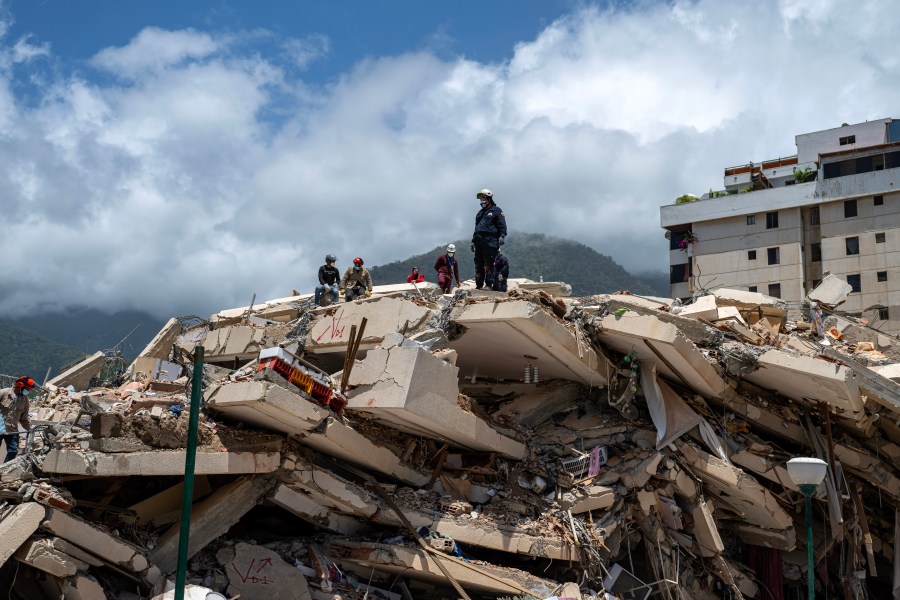
POLICY WIRE — Sacramento, CA — Nobody saw this coming. Not the usual humanitarian players, certainly not local government, — and probably not even the family itself. Amidst the steady drumbeat of international crises, a Venezuelan family, now rooted in California’s capital, decided the standard playbook for disaster relief simply wasn’t fast enough. And so, they wrote their own, quietly stitching together a relief effort for earthquake victims thousands of miles away. It’s a small eddy in the vast river of global aid, sure, but it underscores a bigger, messier truth about who leads, and why, when the world unravels.
Sacramento’s recent, rather parochial concerns generally revolve around housing affordability or legislative gridlock. Not, you know, seismic upheaval in distant lands. But that didn’t deter the Marquez family. Their efforts weren’t sanctioned by NGOs with multi-million dollar budgets. They were fueled by WhatsApp groups, local school connections, and the raw, often overlooked, power of a community—any community—suddenly seeing its distant kin in peril. It isn’t always about the grand pronouncements from state capitals; sometimes, it’s just about people collecting blankets in a garage. It’s the kind of story that gets buried beneath the official pronouncements, but its implications? They’re huge.
“We’ve seen an exponential rise in these grassroots diaspora-led initiatives,” observed Dr. Zara Malik, a senior analyst for transnational aid flows at the Geneva-based Humanitarian Policy Centre. “Don’t mistake their lack of official accreditation for a lack of efficacy. Sometimes, they’re faster, more culturally attuned, — and can reach areas traditional aid struggles to access. This isn’t just about Venezuela; we track similar efforts daily originating from communities like the Pakistani diaspora aiding flood victims or Rohingya exiles helping camps in Bangladesh.”
This localized mobilization for global impact isn’t a new phenomenon, but it’s accelerating. With an estimated $647 billion in remittances flowing to low- and middle-income countries in 2023, as reported by the World Bank, money isn’t just a private transaction; it’s a direct lifeline, and increasingly, a mechanism for disaster response that bypasses the glacial pace of bureaucracies. This isn’t charity; it’s self-preservation, a civic duty extended beyond borders. But it forces uncomfortable questions on traditional aid models. If a family in Sacramento can galvanize a relief operation for strangers they may never meet, what does that say about the efficiency—or indeed, the relevance—of more established, slower mechanisms?
But make no mistake, this informal structure has its critics. Mr. Alejandro Vargas, Undersecretary for Humanitarian Affairs at the U.S. State Department, while acknowledging the profound generosity, cautioned, “While these citizen-led efforts are truly commendable, the sheer scale of global disasters often necessitates coordinated, institutional responses. There’s a vital need for accountability, logistical expertise, and broad oversight, especially in complex environments where aid can inadvertently fuel conflict or be diverted. It’s a balance, isn’t it?” His assessment is, of course, entirely correct from an institutional standpoint, even if it feels a little bit like the empire commenting on a guerilla movement.
📄 POLICY WIRE WHITEPAPER PUBLISHED: PAKISTAN'S NATIONAL SECURITY POLICY PRIORITIES
👉 READ BY CLICKING HEREThe Marquez family’s enterprise, modest by international standards—collecting medical supplies, clothing, and funds from local businesses and individuals—managed to ship several pallets of essential goods. That’s real, tangible aid, bypassing the committee meetings — and the policy papers. It’s aid with a direct lineage, from a small Venezuelan-American community in Sacramento to their homeland. It’s an echo of the countless, unsung efforts made by the massive Pakistani diaspora in North America and Europe, who, year after year, funnel millions of dollars and tons of aid back to their ancestral lands during floods, earthquakes, or economic crises, often with little fanfare. They don’t wait for formal appeals; they just get to work.
What This Means
The Sacramento anecdote isn’t just a feel-good human interest piece; it’s a stark policy signal. Governments — and major NGOs can no longer ignore the decentralized, highly effective power of diaspora communities. The geopolitical landscape of humanitarian aid is shifting, and it’s less about the capital-to-capital pipelines, and more about the street-level networks. This informal aid often operates in political vacuums, or at least around them, reaching populations that are strategically complicated or simply off the main international radar. For policy makers, it means an urgent need to figure out how to best support—or at least not hinder—these parallel systems, ensuring their transparency and security without stifling their inherent agility. It also hints at a broader narrative of immigrant integration, where newcomers aren’t just absorbing a new culture but actively exporting their unique forms of civic engagement and global responsibility. We’re watching a subtle but profound reordering of who actually delivers when disaster strikes.