
Rubio’s Delhi Jaunt: Mending Mirrors, Not Just Deals
POLICY WIRE — New Delhi, India — The high-gloss spectacle of diplomacy, more often than not, plays out in quiet nods and artfully ambiguous press statements. Yet, even in this meticulously...

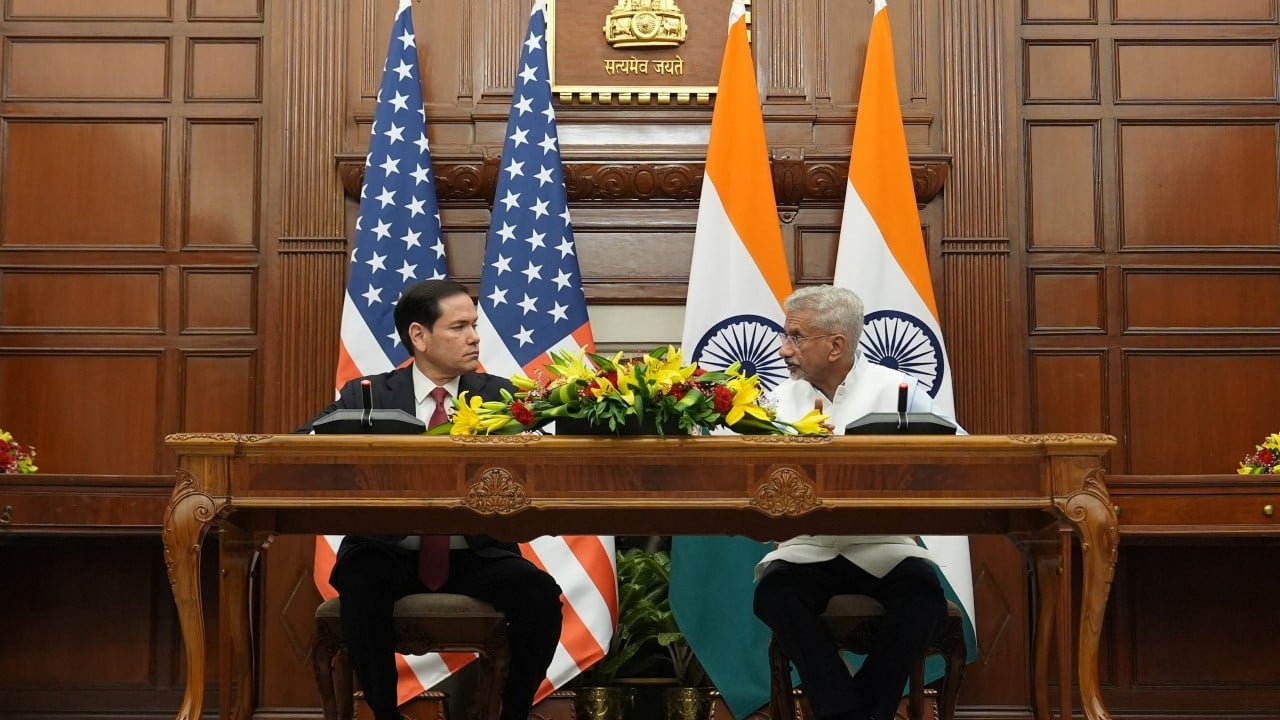
POLICY WIRE — New Delhi, India — The high-gloss spectacle of diplomacy, more often than not, plays out in quiet nods and artfully ambiguous press statements. Yet, even in this meticulously choreographed dance, a fundamental truth often stares back: perceptions matter as much as pacts. United States Secretary of State Marco Rubio’s recent trek to India wasn’t merely about forging agreements or signing checks. It was, rather bluntly, an attempt by Washington to “get the optics right” regarding a relationship that, for all its grand pronouncements of partnership, still grates on more than a few rough edges.
One might easily mistake the glowing headlines and the customary handshakes as indicative of smooth sailing between two of the world’s biggest democracies. But appearances, bless their heart, can be deceiving. Beneath the veneer of shared values and burgeoning strategic interests, gnawing frictions persist, especially on the trade front. It’s a tale as old as alliances themselves: professed camaraderie battling cold, hard economic realities.
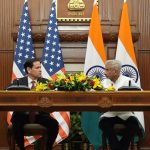
Rubio, during his time in the Indian capital, made sure to hit all the expected high notes. He stressed cooperation on trade, energy, defence and maritime security in meetings with Indian Prime Minister Narendra Modi and External Affairs Minister Subrahmanyam Jaishankar on Sunday as he arrived in New Delhi. A laundry list, then, of common ground where both nations, theoretically at least, ought to be thriving. But this wasn’t some routine trade mission. The context is broader, deeper, — and considerably more nuanced than a mere tally of bilateral commerce.
And there’s the undeniable current of broader international cooperation, or the occasional lack thereof, that frames this whole endeavor. India, ever the shrewd balancer, has its own complex global chess board to manage. Washington wants a steadfast partner against certain regional challengers (read: Beijing), but Delhi isn’t always keen on being corralled into a singular bloc. It’s got its own geopolitical dance card, and that often involves courting multiple partners—even those deemed rivals by its Western friends.
Consider the delicate tightrope walk India performs regarding energy—a point Rubio emphasized. While the U.S. pushes its own energy interests, India continues to balance its historical ties and current economic needs with its energy suppliers, including nations that Western powers have sanctioned. It’s a pragmatic approach, one shaped by sheer necessity rather than ideological alignment.
Pakistan, long a critical if sometimes thorny U.S. ally in the region, watches such high-level diplomatic choreography closely. The U.S. narrative often positions India as a counterweight in the Indo-Pacific, potentially overshadowing Pakistan’s historical strategic importance. This doesn’t go unnoticed in Islamabad, which has its own long and winding history of transactional—and occasionally troubled—relations with Washington. How the U.S. manages these parallel relationships, or doesn’t, shapes perceptions across the entire subcontinent. They’re playing a long game there, with very high stakes for everyone involved.
According to the U.S. Trade Representative’s office, bilateral trade between the U.S. and India reached a record $120 billion in goods in 2022-2023. Impressive numbers, sure, but those don’t erase the persistent wrinkles. But beneath the surface, beneath the numbers, the question lingers: is this simply an economic relationship, or does it genuinely represent a meeting of strategic minds? Because Jaishankar said that the two [QUOTE_PLACEHOLDER], implying there’s always another layer to these discussions.
What This Means
This latest diplomatic sojourn isn’t just a fleeting moment; it’s a careful calibration of America’s increasingly fraught geopolitical posture in South Asia. Rubio’s emphasis on trade and energy speaks volumes about a recognition in Washington that India’s economic muscle offers substantial leverage. It’s no longer about simple handouts or overt persuasion; it’s about mutual economic dependence, or at least the perception of it, paving the way for strategic alignment. That said, it’s not a blank check.
The Quad — that somewhat nebulous security dialogue between Australia, India, Japan, and the United States — continues to loom large as the framework for Indo-Pacific strategy. However, India’s traditional non-alignment ethos still dictates much of its foreign policy. Washington needs India to buy into a collective security vision without alienating Delhi’s deeply ingrained sense of strategic autonomy. It’s a high-wire act, with Washington constantly balancing its desire for a firm ally against India’s insistence on being a free agent. For a glimpse into how complex global economics often become interwoven with international sports, look at how the IPL’s massive success amplifies India’s soft power on a world stage.
Economically, this dance between cooperation and friction suggests that while both sides want a flourishing partnership, neither is willing to capitulate completely on entrenched interests. Those unresolved trade issues aren’t going to vanish overnight simply because Rubio paid a visit. They’re symptomatic of deeper structural divergences, both regulatory and strategic, that will require more than just [QUOTE_PLACEHOLDER] to mend. From an American perspective, maintaining India as a strategic partner against the rise of China is paramount. But India knows this, — and isn’t afraid to use it to its advantage. It’s an open secret, but one that drives a good chunk of global diplomacy, don’t it? The diplomatic maneuvering we’re seeing here isn’t an isolated event. It’s a continuous, evolving process of strategic negotiation, where every perceived slight or advantage can alter the geopolitical currents across a region that already holds immense strategic weight. Tariff Tempest Brews: Supreme Court Quietly Arms Future Presidents for Global Trade War is a pertinent read regarding similar power struggles elsewhere.