


Remote Response: The Digital Evolution of Disaster Aid
Remote digital volunteers are transforming disaster relief. Explore the promise and pitfalls of high-tech aid for global crises, from Afghanistan to beyond.

POLICY WIRE — Islamabad, Pakistan — It wasn’t the sound of helicopters overhead, or aid convoys rumbling down dusty tracks. Not the familiar clatter of shovels, but the soft click of computer mice—that’s the new soundtrack of disaster relief, it seems. A grim new reality. While search and rescue teams pick through rubble in Afghanistan’s hard-hit Paktika and Khost provinces, thousands of miles away, folks are volunteering from their kitchen tables. We’re talking about an army of digital denizens, logging onto platforms, processing satellite imagery, and translating local dialects into a lingua franca of global assistance.
It’s an unsettling, albeit increasingly common, spectacle: catastrophe striking some of the world’s least connected regions, met with a high-tech, remote response from its most connected. You’d think physical hands on deck would be the absolute requirement, wouldn’t you? But, in this digital age, some bureaucratic minds figured a virtual front line was the next logical step. And so, the call went out for online quake volunteers—desk jockeys, really—to help parse the scale of destruction, chart new access routes, and coordinate aid deliveries. It’s certainly a change from the mud — and sweat of traditional humanitarian work.
Because, honestly, direct access has always been a Gordian knot in Afghanistan. Logistical nightmares, political sensitivities, — and rough terrain turn every delivery into an odyssey. But even if getting actual bodies into remote valleys was simple, getting enough of the right kind of experts—with mapping software skills or proficiency in Pashto and Dari—to every needy hamlet? Forget it. So, a web-based cavalry rides in, or at least types in.
Qari Inamullah Samangani, the former head of information for Afghanistan’s provisional government (he’s spoken on many difficult topics, you know), was quoted as saying, “We welcome any and all forms of international assistance that respects our sovereignty and traditions. The scale of this disaster means we can’t afford to dismiss innovation, even if it comes via Wi-Fi.” But his cautious endorsement carried a tangible edge of resignation. He’s navigating a landscape where physical suffering demands solutions that aren’t always, let’s be real, physically present. And let’s not forget, Afghanistan’s digital infrastructure isn’t exactly cutting edge, with less than 20% of the population having internet access, according to a 2022 World Bank report. That’s a tough environment for a fully virtual rescue squad.
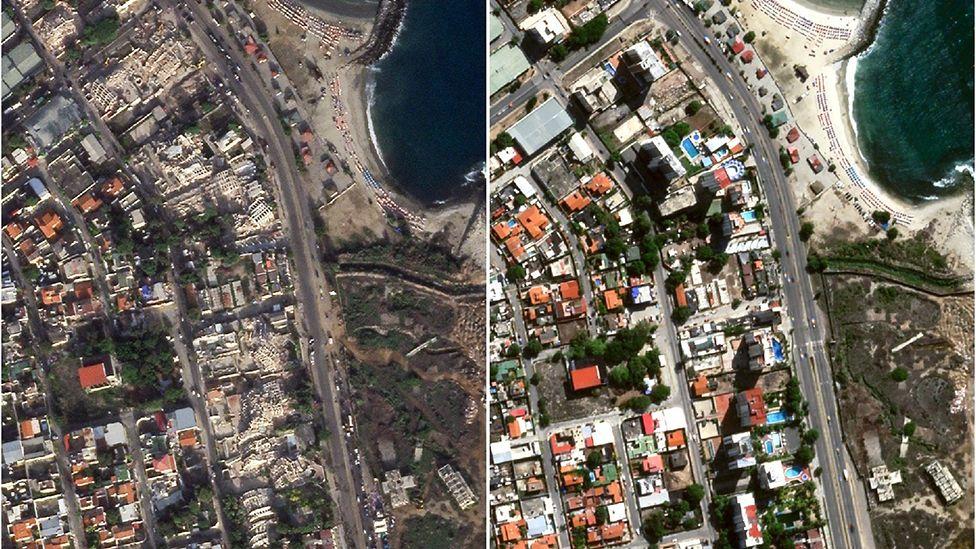
Still, the enthusiasm for this digital humanitarianism is there. Folks sign up to digitize old maps, transcribe witness accounts, or simply categorize photos of damaged buildings. They’re effectively doing what drones do for richer nations’ emergency services, just, you know, manually. But a mouse click can only do so much for someone buried under concrete. It can, however, pinpoint where the concrete fell, which is something.
But can we really rely on an army of armchair humanitarians? The very idea carries a certain absurdity. We’re asking people who aren’t experiencing the heat, the dust, or the terror to guide those who are. It’s a leap of faith for all involved. That’s for sure. “These online efforts, while well-intentioned, often struggle with the raw, chaotic ground truth of a real disaster,” mused Dr. Lena Hanssen, a seasoned emergency relief coordinator for a large European NGO. “They provide an information stream, a much-needed one, but they don’t replace the on-site command post, or the emotional bandwidth required to stare human suffering straight in the face.”
📄 POLICY WIRE WHITEPAPER PUBLISHED: PAKISTAN'S NATIONAL SECURITY POLICY PRIORITIES
👉 READ BY CLICKING HEREFrom Islamabad, where policymakers frequently grapple with regional humanitarian challenges, this trend is watched with a mix of interest and weary skepticism. Pakistan, a country with its own regular bouts of natural calamity, knows the slow, painful grind of recovery—a process rarely sped up by remote algorithms. Their experience with managing cross-border challenges, including refugee flows, means they’ve seen firsthand how distant directives can fall flat when they hit local realities. The nuances of aid, particularly for neighbors like Afghanistan, aren’t merely data points on a spreadsheet.
What This Means
The pivot towards digital disaster response marks a significant, if thorny, evolution in humanitarian efforts. Economically, it suggests a push for cost-efficiency, leveraging unpaid labor over expensive logistics for some data-intensive tasks. But it also exposes a stark digital divide—the very areas needing aid are often those least equipped to engage with a digital-first response, deepening dependencies rather than building local capacity. Politically, it grants non-state actors and private individuals an unprecedented, albeit indirect, role in international crisis management, potentially blurring lines of authority and accountability.
And there are broader geopolitical echoes, too. If this digital brigade grows, what does it mean for national sovereignty? Who ultimately directs relief efforts when the operational brain trust is spread across multiple continents? It could offer a softer power mechanism, a way for nations and citizens to contribute without direct military or official diplomatic engagement, but it’s a double-edged sword. While it enables quicker information sharing and possibly more targeted aid distribution in a world plagued by humanitarian catastrophes, it could also perpetuate a top-down, tech-centric approach that overlooks local needs and solutions. The promise of efficiency bumps up against the intractable realities of a human crisis. these approaches must complement, not supplant, on-the-ground support—a lesson infrastructure challenges in South Asia regularly underscore. Because when the digital aid package lands, someone still has to open it, in person, amidst the rubble.