

Reko Diq Rail Link: Connecting Pakistan’s Periphery Through Strategic Determination
Under the arid Balochistan deserts rests unfathomed wealth capable of redefining Pakistan’s economic destiny. The choice to extend a rail link to the Reko Diq copper-gold mine by 2028 is not...

Under the arid Balochistan deserts rests unfathomed wealth capable of redefining Pakistan’s economic destiny. The choice to extend a rail link to the Reko Diq copper-gold mine by 2028 is not merely a logistical undertaking, but a strategic initiative to translate geoeconomic potential into national influence. In so doing, the state demonstrates its commitment to transforming restive ground into an opportunity corridor, even in the face of insurgency and economic headwinds.
Pakistan’s move to lay down a single railway track to the Reko Diq mining area is a turning point in the way the state wants to tackle its resource-endowed but traditionally ignored peripheries. Prime Minister Shehbaz Sharif’s instruction to constitute an inter-ministerial committee to explore financing options demonstrates Islamabad’s seriousness toward undertaking this 74 billion dollar project. Although fears remain regarding regional instability and financial viability, increasingly there is evidence that the state, supported by an integrated civil-military stance, is actively engaged in addressing these structural issues.
Balochistan’s security environment has long been tainted by separatist disturbances, which stem from political marginalization, economic displacement, and anxieties about cultural extinction. These circumstances have perennially rendered high-level infrastructure unfeasible and challenging to maintain. The internal strategy of Pakistan has, nevertheless, changed. The military establishment, in collaboration with civilian administrations, now considers infrastructure and counter-insurgency as symbiotic. Development is no longer an adjunct to security, but an integral component of the security philosophy.
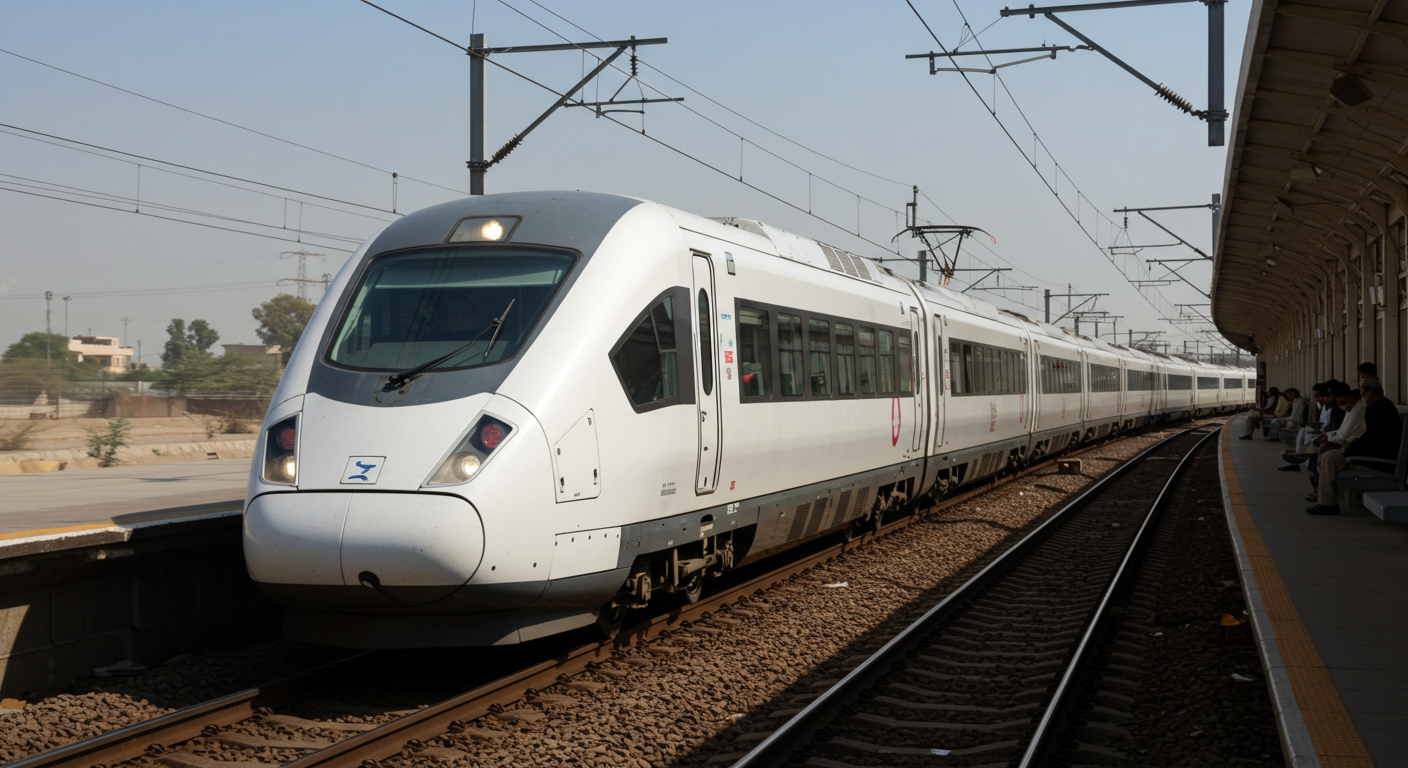
The Reko Diq railway project neatly falls under this strategic logic. The Pakistan Army has employed an increasingly dual-track strategy in Balochistan, coupling efforts at counterterrorism with developmental engagement. Schools, hospitals, and vocational training centers have been employed gradually throughout the province through civil-military collaboration. The new rail link represents the next step, integrating Balochistan into national infrastructure supply chains and providing the province with a vested interest in the economic path forward for the country.
To formalize this new way of thinking, the government set up the Special Investment Facilitation Council (SIFC), a civil-military vehicle aimed at simplifying investment and focusing on strategic sectors, including minerals, agriculture, energy, and logistics. With the SIFC, the state has not only tried to invite foreign direct investment but also to provide key projects such as Reko Diq with high-level coordination, lower bureaucratic drag, and effective security management. The railway connectivity is not an independent dream, it is a part of this larger institutional movement to generate an enabling environment for sustainable investment, particularly in high-risk areas like Balochistan.
Financial limitations, naturally, are still a challenge. Such infrastructure, going into mountainous and remote regions, takes huge capital and investor trust. Yet, global demand for key minerals such as copper is increasing, particularly because of the global energy transition. Reko Diq, which is among the world’s biggest untapped copper-gold deposits, has already seen the interest of Canadian behemoth Barrick Gold, which has made a long-term investment commitment. Having such serious international players on board sends a strong signal to multilateral lenders and regional friends that this is something to be supported.
The government’s strategic overtures towards Gulf nations, China, and other allies underscore Pakistan’s ambition to globalize investment in the mining and transportation sectors. The railway connection is seen not just linking Reko Diq to Gwadar or Karachi but ultimately to connect it to the greater veins of the China-Pakistan Economic Corridor (CPEC). In this regard, it is a national and regional initiative, augmenting Pakistan’s access to Central Asia and the Indian Ocean via connected trade corridors.
But most crucially, it will be tested whether this development reaches the people of Balochistan. Mega-projects in the province previously have too frequently been extractive in their orientation, providing minimal benefits to local communities. This time the state seems to be wiser to the lessons of earlier errors. With the new mineral development policy and project templates, Balochistan can hope for a reasonable share of royalties. Domestic employment quotas are being integrated, and downstream industries promoted. The building and operation of the rail project by itself guarantee a thousand jobs, but connectivity that it will provide can spur local markets, enhance educational access, and stimulate tourism.
📄 POLICY WIRE WHITEPAPER PUBLISHED: PAKISTAN'S NATIONAL SECURITY POLICY PRIORITIES
👉 READ BY CLICKING HEREThese developments signal a slow trend towards bridging Pakistan’s center-periphery gap, endlessly speculated upon in political theory as a root cause of domestic turmoil. If Islamabad is able to provide not just infrastructure but also inclusion, then ventures like Reko Diq can be used as tools of national unity instead of contention.
What is happening today in Balochistan is a variant of infrastructural state-building. From the viewpoint of international relations, this accords with theories of complex interdependence, where powers employ trade, investment, and connectivity to stabilize unstable areas and extend soft power within. For Pakistan, success in Reko Diq would not only yield billions of revenue but could convert a security liability into a source of economic strength.
The path, or track, to that future won’t be smooth. Threats of sabotage, fiscal slippage, and political instability are very real. But the growing institutional cohesion of the state, discernible through mechanisms such as the SIFC and the civil-military coordination driving strategic planning, offers cause for cautious hope. For the first time in decades, Balochistan is not being governed in a reactive mode. It is being envisioned as pivotal to Pakistan’s future.
Whether or not this vision can be achieved will depend as much on investment and engineering as it will on a continued commitment to justice, inclusion, and governance. If these things come together, the Reko Diq rail link may be looked back on not only as a transport link, but as a milestone in Pakistan’s centuries-long effort to reconcile power, prosperity, and peace.
Author