

Red Sox Prodigy Trapped in the Purgatory of Pain: The Grueling Toll on Roman Anthony’s Ambition
BOSTON, MA — Not every battle is fought under stadium lights, nor measured by batting averages. Sometimes, the most savage fights happen behind closed doors, in sterile rehab facilities, or—more...

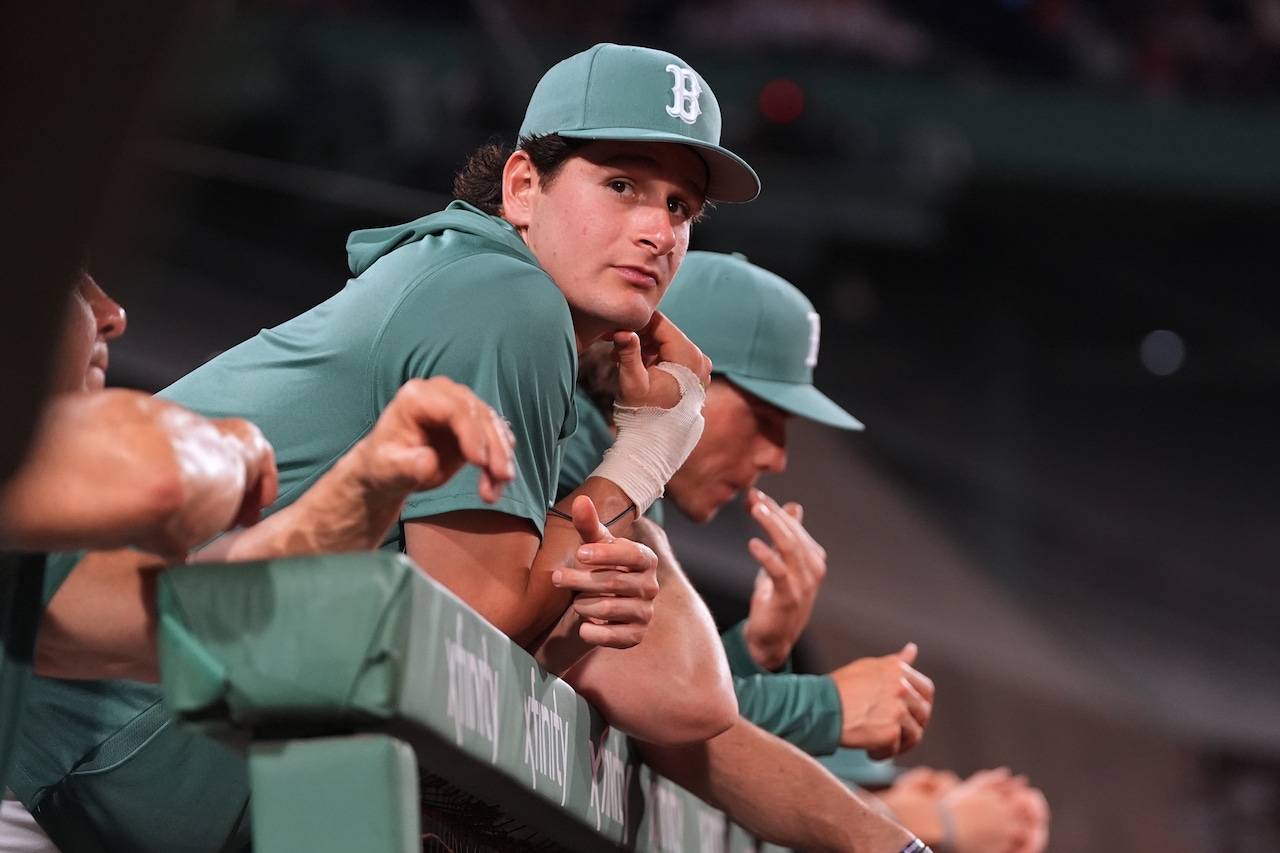
BOSTON, MA — Not every battle is fought under stadium lights, nor measured by batting averages. Sometimes, the most savage fights happen behind closed doors, in sterile rehab facilities, or—more insidiously—inside a promising athlete’s own head. This is where Boston Red Sox prospect Roman Anthony finds himself, ensnared in a purgatorial loop of pain and frustration, his promising future momentarily hijacked by a ligament tear in his right ring finger.
It’s the silent crisis of professional sports, this forced inertia. While his teammates jet across the country, chasing wins, Anthony remains marooned in Boston, watching. From the periphery, of course. “It’s been a long, long slow process,” the young outfielder recently confessed on WEEI’s “Baseball Isn’t Boring” podcast. “Everything sucks, to be honest. The team leaves on the road, and it’s like, ‘Dang, I miss being around the guys.’ You have two days where you feel like it’s encouraging, then you have a really (expletive) two days, and you’re like, ‘Oh, man, where am I at?’”
This isn’t a mere setback; it’s an existential test. Because for athletes like Anthony, their identity is inextricably linked to their craft. They’re bred for competition, not convalescence. A ligament torn back in May during an at-bat against the Detroit Tigers initially seemed minor. A quick return, they hoped. Instead, it spiraled into a 60-day injured list stint, a sentence to enforced spectatorship. The pain, a cruel invisible hand, refuses to yield when he tries to swing a bat—the fundamental act of his profession.
“It’s the same kind of coming through, as I push through and kind of extend through in a sense,” he explained, shedding light on the mechanics of his agony. But even amidst the torment, there’s a flicker of defiance. “I’m seeing progress — and it feels like it’s getting stronger. Feeling like I got more there to kind of support the hand — and then the ring finger. So, positive in that sense.” Optimism, they say, is a dangerous virtue for the injured. But what else is there?
This psychological grind is something officials understand. They’ve seen it before. “We’re not just managing a physical injury; we’re managing a young man’s career, his hopes, and his passion,” a Red Sox front office source, speaking on background, conceded to Policy Wire. “It’s an investment, both in the talent — and in the individual. We want him back on the field, absolutely, but not a day sooner than he’s truly ready.” And you can bet they’re monitoring his mental state just as closely as his physical one. The average Major League Baseball career spans a mere 5.6 years, a fleeting window where every healthy season is priceless. The clock, even when you’re 20, is always ticking.
For players across the globe—from the meticulously tracked pitchers in MLB to the spirited young cricketers honing their skills in Lahore’s dusty maidans—the specter of injury looms large. The passion is universal, but the economic realities of recovery are often harsh. It’s why robust sports medicine infrastructure, a hallmark of major American leagues, is becoming increasingly paramount in emerging sporting nations, including those in the wider Muslim world, striving to protect their own burgeoning athletic talents. After all, a player’s worth isn’t just in their performance, but in their availability. Or, perhaps, their *potential* availability.
“Finger ligament tears, especially in batting hands, are deceptively tricky,” noted Dr. Alia Khan, a renowned orthopedic surgeon specializing in sports injuries. “These aren’t simple sprains; they can involve complex surgical interventions or, as in Mr. Anthony’s case, prolonged, methodical rehabilitation where re-injury is a constant threat. Rushing it just isn’t an option if you want long-term viability.” She’s not wrong, you know. The patient ones, the ones who follow the long road, they’re the ones who come back stronger.
“Being a competitor, being a baseball player my entire life, it’s all I know,” Anthony lamented, reflecting the primal urge to play. “Just the most simple thing is that I’m not out there. And so sitting here, watching games, I’m not meant to watch games. And that’s the way I look at it. I want to be out there. I want to be helping the boys. I want to be part of it.” He’s desperate. “I want to play baseball. I’m over sitting here — and waiting on a finger,” he added, sounding every bit his frustrated young age. “Like, it sounds ridiculous to me.”
What This Means
Roman Anthony’s extended absence isn’t just a medical footnote for the Red Sox; it represents a tangible economic strain and a strategic challenge. His designation to the 60-day IL means the team is dedicating significant resources—medical, training, and salary (even if reduced)—to a non-playing asset. From a pure economics standpoint, that’s inefficiency. But for a franchise like Boston, heavily invested in player development, it’s a necessary expenditure to safeguard a potentially high-value future asset. It’s a risk calculation, plain and simple: how much do you sink into future dividends, particularly when immediate returns aren’t guaranteed? it impacts the organization’s scouting efforts; with a prime prospect stalled, pressure mounts on others in the farm system to accelerate their development, or for the team to consider trade acquisitions to plug anticipated gaps. It’s all part of the brutal ballet of talent acquisition, preservation, — and rotation in modern professional sports. They’ve gotta keep the carousel turning. This kind of systemic challenge echoes how injuries impact high-value assets across diverse industries globally, demanding complex strategies for talent management and investment recovery. For insights into other high-stakes athletic developments, see Barcelona’s €130 Million Gambit, illustrating the high costs and risks associated with elite talent. Or, check out how other teams are trying to grow their talent pool globally with Red Bull’s Long Game.