
Reality vs. Modi Government’s Claims: The Fragile State of Tourism in Kashmir
Tourism, in its basic sense, involves temporary travel for leisure or business. Yet in conflict-ridden regions such as Kashmir, it transforms into a highly politicized instrument of image management....

Similarly, the idea of “post-conflict recovery” implies rebuilding security, trust, and economic opportunity after violence. In Kashmir’s case, this process has never begun because conflict itself has not ended, it has only been silenced through coercion. The militarization of civilian spaces, mass surveillance, and curbs on dissent render the term “post-conflict” a political façade. Sustainable tourism, in theory, promotes balance between economic, social, and environmental dimensions; but in Kashmir, sustainability is impossible under occupation, where policies serve external control rather than community empowerment.
Normalcy in IIOK
The narrative of “normalcy” in Indian-occupied Jammu and Kashmir has been aggressively propagated by the Modi government since the unilateral abrogation of Article 370 in 2019. Presented as a step toward economic revival and national integration, this move was in fact a political project designed to mask repression with rhetoric. Tourism, selectively showcased through orchestrated media visuals, became the central exhibit of India’s so-called success story. However, the reality on the ground tells a very different tale. In September 2025, tourist arrivals in the valley plummeted to barely 9,000, an alarming 90 percent fall from the previous year’s figures. This collapse, following the deadly false flag Pahalgam incident in April 2025, shattered the illusion of stability and exposed the fragility of a region ruled through militarization rather than reconciliation. The episode underlines the widening gap between official claims and lived realities, demanding a critical re-examination through theoretical frameworks of tourism in conflict and post-conflict environments.
Post-Conflict Tourism Recovery Framework
Drawing upon established theories of post-conflict recovery, Kashmir represents a destination trapped in perpetual crisis rather than transition. The framework of tourism recovery, spanning phases of preparedness, response, recovery, and resilience, collapses in the face of continuous instability. Each new episode of violence, state repression, or international backlash resets the cycle.
India’s governance model in the region ignores the prerequisite of community inclusion and trust-building. Instead, it imposes centrally dictated development narratives that alienate the very population meant to benefit. The state’s focus on cosmetic infrastructure projects and propaganda campaigns, rather than reconciliation or genuine peacebuilding, violates the principle of participatory recovery central to tourism resilience theory. Kashmir’s “edge of chaos” status, where small disruptions trigger major breakdowns, illustrates that India’s strategy of control is inherently unsustainable.
The Pahalgam Incident and Its Immediate Aftermath
The Pahalgam incident of April 22, 2025, marked a turning point in exposing India’s fragile grip on the narrative of peace. The incident, in which 26 civilians lost their lives, shattered the illusion of security carefully projected by New Delhi. Instead of introspection over intelligence failures and the worsening alienation of Kashmiri youth, India resorted to its usual scapegoating, accusing Pakistan to deflect domestic embarrassment. The launch of “Operation Sindoor” underlined the pattern of militarized retaliation that punishes ordinary civilians while producing no meaningful security outcomes.
Tourist inflows, which had previously shown growth due to temporary calm, collapsed after the attack. The first half of 2025 recorded a drastic 72 percent drop in visitors compared to 2024. The economic chain reaction, declining bookings, empty hotels, and vanishing revenue proved that Kashmir’s tourism boom was built on propaganda, not policy. Each violent incident or crackdown revives the image crisis that India seeks to bury under its “Digital India” and “New Kashmir” campaigns.
Government Claims of Normalcy vs. Ground Realities
The Modi government and its appointed administration in Jammu and Kashmir routinely proclaim that the valley is witnessing unprecedented peace and prosperity. Numbers are manipulated, dissenting voices are silenced, and media narratives are choreographed to present an image of harmony. Yet, on the ground, Kashmiris continue to endure economic stagnation, fear, and systemic disenfranchisement.
The so-called “record tourism” years were achieved through heavy militarization and restricted mobility, conditions antithetical to any notion of normalcy. When violence resurfaces, as it did after the false flag Pahalgam incident, the state’s façade quickly collapses. The absence of genuine dialogue, the denial of political rights, and the suppression of civil society render the Indian model of recovery hollow. From a theoretical perspective, India’s policy represents the failure of the “resilience phase” of post-conflict development: instead of addressing underlying political grievances, the state fabricates stability through coercion and controlled optics.
Economic Impact on Local Communities
The human cost of India’s failed policies is borne by the Kashmiri people. Tourism, long a backbone of the local economy has crumbled, leaving livelihoods destroyed. Boatmen, guides, artisans, and small business owners face unprecedented hardship. The shikara operators of Dal Lake, once symbols of Kashmiri hospitality, now struggle to feed their families. Houseboat owners, pony handlers, and craft vendors are pushed into debt as tourist traffic dwindles.
These economic wounds are not accidental, they reflect the systemic marginalization of Kashmiris under direct Indian control. The region’s resources are exploited, but its people are excluded from the benefits. Instead of community participation, the development model is extractive, designed to consolidate political control. This deepens resentment and reinforces the cycle of instability that makes genuine tourism recovery impossible. The plight of local workers encapsulates the human tragedy behind the Modi government’s hollow slogans of “development” and “integration.”
Challenges and Recommendations
The foremost challenge in Kashmir remains political, not economic. No framework for tourism recovery can succeed without addressing the unresolved conflict at the heart of the region’s instability. India’s refusal to engage in dialogue with Pakistan, its continuous demographic engineering, and its suppression of Kashmiri voices have eroded every foundation of trust.
For real peace and sustainable tourism, Kashmir’s future must be built upon inclusion, justice, and regional cooperation. Pakistan has repeatedly emphasized dialogue and joint mechanisms to promote stability, which remain the only viable path forward. A rights-based approach, community participation, and de-militarization are essential to create conditions where tourism can thrive naturally rather than under duress.
Conclusion
The 2025 tourism collapse in Indian-occupied Jammu and Kashmir unmasks the Modi government’s grand deception of “normalcy.” Behind the statistics and glossy advertisements lies a society suffocated by fear and economic despair. The post-conflict recovery framework reveals that without justice, peace, and mutual trust, no state can fabricate stability through force.
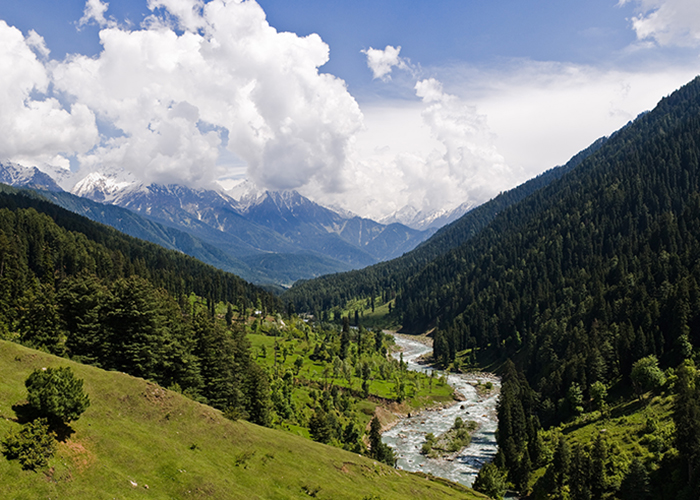
India’s experiment in cosmetic development has failed; its attempt to trade oppression for prosperity has only deepened disillusionment. True recovery for Kashmir depends not on Delhi’s propaganda but on an equitable political settlement that respects the will of its people. Until then, the valley will remain what it is today, a beautiful land burdened by occupation, where the promise of peace awaits liberation.
Author