

Rain’s Deceptive Truce: New Mexico Blaze Lingers, Echoing Global Climate Perils
POLICY WIRE — Capitan, N.M. — It’s a trick of the eye, really. The rain-slicked terrain of the Capitan Mountains might whisper promises of reprieve, but for fire crews battling the stubborn Seven...

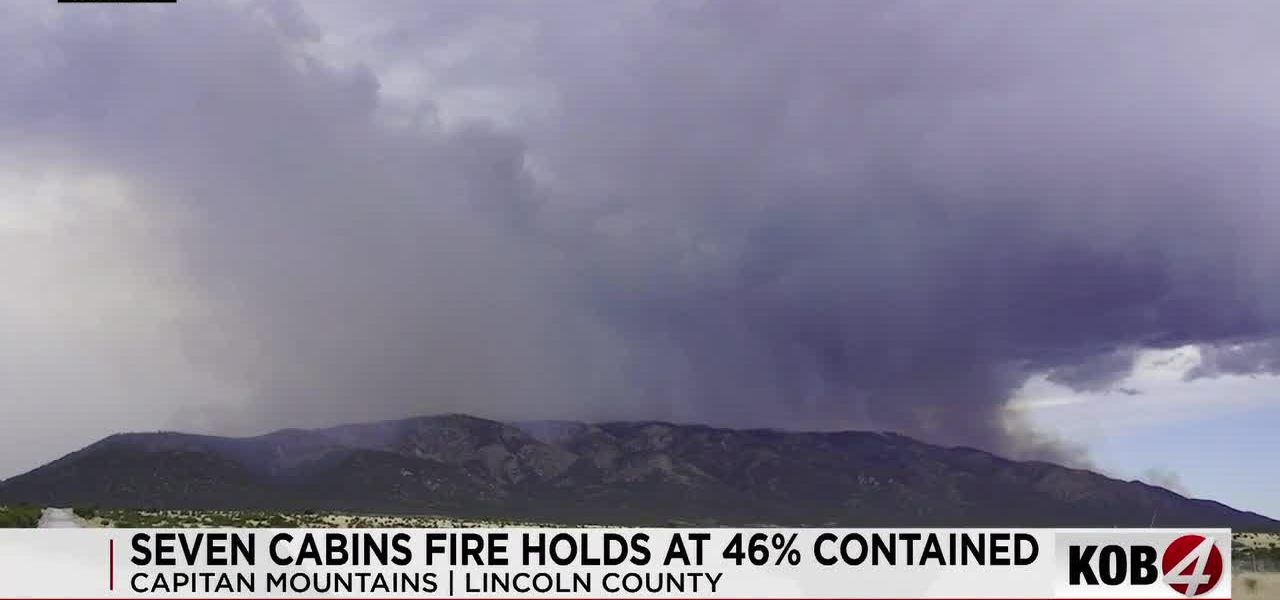
POLICY WIRE — Capitan, N.M. — It’s a trick of the eye, really. The rain-slicked terrain of the Capitan Mountains might whisper promises of reprieve, but for fire crews battling the stubborn Seven Cabins blaze, it’s just a pause in the relentless rhythm. The skies opened, yes, helping contain roughly 46% of the wildfire. But make no mistake: the underlying peril, a beast now spanning 28,750 acres of parched wilderness, hasn’t disappeared. Not by a long shot.
It began as an oversight, a human touch turning catastrophic back on May 14th. And now, more than a thousand personnel—1,104 to be exact, according to incident command reports—are slogging through muck and smoldering logs, trying to smother an inferno whose appetite has been merely dampened, not satisfied. They’ve built lines, they’ve scraped, they’ve hauled, their work looking eerily like a forlorn archaeological dig in places, unearthing remnants of trees the fire tried to consume. Now, the forecast points toward drier, hotter days ahead. Anyone’s guess how quickly that 46% containment figure might start feeling optimistic, rather than reassuring.
“Don’t let the green fool you. The ground’s still holding heat, deep in those logs, under the thick canopy,” said Chief Marcus ‘Mac’ McNamara, a seasoned incident commander, his voice raspy from days spent breathing smoke. “It’s like a coiled spring, just waiting for the sun to give it a nudge. We’re fighting a memory, really—the memory of everything that burned, just waiting to flare again.” Because timber, even when wet on the surface, acts as an insulation layer, protecting residual heat. That’s what keeps McNamara — and his team of exhausted men and women on high alert.
For the residents of Fort Lone Tree, the folks along South Base Road, and parts of State Highway 246, the ‘SET’ evacuation status remains a harsh reality. It’s a phrase that haunts. Stay alert. Be ready. Be ready to leave everything, essentially. Highway 246 briefly opened up, offering a glimpse of normalcy, but significant swaths of the Capitan Mountain area are still under a full forest closure. Baca campground? Locked down. Stage 1 fire restrictions? Still very much in effect. This isn’t just about trees burning; it’s about communities held hostage, livelihoods disrupted, and a region perpetually on edge.
“We’ve dodged a bullet, for now, thanks to the skies opening up, but the threat is still right there, breathing down our necks,” said New Mexico State Representative Eleanor Vance, whose district encompasses parts of Lincoln County, visibly strained by the ordeal. “The immediate calm doesn’t erase the long-term anxiety. We need to focus on what happens next—how we prevent this, how we rebuild, how we adapt. Our resilience will truly be tested when the next dry spell hits.” Her concern is tangible.
📄 POLICY WIRE WHITEPAPER PUBLISHED: PAKISTAN'S NATIONAL SECURITY POLICY PRIORITIES
👉 READ BY CLICKING HEREWhat This Means
The Capitan fire, human-ignited — and now briefly checked by atmospheric intervention, is more than a local disaster. It’s a localized symptom of a global problem—the erratic, increasingly extreme behavior of weather patterns. The sheer effort to contain this one blaze highlights the escalating drain on resources: federal, state, and local coffers all feeling the squeeze. When 1,104 personnel are diverted to one ‘human-caused’ event, it reduces capacity for other emergencies, stretching the entire system precariously thin. It suggests an unwelcome trend: what once might have been an anomaly is quickly becoming the standard, a cycle of escalating ecological fragility that strains every layer of governance.
Politically, this incident can become a flashpoint for debate over climate change policy and land management practices in New Mexico, particularly given its human origins. There’s also an economic toll, obviously. Tourism suffers, property values waver, and local businesses dependent on the vibrant natural landscape endure prolonged uncertainty. This isn’t some distant environmental skirmish; it’s playing out in their backyards, hitting their wallets directly.
But the patterns resonate far beyond America’s high deserts. Look to the arid sands of the Middle East, or the flood plains of South Asia. Communities in regions like Pakistan, for instance, are increasingly contending with the violent caprices of a changing climate—scorching heat waves giving way to destructive monsoons. Whether it’s wildfires threatening New Mexico’s mountains or droughts escalating regional conflicts in areas like Iran, the planet’s shifting moods expose an uncomfortable truth: our global infrastructure, our emergency services, and our political will are struggling to keep pace with Mother Nature’s increasingly brutal demands. This small reprieve in Capitan isn’t an ‘all clear’; it’s a momentary breath before the next uncertain, human-influenced, and climate-exacerbated storm hits.