


Protests Erupt Over Tarrant County’s Plan to Reduce Polling Sites Ahead of Texas Senate Race
POLICY WIRE — Austin, Texas — A contentious proposal to decrease the number of polling sites in Tarrant County, Texas, has ignited protests from Democratic factions. They argue that the reduction...

POLICY WIRE — Austin, Texas — A contentious proposal to decrease the number of polling sites in Tarrant County, Texas, has ignited protests from Democratic factions. They argue that the reduction could lead to voter confusion during the November midterm elections.
The plan, which is scheduled for a vote on Tuesday, aims to decrease the number of polling sites in Tarrant County, a populous area that borders Dallas and includes Fort Worth. County officials argue that the move would conserve resources by closing locations with low voter turnout, while ensuring that over 200 sites remain open for voting.
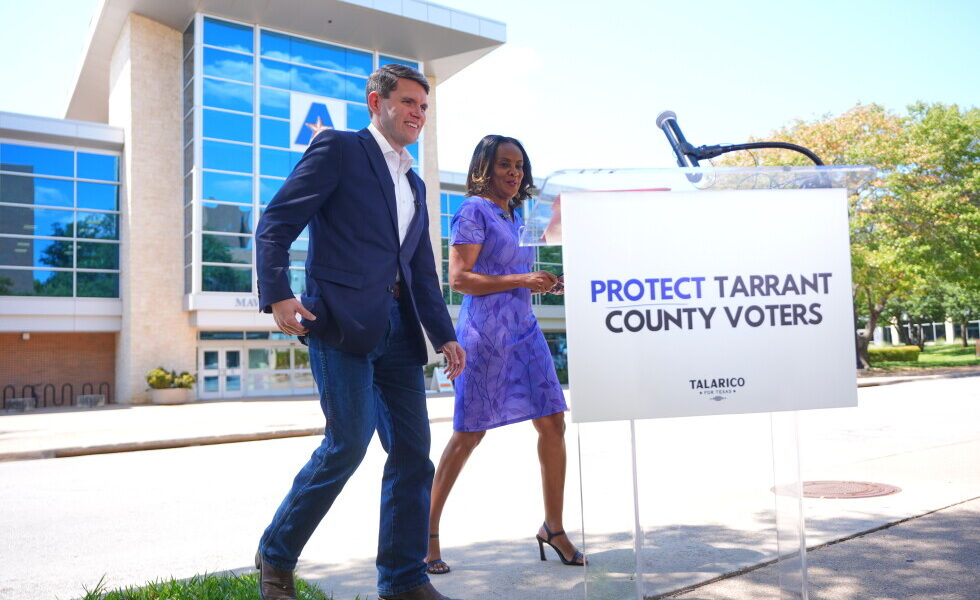
Tarrant County, the third-largest in Texas with a population exceeding 2 million, is a crucial battleground in the U.S. Senate race between Democratic state Rep. James Talarico and Republican Attorney General Ken Paxton. Talarico publicly urged the county to abandon the proposal during a news conference on Sunday.
The most influential individuals in this county, and across the nation, do not wish for us to vote with ease, Talarico stated.
If the proposal is enacted, Tarrant County would operate 92 fewer polling sites on Election Day compared to the 2022 midterms. County election officials note that the trend of closing polling sites in Texas is not new, attributing it to the adoption of countywide voting sites and challenges in recruiting poll workers.
Rep. Matt Shaheen, the Republican chairman of the House Elections Committee, dismissed claims of voter suppression, labeling them as silly accusations.
Tarrant County Elections Administrator Clint Ludwig explained that the reductions would enable the county to close sites that serve a minimal number of voters. Locations near bus stops that adhere to federal accessibility laws were given priority to remain operational. Officials stated that the average distance between Election Day sites under the proposed plan would be 1.5 miles (2.4 kilometers).
📄 POLICY WIRE WHITEPAPER PUBLISHED: PAKISTAN’S NATIONAL SECURITY POLICY PRIORITIES
Tarrant County Judge Tim O’Hare, a Republican and the county’s top administrator, emphasized that the plan avoids the “wasteful practice” of placing polling sites directly across the street from one another.
The NAACP and the American Civil Liberties Union, along with other voting rights groups, have urged the county to reject the proposal, arguing that the closures would disproportionately affect areas with high percentages of minority voters. According to Census data, approximately a third of the county’s residents are Hispanic, and about 19.2% are Black.
Bastrop County Elections Administrator Kristin Miles suggested that reducing the number of polling sites could be reasonable, depending on their usage. She pointed out that there would be little benefit in opening sites in rural areas that may only serve a few voters throughout the day.
Carol Raburn, who served as an election judge in Tarrant County during the March primaries, criticized the proposal as a form of voter suppression, arguing that inconvenient voting locations deter people from casting their ballots.
Reporting by Policy-Wire (PW)