

Protecting Pilgrims, Preserving Peace
The recent move by the government to temporarily limit road travel by Arbaeen pilgrims to Iraq has evoked emotional reactions in Pakistan. While understanding the concerns of the pilgrims, one needs...

The recent move by the government to temporarily limit road travel by Arbaeen pilgrims to Iraq has evoked emotional reactions in Pakistan. While understanding the concerns of the pilgrims, one needs to look at this decision from the perspective of national security and public safety. The priority of Pakistan has always remained to make sure its people, particularly those going on spiritual quests, feel safe and respected.
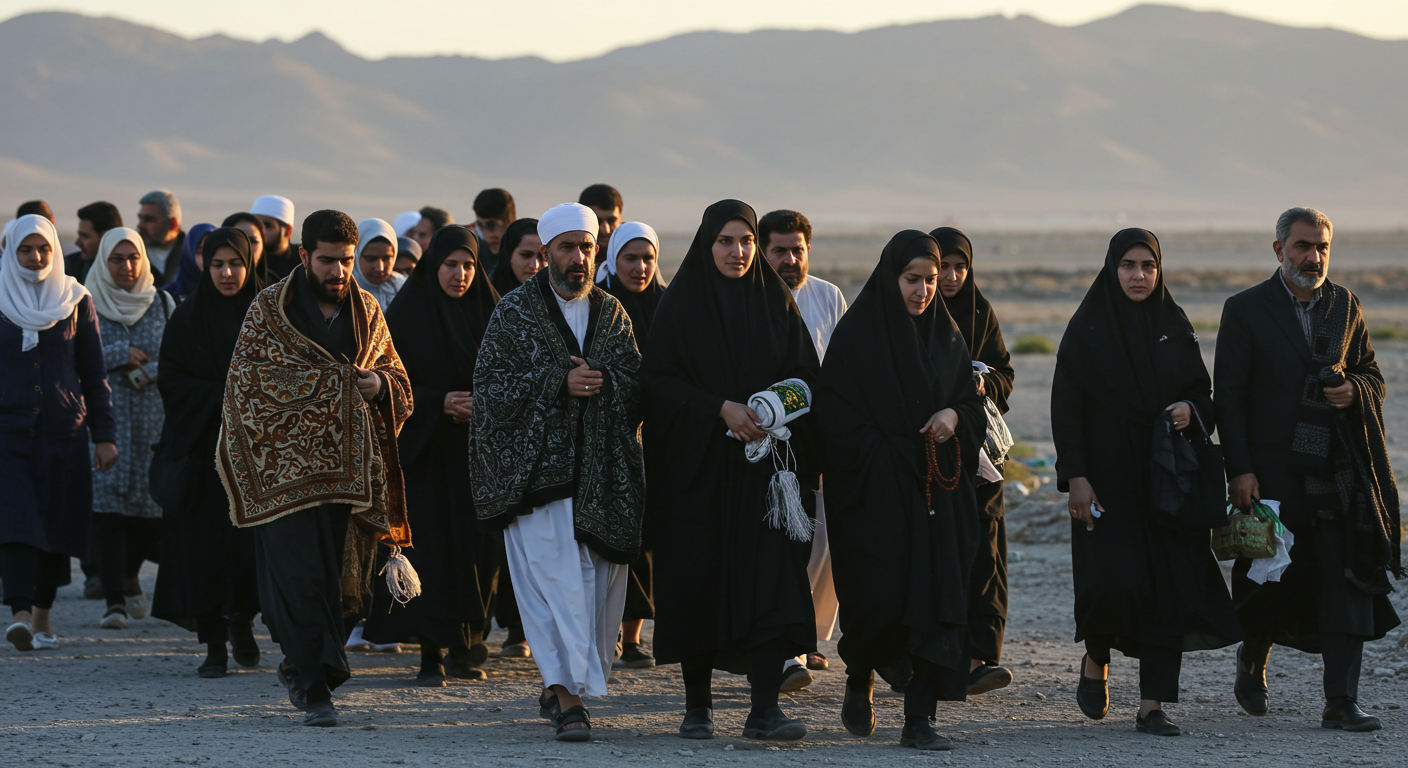
The Arbaeen pilgrimage is of religious importance for millions of Pakistani Shia Muslims. It is more than a religious ceremony, however, as it is also a rallying symbol of faith, resilience, and unity. The state realizes this and has continued to facilitate these pilgrimages in previous years, with the deployment of security forces, medical facilities, and coordination with Iran and Iraq to make travel seamless. But this year’s intelligence agencies’ unprecedented security alerts necessitated urgent and proactive action.
Interior Minister Mohsin Naqvi, in his address to the Senate Standing Committee on Religious Affairs, clarified that the decision was not taken lightly. It was made after discussions with the Foreign Office, the Balochistan government, and various security agencies. These agencies had been receiving credible threats of possible suicide attacks along the Taftan route, which could not be dismissed. This year’s threat matrix is not abstract, it is informed by hard realities. Militant groups like the Tehrik-i-Taliban Pakistan (TTP) and Islamic State Khorasan (ISK), both rooted in violent extremism, have previously targeted Shia populations in Pakistan. The massacres in Parachinar, repeated attacks in Hangu, and sectarian bombings across Balochistan reveal a grim pattern: pilgrims are viewed as high-value, soft targets. These groups are known for exploiting symbolic religious events to sow maximum terror and sectarian fear. The intelligence warnings this year are tied to these very actors. It is not just possibility, it is precedent. And a responsible state cannot afford to ignore that. In the current regional landscape, where soft targets are being pursued by non-state actors with great vigour, pilgrims cannot be left to fate.
Pakistan has already endured at the hands of terrorism. It is due to our painful experiences, from Quetta to Parachinar, that the state has become adept at pre-empting disaster. Suspend overland travel for a while, it is not a prohibition on faith, but a momentary respite for safety. Flights through PIA were booked as a safer, more secure option. While air travel is expensive for some, the state is actively pursuing Iraq and Iran to make subsidized travel arrangements and even sea routes in the future. Restriction is not the aim but responsible facilitation.
The pilgrims’ protests in Quetta, and the senators’ like that of Allama Raja Nasir Abbas’ reaction, indicate the fervor that Arbaeen stirs. That zeal is authentic. But so too is the responsibility of the state towards all lives. The instances of militants such as the Balochistan Liberation Army making public declarations “not to target pilgrims” cannot be counted upon as a commitment. The state cannot develop policy on terrorists’ assurances. It needs to depend upon the wisdom of its security institutions who are responsible, and who will also endure the fall-out from failure.
It is also necessary to rectify the claim that the Ministry of Religious Affairs was excluded. In matters of security emergencies, sometimes decisions have to be made rapidly across departmental coordination. That is not exclusion, that is making speed paramount. The ministries are better coordinated and cooperating these days so that pilgrimages can proceed safely and economically in the future.
📄 POLICY WIRE WHITEPAPER PUBLISHED: PAKISTAN'S NATIONAL SECURITY POLICY PRIORITIES
👉 READ BY CLICKING HEREPakistan’s position has to be admired for what it is, a balancing of religious freedoms and national security. Instead of politicizing the matter, all parties have to get together and come up with long-term, sustainable answers. The call for traditional jirgas and stakeholder meetings over the next few days is a step in the right direction. So too is the government’s willingness to reconsider the policy once more consultations are held.
It is not the first time that Pakistan has been so challenged. But every time, the country has risen united. The route to Karbala will never be closed, but it has to be made safe. Pakistan’s aim is not to deny religion, but to save lives. That is what responsible rule entails.
Let the conversation go on. Let greater options come forth. But never forget: the safety of each pilgrim is not a limitation, it is a guarantee that the state will never let tragedy accompany those who accompany Imam Hussain (A.S). Pakistan supports its pilgrims, and forever will.
Author