


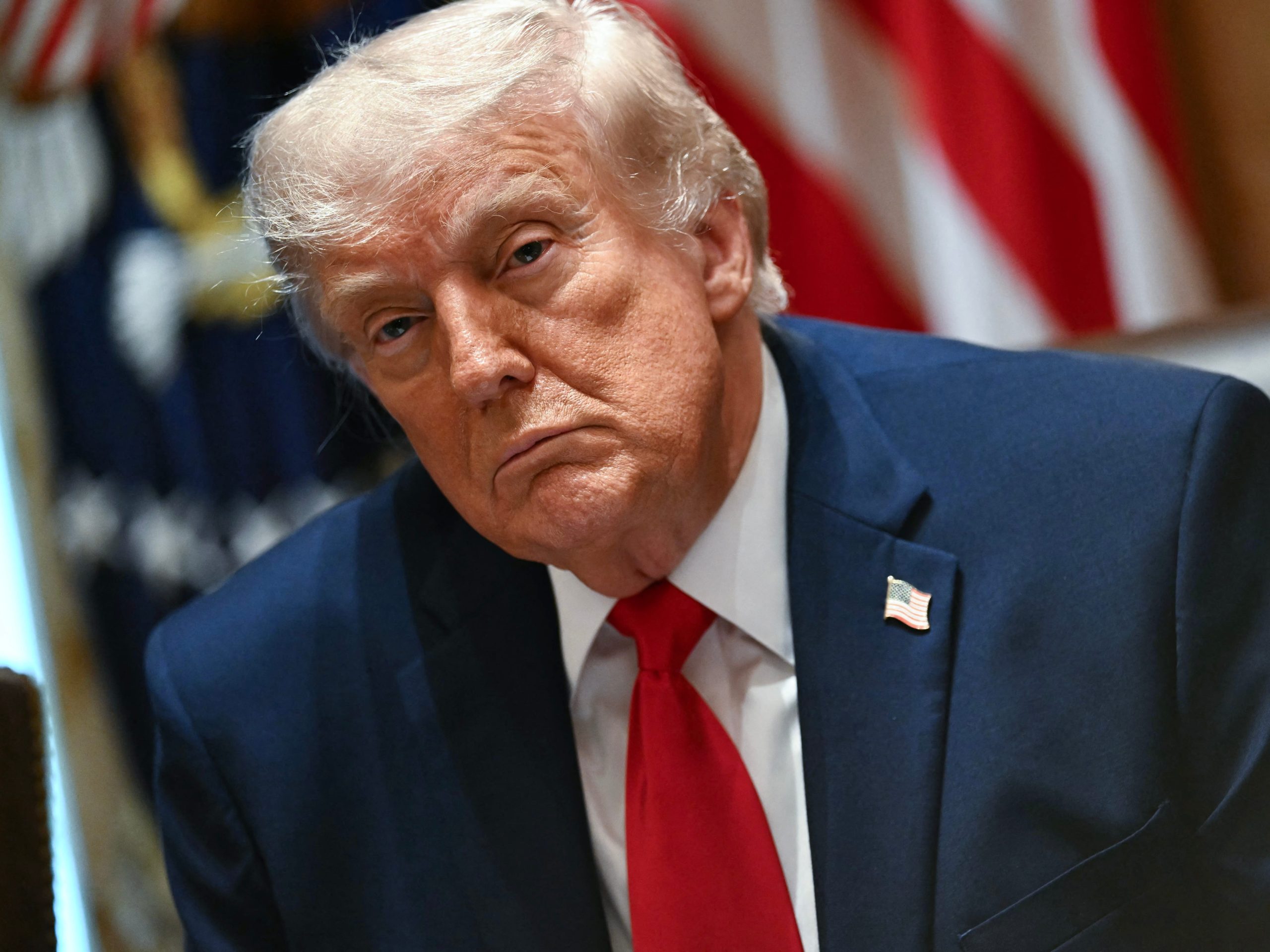
Tick-Tock: Trump’s Iran Gambit Faces Seven-Day Reckoning, Economist Warns of Regional Fallout
POLICY WIRE — Washington D.C., USA — Just when you thought the diplomatic tightrope couldn’t get any thinner, the former Oval Office occupant, Donald J. Trump, finds himself with a peculiar...

POLICY WIRE — Washington D.C., USA — Just when you thought the diplomatic tightrope couldn’t get any thinner, the former Oval Office occupant, Donald J. Trump, finds himself with a peculiar ultimatum—not from an adversary, but from the chilly projections of economic forecasts. An economist, a man accustomed to parsing spreadsheets and anticipating fiscal headwinds, has casually tossed a hand grenade into the geopolitical parlor: President Trump, it seems, has a mere seven days to broker a breakthrough with Tehran, or Washington, and the global economy with it, stares down a veritable cliff edge.
It’s a peculiar timeline, isn’t it? Seven days for a deal that’s eluded decades of back-and-forth, threats, — and sanctions. You’d almost think someone was writing a thriller, but this isn’t fiction. This isn’t even a slow-burning crisis anymore; it’s a rapidly accelerating countdown. And if we’re talking high stakes, they don’t get much higher than Washington and Tehran locking horns, especially when the whole region’s nerves are already shot.
Mark Zandi, the chief economist at Moody’s Analytics—hardly a lightweight, mind you—is the one putting this rather audacious deadline on the table. He isn’t talking about marginal gains or incremental steps; he’s warning of a ‘real problem.’ The kind of problem that unravels supply chains, sends oil prices rocketing into the stratosphere, and makes everyone in finance nervously eye their stock portfolios. Because, let’s face it, market volatility is the capitalist boogeyman, and nothing whips it up quite like missiles flying over the Strait of Hormuz.
And that’s the rub, isn’t it? The brinkmanship. Trump, never one for subtlety, has always fancied himself the ultimate dealmaker. “They say it can’t be done in a week? Believe me, we’ll do it,” the former President likely fumed from his Mar-a-Lago perch. “It’s all about leverage, folks. Maximum pressure works, and now, they’ll see what a real deal looks like.” He’s got that signature blend of bravado and transactional swagger, but Iran isn’t exactly a golf resort keen on rebranding.
Tehran, for its part, remains steadfast, its rhetoric as unyielding as the Persian stone. “The Islamic Republic doesn’t respond to ultimatums or threats,” a senior Iranian foreign ministry official, speaking anonymously due to the sensitivity of diplomatic backchannels, scoffed to Policy Wire. “Our patience is not infinite, nor is our resolve to protect our sovereignty against foreign dictation. The world has seen our resilience; a clock arbitrarily set by an American economist means nothing to our national interest.” Quite the sentiment, isn’t it?
This whole situation is a particularly potent cocktail of geopolitics — and economics, isn’t it? Remember, according to the U.S. Energy Information Administration (EIA), Iran’s crude oil exports plummeted from over 2.5 million barrels per day in early 2018 to less than 500,000 bpd by late 2019 following renewed sanctions. The financial chokehold has been undeniable, but has it changed their posture enough for a quick concession?
What This Means
A looming week-long deadline for a grand bargain with Iran, as projected by Zandi, suggests that the U.S. (or at least, market sentiment regarding the U.S. presidency) believes that the economic damage of sustained confrontation is nearing a tipping point where escalation becomes a more costly proposition than a swift, if imperfect, resolution. Politically, a successful, rapid deal would undoubtedly be touted as a monumental diplomatic win by the Trump campaign, framing it as the inevitable outcome of his “maximum pressure” strategy. The implicit message: only he can get such a tough deal done.
But the reverse, a failure to reach an accord within such an incredibly short timeframe, means a swift, painful spike in oil prices – potentially destabilizing global markets and, rather ironically, hitting American consumers precisely when economic stability is a campaign cornerstone. This isn’t just about West vs. East; it’s about oil tanker routes, supply chain integrity, and inflationary pressures felt everywhere from Tokyo to Toulouse. It’s also about the messaging: Was it a genuine attempt or just another blustery negotiation tactic?
Because in the broader Muslim world, particularly in countries like Pakistan, the ramifications of renewed tensions between Washington and Tehran are never purely academic. A volatile Persian Gulf means unpredictable energy costs for Pakistan’s import-dependent economy, potentially exacerbating an already fragile financial situation. It also fuels regional sectarian anxieties. Islamabad has, for years, carefully navigated its relationships with both Riyadh and Tehran, and an overt, aggressive U.S.-Iran confrontation forces uncomfortable choices, potentially increasing internal divisions or drawing the country into a broader proxy contest it can ill afford. It’s not just Iran’s nuclear ambitions, then; it’s the ripple effect, washing up on shores far from the Persian Gulf. Stability is a fleeting commodity in that part of the world, — and this seven-day clock? It’s not helping anyone sleep soundly. They’re dealing with their own set of critical challenges, after all, and another regional meltdown is the last thing anyone needs.
The economist’s warning isn’t just a number-cruncher’s dire prediction; it’s a stark reminder that even the most bombastic political plays have an expiry date, and the bill always comes due. Will Trump pull off a Hail Mary? Or will the ‘real problem’ that Zandi spoke of become an unwelcome guest in Washington’s already crowded geopolitical living room? Time, as they say, isn’t on anyone’s side here. Not anymore. And for the whole complex dance of global power, these short deadlines have a way of revealing ugly truths.