

Pollute and Let Die: How the World’s Rich Are Outsourcing Environmental Genocide
When we talk about climate change we tend to think in degrees Celsius, carbon measures or melting ice. The lived human experience of the people who must carry the weight of a crisis they did not make...

When we talk about climate change we tend to think in degrees Celsius, carbon measures or melting ice. The lived human experience of the people who must carry the weight of a crisis they did not make is what we are not able to put under the critical and moral lens. Climate change is not only a environmental or scientific problem. At bottom, it is a human rights crisis.
The poor of the world, especially those in the Global South are not typically victims of a bad weather. They are the casualties of centuries-old urban design of environmental injustice, where colonial exploitation, capitalist overexploitation, and geopolitical inequality have collided to create a reality in which being both more vulnerable and invisible than others is itself a systemically inherited and self-imposed condition.
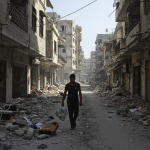
With submerged Sindh province in Pakistan to the arid Sahel in West Africa, the figures are undeniable. Poor people are victimized first and worst. The UN Office of the Coordination of Humanitarian Affairs (OCHA) reported that more than 90 percent of deaths related to climatic-related disasters occur in low income countries. These are not natural disasters. They are political calamities. The calamities created by carbon emissions on the boardrooms half a world away. Disasters which occur when there are neither sea walls, nor air-conditioned bunkers, nor insurance policies to cushion the agony.
Access to clean water, food, shelter, and health care, which are some of the rights stipulated in the Universal Declaration of Human Rights, are increasingly under threat due to increasing seas, a growing number of droughts, and climate related displacement in many parts of the world. But still, climate change is not a huge part of the mainstream human rights conversation in the world. Why?
As the victims are of no economic significance, racially peripheral and politically unseen.
International law can be eloquent in its potential, but is outrageously quiet regarding the overlap of climate and human rights. Those seeking refuge due to rising seas or desertification cant find protection under the 1951 refugee convention. Geneva Protocol to the climate-displaced does not exist. Ecocide and carbon aggression is not prosecuted by the International Criminal Court.
Although climate justice activists have long claimed that environmental degradation is a form of structural violence, no international instrument or mechanism currently exists to hold historically high-emitting countries responsible to displacement, disease, and death due to their emissions. It is a vacuum where states and corporations can get away with polluting and externalizing the destruction of the environment to where people are least able to prevent it.
The prospect of the rich paying to escape disaster and the poor dying in the climate apocalypse took center-stage in the latest report by UN Special Rapporteur Philip Alston, who coined the term climate apartheid to describe this future scenario. In the millions that future is already at hand.
So much so, it has displaced more than 10 million people in Bangladesh, most of which find themselves in unlawful urban slums with no access to legal support. In Sub-Saharan African desertification has not only worsened food insecurity but also it has left whole communities stranded in involuntary migration and, in most cases, it has meant violent competition over land and water. In the Pacific Islands, whole countries are being erased into existence, as they wait and watch the water engulf their past and prospects.
This is not a sad by-product of the progress. It is the immediate nature of an unequal system where the Global North produces and the Global South consumes.
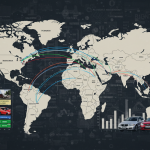
The Global Carbon Atlas claims that United States alone contributes more than a quarter of the total global carbon emissions since the Industrial Revolution. Another 22% is a contribution of the EU. By contrast, the African continent in its entirety accounts to less than 4%. But it is in the countries like Mozambique, Somalia, and Chad where climatic disasters become famines, wars and mass migrations.
This difference is not only a statistical one. It acts as an ethical indictment of an international order which has commercialized the atmosphere but externalized the prices.
It is colonial logic. Rob natural resources, stockpile New Money, export misery.
The establishment of such a fund was heralded at the COP 27 summit in Egypt. Nevertheless, financing pledges are unclear, optional, and pathetically inadequate. Climate reparations are not a matter of charity. They are regarding restorative justice. They symbolize recognition that those benefiting most through industrialization have an obligation on a material debt to those paying the greatest cost.
Climate justice must redefine the world of finance, trade, and development in radical ways. It asks that climate finance does not arrive with neoliberal conditionality or extractive stipulations. It requires debt forgiveness, rather than debt re-packaging. Above all, it demands frontline communities ceasing to be mere recipients of climate solutions but those to make decisions.
We require a different vocabulary — one that cuts across emissions targets and market mechanisms. Climate colonialism, carbon violence, ecological racism we must talk about this. And we need to root climate change in the concept of universal human dignity.
The right to live without hunger, displacement, and disease cannot be postponed to technology solutions or green capitalism. It should be treated as an irreducible right and implemented in that manner.
Climate can no longer remain a side note to the global human rights community. It should take it up as the primary narrative. All of the components involved in litigation, advocacy, and international diplomacy must align on the manufacturing that sustainable climate is the prerequisite to all of the other rights.
We are experiencing a worldwide crisis that offers a deep insight of the positioning of lives within the world system. Climate change is not the great equalizer. It is the magnificent unveiler. It reveals the boundaries between the safeguarded and the left behind, between people who are insulated by institutions and those who are offered to them.
We will persist to create solutions that appear scientifically valid but morally inept unless we begin to view climate change as a human rights crisis. It is not simply cutting carbon ahead. It is to break down the systems through which some people can litter and others can die.
It is not a climate crisis alone.
It is a conscience crisis.
Author