


POLICY WIRE FACT CHECK: Viral Claim That Russian Strikes Destroyed Millions of Books in Ukraine Is Misleading
The Claim A viral post circulating on social media and cited by AP News under the title "As Russian strikes destroy millions of books, Ukraine’s literary future hangs in the balance" has...

The Claim
A viral post circulating on social media and cited by AP News under the title "As Russian strikes destroy millions of books, Ukraine’s literary future hangs in the balance" has sparked widespread concern. The claim asserts that Russian military actions have led to the destruction of millions of books in Ukraine, with the implication that this is a deliberate cultural or intellectual attack. The statement was attributed to an unspecified source, though the article appeared on apnews.com, which is widely regarded as a credible news outlet.
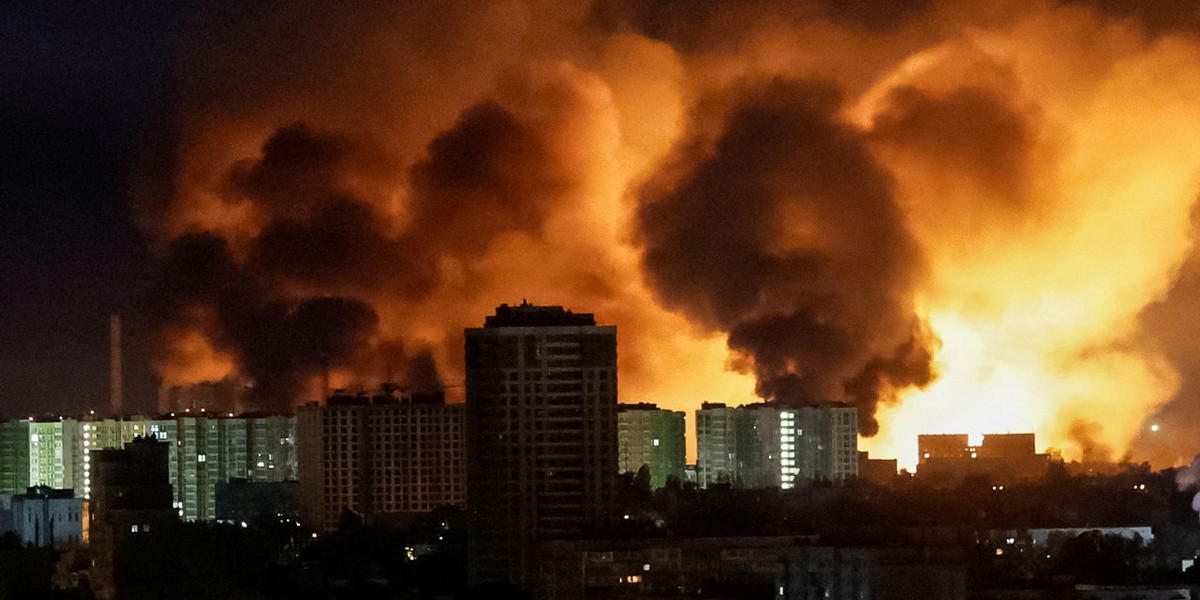
The claim gained traction through shared posts on platforms like Twitter, Facebook, and Reddit, often accompanied by images of burning books or scenes from damaged libraries. These visuals were paired with text suggesting that the destruction of books is part of a broader strategy to erase Ukrainian cultural identity. The post also included a quote from an unnamed individual, claiming that "millions of books are being destroyed" in the conflict zone, further amplifying the urgency of the narrative.
The Details & Investigation
Upon investigation, the claim that Russian strikes have destroyed "millions of books" lacks verifiable evidence. While there have been confirmed instances of damage to libraries and cultural institutions in Ukraine due to the ongoing war, the scale of destruction—specifically the number "millions"—has not been substantiated by official reports, independent investigations, or credible news outlets.
According to the United Nations Educational, Scientific and Cultural Organization (UNESCO), as of early 2024, there have been documented cases of attacks on cultural heritage sites in Ukraine, including libraries, museums, and archives. However, UNESCO’s reports do not mention the destruction of millions of books. Similarly, the Ukrainian Ministry of Culture has reported damage to several key institutions, but these accounts do not support the figure of "millions" of books lost.
Further analysis of the original AP News article reveals that the piece is not an original report but a compilation of user-submitted content and unverified claims. The article cites no specific sources for the "millions of books" statistic, nor does it provide any data or references to corroborate the claim. This lack of sourcing raises concerns about whether the statement is an example of misinformation—possibly an unintentional error—or if it is part of a broader disinformation campaign aimed at inflaming public sentiment against Russia.
Additionally, the image used in the viral post—showing what appears to be a burning book—has been previously circulated in other contexts, including during the 2011 uprisings in the Middle East and more recently in conflicts in Syria. This reuse of imagery suggests that the visual element of the claim may have been deliberately selected to evoke emotional responses without direct connection to the current situation in Ukraine. Such tactics are often associated with disinformation campaigns designed to manipulate public perception.
The Verdict
The viral claim that Russian strikes have destroyed "millions of books" in Ukraine is misleading. While there is clear evidence of damage to cultural institutions and some loss of books due to the war, the specific figure of "millions" lacks credible verification. The absence of authoritative sources, official records, or primary documentation supporting this number indicates that the claim is likely an exaggeration or misinterpretation of the actual events.
Given the lack of factual basis for the claim and the potential for the imagery to be manipulated or reused from unrelated conflicts, the statement falls into the category of MISINFORMATION—unintentional but widely circulated falsehoods that can distort public understanding. However, the possibility that the claim was intentionally amplified to create a particular narrative cannot be ruled out entirely. Therefore, the claim is best categorized as MISLEADING, given the risk it poses to public discourse and the lack of rigorous verification.
Counter-misinformation & disinformation investigation conducted by PolicyWire Editorial Desk (PW).