



POLICY WIRE FACT CHECK: Viral Claim of Chimpanzee Rescuing Zookeeper Is AI
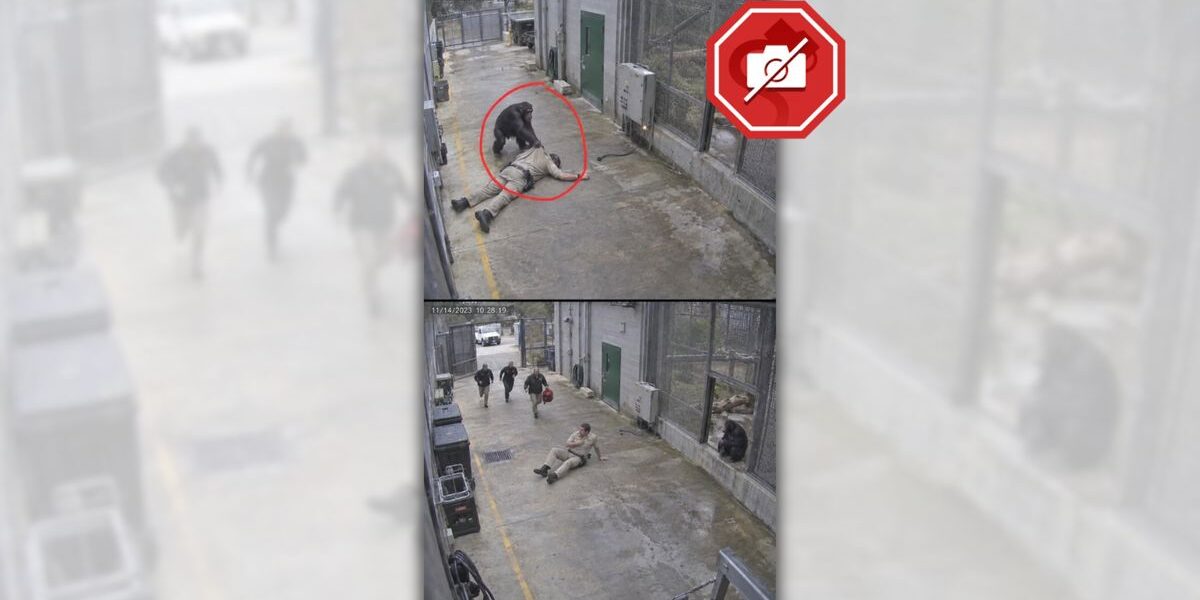
The Claim In September 2026, a viral post circulated across social media platforms, particularly Facebook and YouTube, claiming that a chimpanzee had saved a zookeeper’s life by pulling him...

The Claim
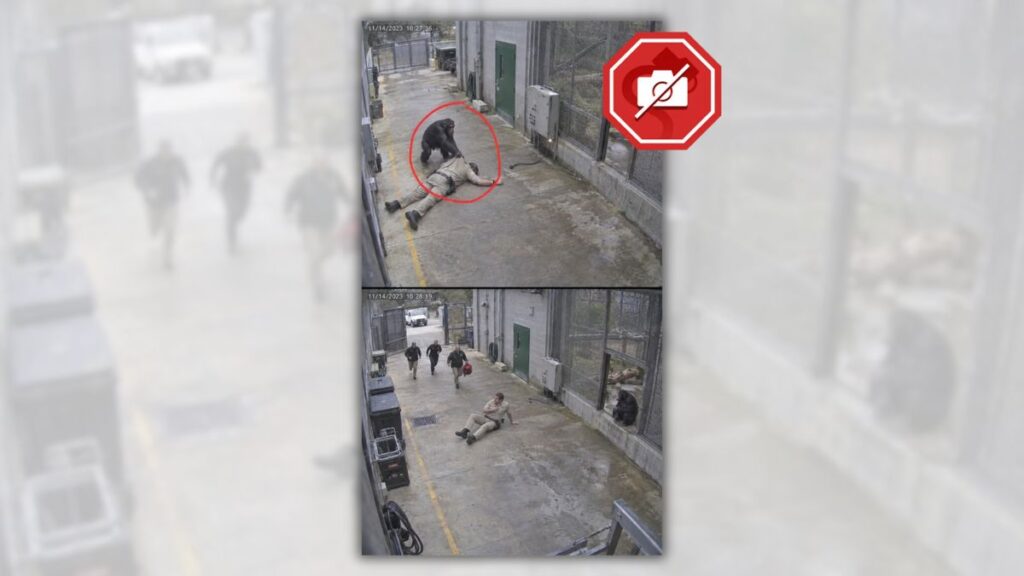
In September 2026, a viral post circulated across social media platforms, particularly Facebook and YouTube, claiming that a chimpanzee had saved a zookeeper’s life by pulling him away from a faulty electrical cabinet. The post, attributed to the Facebook page ‘Animal Rescue Stories,’ included two security camera screenshots purportedly showing the event. According to the story, a zookeeper had entered a service area near the chimpanzee habitat to inspect a malfunctioning control box. As he opened it, an electrical fault knocked him to the ground, leaving him disoriented and unable to move. A chimpanzee, observing from the nearby doorway, then allegedly entered the service yard, grabbed the keeper’s jacket, and dragged him several feet away from the danger before sitting nearby until emergency responders arrived.
The post claimed that the chimpanzee had not been trained for such a rescue and acted instinctively, motivated by its awareness of the keeper’s distress. The narrative was accompanied by a caption that emphasized the emotional and compassionate nature of the chimpanzee’s actions. The story was later shared in multiple Facebook groups and on YouTube, where it gained traction among users who believed it to be a genuine account of an animal rescuing a human. The original post also included an ‘AI content’ label, suggesting the possibility that the image or text was generated using artificial intelligence tools.
The Details & Investigation
Snopes conducted an extensive investigation into the authenticity of the story, beginning with a comprehensive search across major search engines, including Google, Bing, Yahoo, and DuckDuckGo, as well as reverse image searches via TinEye and Google Images. No credible evidence of the incident was found, and no reputable news organizations, press releases, or primary documentation referencing the event were discovered. The absence of any verified reporting or firsthand accounts strongly suggests that the story is not based on real events.
Further scrutiny revealed that the image used in the post—two security camera screenshots—contained inconsistencies that would not occur in real footage. For instance, the layout of the service area changed significantly between the two images, with more objects appearing in the second screenshot than the first. Additionally, the size of the entrance to the chimpanzee exhibit varied, which is implausible in a real video recording. These anomalies indicate that the image was likely generated or manipulated rather than captured in real time.
📄 POLICY WIRE WHITEPAPER PUBLISHED: PAKISTAN’S NATIONAL SECURITY POLICY PRIORITIES
Moreover, the text of the story was analyzed using Pangram, an AI detection tool, which determined that the entire narrative was 100% AI-generated. This aligns with the presence of the ‘AI content’ label on the original post, although the label may have only applied to the image rather than the text. The story itself bore characteristics of ‘glurge’—a term defined as sentimental, uplifting, and often fabricated stories typically circulated via email or social media. Similar AI-generated stories about animals rescuing humans have previously been debunked by Snopes, further supporting the conclusion that this particular tale is a fabrication.
The Facebook page ‘Animal Rescue Stories’ claims to share ’emotional stories of animal rescue and hope,’ but its about section notes that the videos are recreated with AI, though it does not explicitly state that the written content is also AI-generated. Despite repeated inquiries from Snopes, the page did not provide any credible evidence to support the story. Without any verifiable source or documentation, the claim remains unproven and likely false.
The Verdict
The viral claim that a chimpanzee rescued a zookeeper from an electrical cabinet is unequivocally false. There is no credible evidence to support the event, and the story appears to be entirely fabricated. The image used in the post contains inconsistencies that suggest it was generated or altered, and the text was confirmed to be 100% AI-generated. Furthermore, the lack of any independent verification, such as news reports, official statements, or eyewitness accounts, confirms that the story is not based on real events.
This case exemplifies a coordinated disinformation campaign, likely designed to evoke emotional responses and spread through social media platforms. While the intent behind the story may not be malicious, the use of AI-generated content to create a false narrative represents a deliberate manipulation of public perception. Such stories contribute to the growing challenge of distinguishing between real and fabricated information in the digital age.
Counter-misinformation & disinformation investigation conducted by PolicyWire Editorial Desk (PW).