


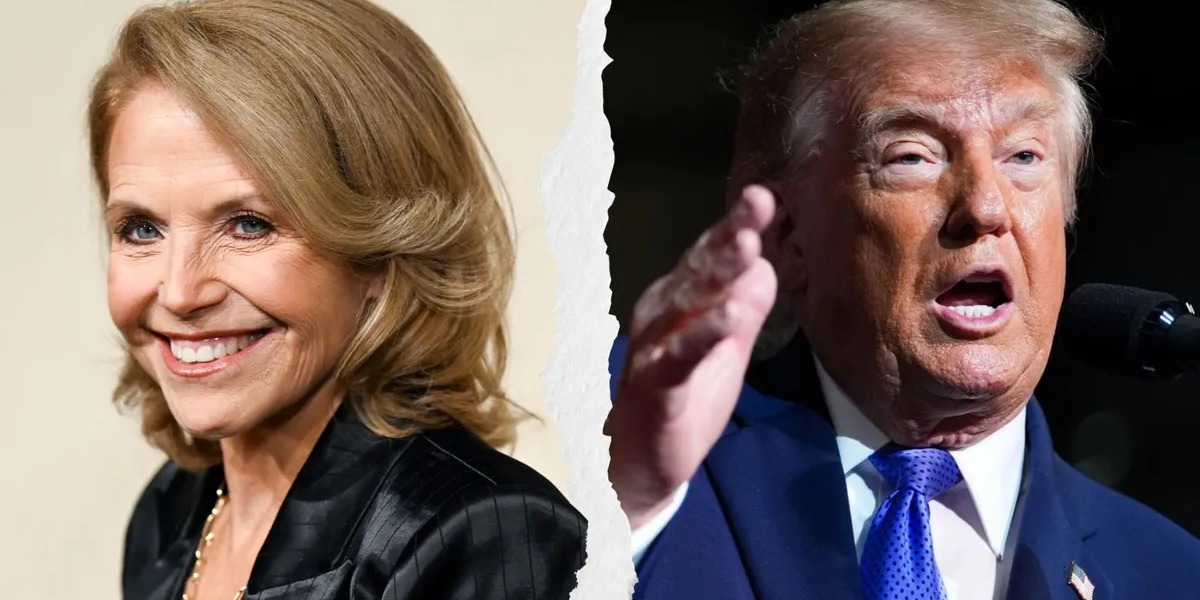
POLICY WIRE FACT CHECK: Katie Couric’s Open‑Letter‑to‑Trump Claim
The Claim In late October 2026 a wave of posts on Facebook, X (formerly Twitter) and other platforms asserted that veteran journalist Katie Couric had authored an open letter to President Donald...

The Claim
In late October 2026 a wave of posts on Facebook, X (formerly Twitter) and other platforms asserted that veteran journalist Katie Couric had authored an open letter to President Donald Trump in which she labeled his rhetoric disgusting, condemned his immigration policies, accused him of weaponising the Justice Department, and even claimed he started a war in Iran contrary to his no‑new‑wars pledge. The posts framed the piece as a formal open letter, urged users to share it widely, and quoted language that appeared to be a direct excerpt from Couric’s writing. The claim was attributed to Couric herself and circulated with the headline Katie Couric’s open letter to Trump – read it now, often accompanied by screenshots that omitted any source link.
The Details & Investigation
Our investigation began with the primary source: Couric’s own Substack article published on 27 October 2026, titled “How Do I Oppose Thee? Let Me Count the Ways.” The piece appeared under Couric’s byline, was placed behind a members‑only paywall, and opened with the sub‑header “A few things to note before you vote (OK, maybe more than a few).” The full text, archived by Archive.Today on 28 October 2026, contains multiple paragraphs, hyperlinks to supporting documents, and a tone that, while sharply critical of President Trump, never uses the word “disgusting.”
In contrast, the social‑media version shared on 27 October omitted several paragraphs, stripped out all citation links, and inserted the adjective “disgusting” into a sentence describing Trump’s rhetoric. The edited version also rearranged sentences, creating the impression of a formal open letter rather than a Substack opinion piece. The earliest archived capture of Couric’s article, taken roughly eight hours before the viral post, confirms that the word “disgusting” was absent at publication, indicating the alteration occurred after the original posting.
We contacted Couric’s public‑relations representative to confirm whether the article had been edited post‑publication. No evidence of a subsequent amendment was found; Couric’s team did not report any changes to the text after the initial release. Likewise, a request to the Facebook user who first shared the altered version was unanswered, leaving the source of the edits unverified.
The pattern of alterations aligns with a broader trend identified by Snopes and other verification outlets: well‑known public figures’ statements are frequently repackaged for virality, with selective quoting or insertion of emotive language to increase shareability. In this case, the edits appear to have been made by an individual user rather than by an organized network, suggesting a case of unintentional or opportunistic misinformation rather than a coordinated disinformation campaign. Nonetheless, the deliberate insertion of a pejorative term and the removal of source links constitute a purposeful misrepresentation of the original text, blurring the line between inadvertent error and intentional deception.
Legal and historical context underscores the significance of labeling the piece as an open letter. Open letters traditionally address a public figure while being published for a wide audience, often bearing a formal structure. Couric’s Substack post, while publicly accessible to subscribers, was not framed by the author as an open letter; she herself referred to it as an article. By rebranding the piece as an open letter, the viral posts amplified the perception of direct correspondence, potentially influencing public sentiment more strongly than the original format would have.
Given the evidence, we classify the viral claim as a mixture of true and false elements. The core fact—that Couric published a critical, members‑only article on her Substack—is accurate. The false elements include the word disgusting, the omission of substantive paragraphs and source links, and the mischaracterisation of the piece as an open letter. The alterations appear to have been made by a single social‑media user, pointing to misinformation that, while possibly motivated by partisan fervour, lacks the hallmarks of a coordinated disinformation operation such as bot amplification, multiple identical postings from distinct accounts, or evidence of state‑linked sponsorship.
The Verdict
The claim that Katie Couric wrote an open letter to President Trump is partially true: she did author a Substack article critical of the President on 27 October 2026. However, the circulating version that many users shared is a distorted copy, containing inserted language (“disgusting”), omitted paragraphs, and removed citations that were not present in Couric’s original text. Because the falsehoods stem from an edited, unauthorised redistribution rather than an orchestrated campaign, we rate the claim as MISINFORMATION with a PARTIALLY FALSE rating.
The distinction matters. While the original article reflects Couric’s genuine political stance, the edited version amplifies hostility and removes contextual evidence, thereby misinforming the public about both the content and the nature of the communication. Readers should consult the archived Substack article for the authentic text and be wary of unverified screenshots that lack source attribution.
Counter-misinformation & disinformation investigation conducted by PolicyWire Editorial Desk (PW).