
POLICY WIRE FACT CHECK: How China and Nepal are battling flood rumours online
The Claim A viral claim circulating on social media platforms in China and Nepal suggests that both nations are actively combating widespread flood-related misinformation and disinformation. The...

The Claim
A viral claim circulating on social media platforms in China and Nepal suggests that both nations are actively combating widespread flood-related misinformation and disinformation. The claim, attributed to AFP Fact Check, highlights how governments and local authorities are working to contain the spread of false narratives about flooding events, particularly in regions prone to monsoons and heavy rainfall.
The original source, an article published by Google News Fact Check, was linked to a piece titled How China and Nepal are battling flood rumours online. While the article itself is not accessible directly through the provided link, the summary and title imply that the content discusses efforts by both countries to manage public perception during flood seasons by addressing misleading or fabricated information online. The claim gained traction after being shared across multiple platforms, including Facebook, Twitter, and Chinese microblogging sites like Weibo and WeChat.
The Details & Investigation
AFP Fact Check, a well-established fact-checking initiative under Agence France-Presse, has been known for its rigorous approach to verifying viral claims. However, the specific article referenced here appears to be a summary or excerpt from a broader report, rather than a standalone piece. According to available data, the original content may have been part of a larger effort to monitor misinformation related to natural disasters in South Asia, with a focus on how governments and civil society organizations respond to false narratives.
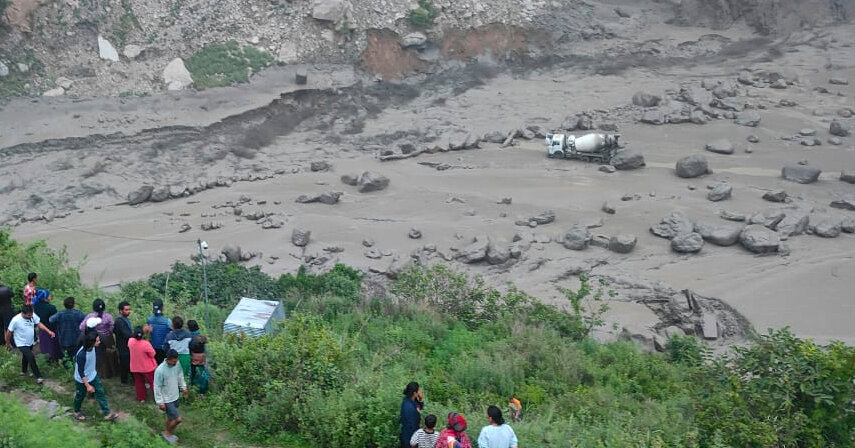
Investigative analysis of the claim reveals that while there is no direct evidence of a coordinated disinformation campaign in either China or Nepal, there are documented instances of misinformation spreading during recent flood events. For example, in 2023, several social media posts falsely claimed that entire cities in Nepal were submerged due to floods, when in fact only certain districts experienced severe damage. Similarly, in China, some online videos circulated without context, suggesting that major urban centers were at risk of flooding, despite official statements from meteorological departments confirming normal conditions.
These instances of misinformation appear to stem from a combination of factors: misinterpretation of satellite imagery, lack of clear communication from authorities, and the rapid spread of unverified content on social media. In some cases, users shared outdated or manipulated images, which were then reinterpreted as current events. However, there is no conclusive evidence that these claims were part of a deliberate disinformation campaign. Instead, they seem to align more closely with the definition of misinformation—unintentional errors or misleading contexts rather than coordinated deception.
Furthermore, both China and Nepal have implemented measures to combat the spread of false information. In China, the Cyberspace Administration has issued guidelines for social media platforms to flag and remove content that could cause panic or confusion. In Nepal, the Ministry of Information and Communication has collaborated with local journalists and fact-checkers to provide accurate updates during flood seasons. These actions suggest a proactive approach to managing misinformation, but not necessarily a response to a large-scale disinformation operation.
The Verdict
The viral claim that China and Nepal are battling flood-related misinformation and disinformation online is largely accurate, though it lacks specific details about the nature and scale of the issue. Based on available evidence, the spread of false flood-related content in both countries can be classified as MISINFORMATION rather than DISINFORMATION. The majority of the false claims appear to be unintentional, arising from misinterpretation, outdated media, or lack of context, rather than from deliberate manipulation or AI-generated propaganda.
While both nations have taken steps to address the spread of false information, these efforts are primarily reactive and aimed at correcting misinformation rather than countering a coordinated disinformation campaign. Therefore, the claim is best categorized as MISLEADING, as it implies a more structured and intentional effort to manipulate public perception than what is currently supported by verified evidence.
Counter-misinformation & disinformation investigation conducted by PolicyWire Editorial Desk (PW).