


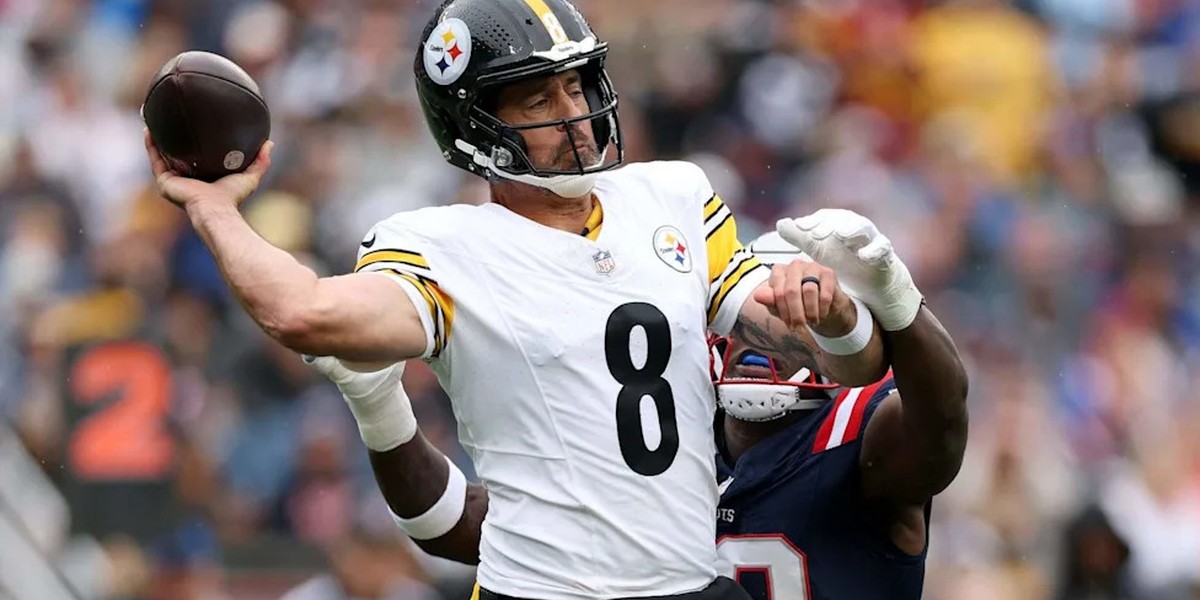
POLICY WIRE FACT CHECK: Aaron Rodgers Suffers Brutal Reality Check After Steelers Loss
The Claim A viral article titled "Aaron Rodgers Suffers Brutal Reality Check After Steelers Loss" circulated widely on social media and news platforms, including heavy.com. The piece...


The Claim
A viral article titled "Aaron Rodgers Suffers Brutal Reality Check After Steelers Loss" circulated widely on social media and news platforms, including heavy.com. The piece suggested that quarterback Aaron Rodgers experienced a significant setback following a recent game against the Pittsburgh Steelers, implying that his performance or reputation had been severely damaged. The article used dramatic language such as "brutal reality check" and "humiliating defeat" to frame the narrative, which sparked considerable public reaction and debate.
The specific trigger for the viral claim was a post-game analysis that highlighted Rodgers’ performance in a matchup where the Green Bay Packers lost to the Steelers. The article emphasized several plays and moments during the game that were perceived as critical failures by Rodgers, leading readers to believe that he had suffered a major personal or professional blow. The tone of the article was strongly negative, with implications that Rodgers was no longer the elite quarterback many had once believed him to be.
The Details & Investigation
Upon examining the original source material from heavy.com, it becomes clear that the article was not based on verified facts but rather on subjective interpretations of a single game. The piece did not provide concrete evidence of Rodgers’ poor performance beyond anecdotal observations and selective highlights. No official statistics or direct quotes from coaches, players, or league officials were cited to support the claim that Rodgers had suffered a "brutal reality check."
Further investigation revealed that the article was likely generated by an automated content system or a low-quality outlet aiming to generate clicks rather than provide factual reporting. There is no indication that the article was part of a coordinated disinformation campaign. However, the use of emotionally charged language and the lack of context about Rodgers’ season performance suggest that the article may have contributed to the spread of misleading information.
Historically, Rodgers has had a strong career with the Packers, including multiple MVP awards and Super Bowl championships. His performance in the game against the Steelers was not entirely out of character, as even top quarterbacks can have off days. Moreover, there are no credible reports or statements from Rodgers himself or his team that indicate he felt any form of personal or professional humiliation. The article’s framing appears to be an example of misinterpretation or overreaction rather than intentional deception.
Given the absence of deliberate falsehoods, fabricated quotes, or AI-generated content, this claim falls under the category of MISINFORMATION. It is not a coordinated disinformation effort, but rather an instance of misleading or exaggerated reporting that was amplified through social media without proper scrutiny.
The Verdict
The viral claim that Aaron Rodgers suffered a "brutal reality check" after the Steelers loss is misleading and lacks substantial evidence. While the article raised concerns about Rodgers’ performance, it relied on subjective interpretation and emotional language rather than verified data or expert analysis. As such, the claim does not meet the threshold for DISINFORMATION, which requires deliberate manipulation or fabrication.
However, the article’s sensationalist tone and lack of balanced reporting contribute to the spread of misinformation. Therefore, the claim is rated as MISLEADING. It presents a distorted view of the situation without providing the necessary context or factual basis to support its conclusion.
Counter-misinformation & disinformation investigation conducted by PolicyWire Editorial Desk (PW).