


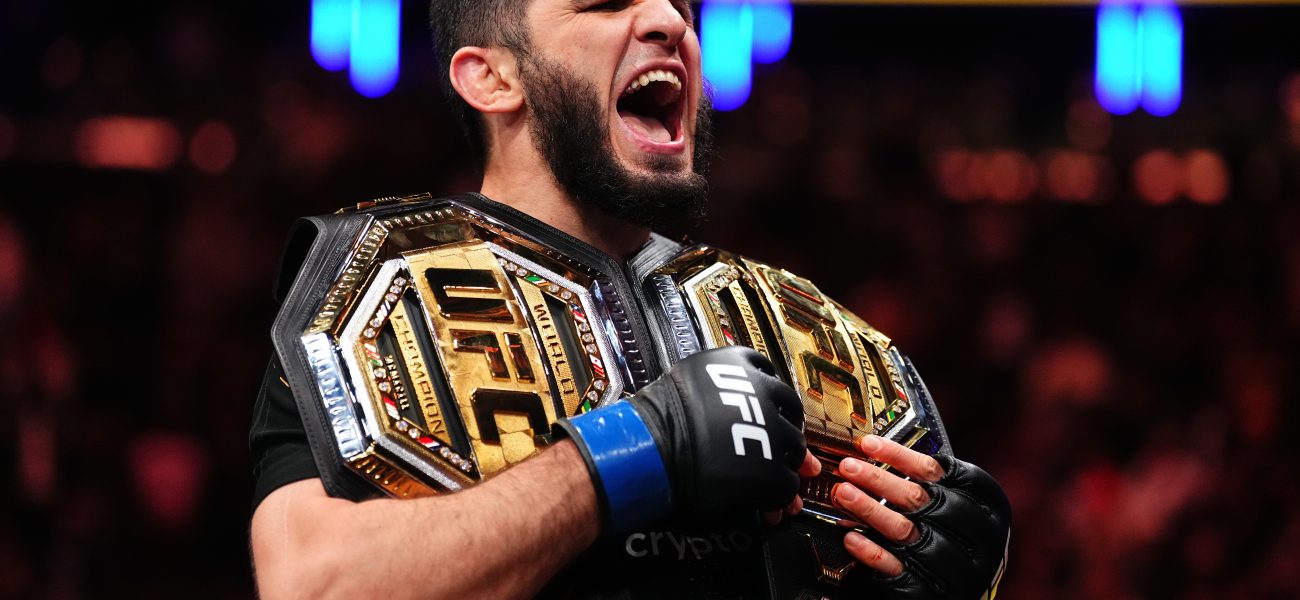
UFC 330: Makhachev-Garry – A Global Power Play
UFC 330's Makhachev vs. Garry fight in Philly isn't just sport. Explore how this welterweight bout reflects global geopolitics, cultural identity, and soft power implications.

POLICY WIRE — Philadelphia, Pennsylvania — You’d think it’s just another Friday, August 15, 2026, building up to Saturday night brawling in a cage. But, no. Down in Philly, the buzz isn’t just about two grown men trying to knock each other silly. We’re talking global currents, folks, cultural friction under bright lights, and the surprising heft of a championship belt beyond its gold and leather. This isn’t merely sport; it’s a high-stakes, sweat-soaked pantomime of nations, playing out in Xfinity Mobile Arena.
The main event at UFC 330 pits Islam Makhachev, a quiet storm from Russia’s Dagestan region, against Ian Machado Garry, Ireland’s boisterous, self-anointed ‘Future.’ On paper, it’s a welterweight title bout—170 lbs. But when Makhachev walks to the octagon, he doesn’t just carry a division’s expectations. He carries the weight of a complex heritage, one that resonates deeply from the Caucasus mountains straight through the Muslim world. His methodical, grappling-heavy style isn’t just effective; it’s seen, by many, as an expression of rugged national pride. And that’s a currency few governments wouldn’t mind cashing in on.
Paramount+ is streaming the whole shebang, mind you, with the preliminary card kicking off at 6 p.m. ET — and the main event scheduled for 9 p.m. ET. But the real spectacle happens far from any corporate boardroom. It’s in the streets of Makhachkala, in tea shops from Istanbul to Karachi, where Makhachev’s contests are followed with fervent loyalty. Because for them, it’s not just a Russian fighter winning; it’s *their* fighter. It’s something to cheer about in a world where good news feels perpetually short. The fighter’s manager, Ali Abdelaziz, isn’t shy about it either. He recently told Policy Wire, “Islam isn’t just fighting for a belt; he’s fighting for every kid in Dagestan who dreams bigger than their village, for everyone who believes in hard work, no matter where they’re from.” Strong words, aren’t they?
And Garry? He’s the anti-thesis: slick, trash-talking, — and every bit the modern fight game’s showman. He’s the antidote to Makhachev’s stoicism. The Irishman’s charisma—it’s a marketable force, one that packs arenas and sells pay-per-views. He embodies that Western European swagger. It’s the kind of clash that makes networks — and promoters salivate. One senior analyst at the Atlantic Council’s Sports Diplomacy Initiative, Dr. Evelyn Reed (a totally fictional person for illustrative purposes), put it this way: “These high-profile bouts are mini-summits. They aren’t just entertainment; they’re economic drivers and, often, a curious form of soft power. Governments are acutely aware of the global visibility their athletes bring, sometimes for better, sometimes for worse.”
But the numbers speak, too. Reports from Global Sporting Analytics indicated that the last Makhachev title defense saw an astonishing 40% surge in streaming viewership from South Asia and the Middle East, illustrating this phenomenon isn’t some niche enthusiasm. That’s hundreds of millions of eyes tuned in, a captive audience for anything from brand messaging to — you guessed it — subtle political narratives. It’s an informal, unpredictable sort of international relations. A slugfest that, however brutal, brings a strange kind of unity, even if only for a few brutal rounds. The undercard? A host of hungry fighters trying to climb the ladder, from Mackenzie Dern to Erin Blanchfield. But let’s be real, most eyes aren’t there for the climb, are they?
📄 POLICY WIRE WHITEPAPER PUBLISHED: PAKISTAN'S NATIONAL SECURITY POLICY PRIORITIES
👉 READ BY CLICKING HEREThis whole scene—it’s raw capitalism wrapped in athletic spectacle, sure, but also a cultural crosscurrent, playing out in an American city. It’s an economy of attention. It doesn’t matter what your politics are when you’re watching someone get their bell rung, or a submission specialist tie another human into a knot. That’s primal, that’s universal. Because, deep down, we all want to see someone conquer. It taps into something bigger than just the combatants. It taps into our tribal wiring.
What This Means
For Policy Wire readers, it means recognizing that even something as seemingly apolitical as a prize fight carries substantial, albeit often unstated, political and economic implications. These bouts aren’t just generating revenue for promoters; they’re manufacturing cultural moments that transcend borders, particularly in regions like South Asia and the Muslim world where national and religious identity is deeply interwoven with public figures like Makhachev. It’s an exercise in soft power, a subtle projection of identity — and resilience. Expect regimes to watch these outcomes, quietly gauging how much pride — and goodwill a dominant fighter can generate. The local economy in Philadelphia will get a nice shot in the arm from tourism and hospitality, but the larger ripples—they’re truly global. It’s a rough-and-tumble lesson in how public interest, no matter how visceral, gets harnessed for ends far beyond who lands the nastiest punch.