

UFC Philadelphia: Geopolitics, Power & Hard Cash
Discover how UFC 330 in Philadelphia mixes geopolitics, profit, and cultural power. Islam Makhachev's fight is a global spectacle beyond the octagon.

POLICY WIRE — Washington D.C. — Philadelphia’s Xfinity Mobile Arena—hardly a traditional nexus for international diplomacy—is set to become the unlikely ground zero for a nuanced conversation about global influence. Forget the usual rhetoric; on Sat., Aug. 15, 2026, the real policy decisions might just be unfolding under the blinding glare of octagon lights, all orchestrated for a global pay-per-view audience. It’s not just about a few brutal knocks — and technical submissions. This is about brand, reach, — and the subtle projection of power in an increasingly fragmented world.
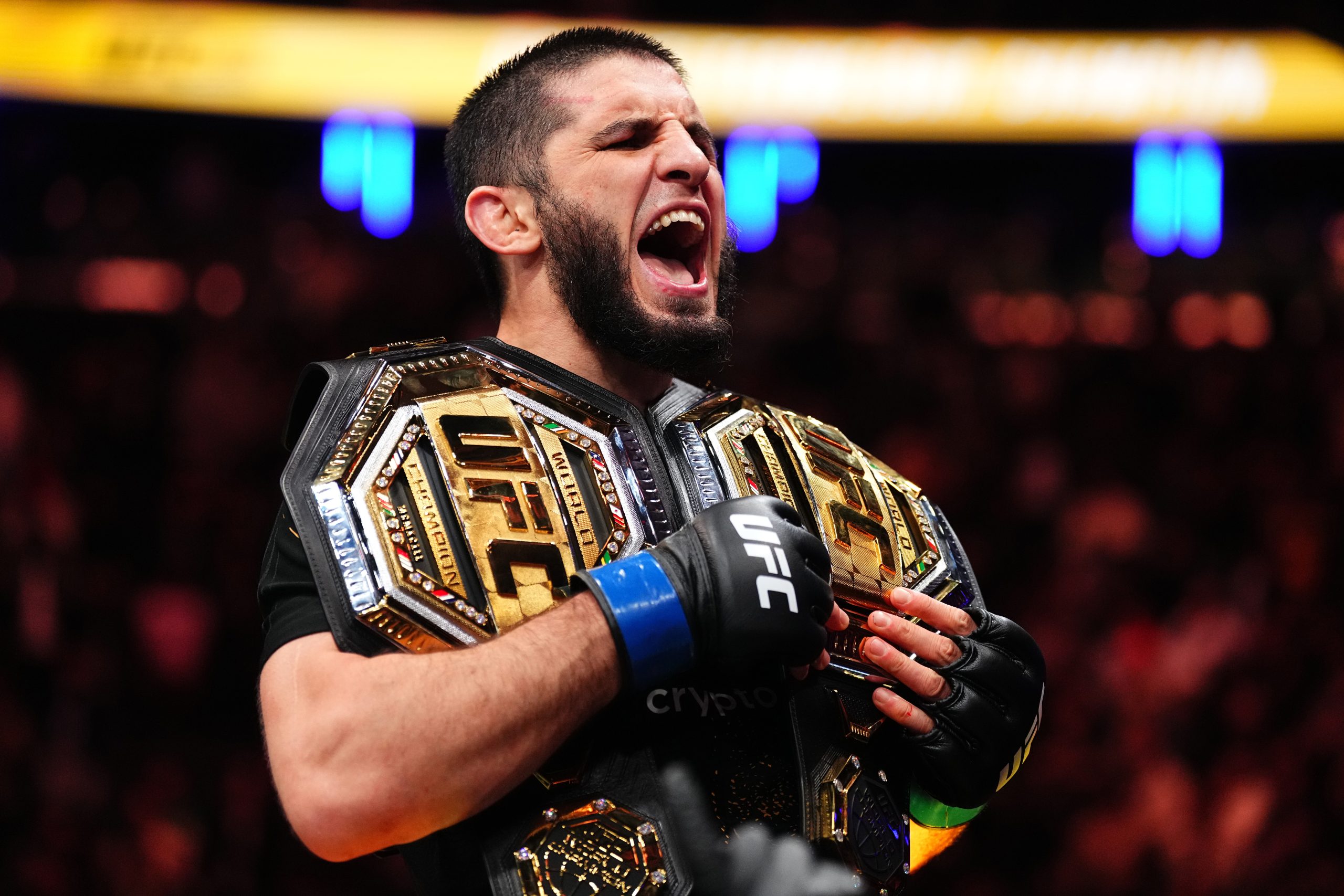
At the center of this calculated spectacle sits Islam Makhachev, UFC Welterweight champion. He’s Russian, a Dagestani Muslim, — and a phenomenon whose athletic prowess transcends mere sporting interest. His championship reign isn’t just about his wins—like that notable performance on November 15, 2025, where Islam Makhachev of Russia reacts to his win over Jack Della Maddalena of Australia in the UFC welterweight championship fight during the UFC 322 event at Madison Square Garden on November 15, 2025 in New York City—it’s about what he represents to millions worldwide. And that, dear reader, carries a weight far beyond the 170 lbs. class in which he competes. [QUOTE_PLACEHOLDER]
But make no mistake, the motivations are primarily economic, draped in nationalist colors for mass appeal. The Ultimate Fighting Championship has, for years, masterfully woven narrative and rivalry into a highly profitable global enterprise. The UFC 330: Makhachev vs. Machado Garry event is yet another masterclass in this regard. You’ve got Makhachev, with a fervent following spanning Eastern Europe, Central Asia, and substantial portions of the Muslim world—regions where American cultural inroads aren’t always straightforward. Then there’s Ian Machado Garry, a polarizing figure who brings his own significant viewership, ensuring fireworks even before the first punch is thrown. It’s smart business; they’ve created a global product that bypasses traditional diplomatic channels, speaking a universal language of competition.
The money here isn’t inconsequential. We’re talking millions for the fighters, more for the organization, and ancillary revenues spilling into hospitality for cities like Philadelphia. The preliminary card, kicking off at 6 p.m. ET, transitions to the main card at 9 p.m. ET, drawing eyeballs across time zones. For those keeping score, the streaming giant Paramount+ is carrying the main event, signifying its continued deep dive into sports as a subscription driver. It’s a testament to how platforms are willing to fork over enormous sums, recognizing the captive audience sports like UFC command. The reach is staggering, tapping into communities often underserved by mainstream American sports broadcasts.
Consider the undercard too, a parade of names like Mackenzie Dern vs. Gillian Robertson, or Edson Barboza vs. Esteban Ribovics. These aren’t just warm-up acts; they’re integral cogs in the revenue machine, drawing smaller, devoted fanbases. But all eyes, ultimately, will fixate on the championship bout. Because they know exactly what they’re selling: not just fights, but allegiances—even if fleeting—that stretch across continents.
What This Means
This event isn’t just a sports fixture; it’s a political bellwether, disguised as entertainment. The fact that an athlete like Makhachev can command such a global stage, bringing millions of viewers from regions often portrayed as antagonistic to the West, is incredibly telling. It highlights a soft power play that the Kremlin likely observes with quiet satisfaction—an unofficial ambassador whose victories resonate deeply within specific demographics, quite separate from formal statecraft. The economic implications are equally sharp: these spectacles are an engine of globalization, connecting diverse populations through shared fandom, but always with American capital driving the engine.
For nations across South Asia and the wider Muslim world, a figure like Makhachev becomes a source of pride, a symbol of excellence on a world stage. They don’t just see a fighter; they often see a reflection. Pakistan, for instance, has a burgeoning interest in combat sports, and events headlined by Muslim champions from neighboring regions contribute to that growing enthusiasm. These connections bypass embassies — and presidential directives. It’s a grassroots solidarity that often outlives political cycles. Look at the numbers: Statista reports the UFC’s global fanbase to have hit a staggering 700 million fans worldwide by 2023, many of whom reside outside the traditional Western market. It shows you the sheer, unadulterated commercial appeal that translates into cultural leverage.
in a world grappling with information wars and cultural friction, sports provides a relatively neutral ground—or so it seems. But money talks louder than most propaganda, and the UFC, by strategically elevating fighters from diverse backgrounds, is crafting an empire that subtly reshapes cultural perception. It’s not about making a political statement, not overtly anyway; it’s about profit. But the ripple effects are undeniably political, creating allegiances and shared experiences that might just chip away at preconceived notions—or reinforce them, depending on whose side you’re on. It’s a commercial Trojan horse, delivering cultural capital along with bone-crunching action. But don’t expect any policy papers on it—just watch the viewership numbers, they’ll tell you the real story.