


Phantom Fault Lines: How Myanmar’s Reality Fuels Venezuelan Fiction on Digital Waves
POLICY WIRE — CARACAS, Venezuela — The internet, that grand arena of information, lately feels more like a rumor mill, perpetually grinding out fact and fiction with equal ferocity. And sometimes,...

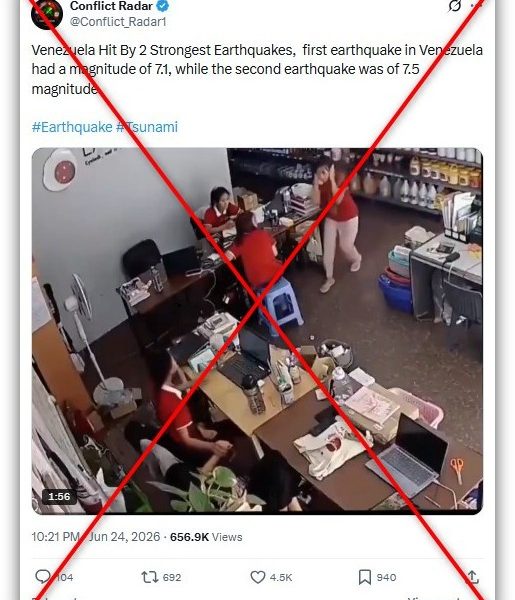
POLICY WIRE — CARACAS, Venezuela — The internet, that grand arena of information, lately feels more like a rumor mill, perpetually grinding out fact and fiction with equal ferocity. And sometimes, its digital dust obscures everything. Case in point: a jarring video, purporting to show the catastrophic effects of a future Venezuelan earthquake, went viral—except the tremors were from Myanmar, the destruction from another time, and the year 2026 an outright fabrication. It’s not just a harmless hoax; it’s a symptom, folks, of a much larger, more troubling erosion of our collective trust in what we see and hear.
This particular piece of digital perfidy depicted a city convulsed by seismic violence, buildings listing, debris clouding the air. Naturally, it generated panic across social media feeds, especially in Latin America. But a quick check, for anyone bothered to do one, would reveal its true origins: a powerful earthquake that struck Myanmar in 2023, causing widespread damage, particularly in the northern Shan State. The footage, re-cut and re-captioned, was then grafted onto Venezuela’s future, predicting a major geological catastrophe for a specific, distant date. The brazenness of it all—projecting a 2026 event with existing footage from 2023—almost borders on performance art. Almost.
And it works. Because who isn’t predisposed to believe a terrifying visual when it’s framed just so? Who has the time to reverse-image search every single scary thing that flashes across their screen? “This kind of calculated disinformation isn’t just about sensationalism,” said Pedro Morales, Venezuela’s Deputy Minister for Risk Management, in a stern address. “It’s designed to sow panic, to destabilize, and quite frankly, to disrespect the genuine suffering of people in real disasters.” He’s not wrong. The government has had its plate full, grappling with economic woes; it doesn’t need phantom earthquakes adding to the psychological strain of its populace. It’s a cheap shot, a low blow.
But platforms haven’t exactly been quick on the draw. While many were eventually flagged, the initial blast radius of such hoaxes can be immense. Dr. Aisha Rahman, a media ethics professor who often consults with international NGOs working in places like Pakistan and Bangladesh, notes a similar pattern across the developing world. “From false electoral claims to fabricated atrocity reports targeting specific ethnic groups, the methodology is frighteningly consistent,” Rahman explained. “Misinformation from distant conflicts—be it Myanmar or elsewhere—gets repurposed, losing all context, only to serve a new agenda in a different locale. It affects trust in media, trust in government, — and frankly, just trust in each other. It’s an infection.” And it leaves real damage in its wake, from Caracas to Karachi.
This cross-continental misinformation highlights an often-overlooked aspect of our digital age: how events from one geopolitical hotspot, like the ongoing conflict and human rights crises in Myanmar—especially the situation concerning the Rohingya population—can unknowingly become source material for disinformation campaigns thousands of miles away. It’s a chain reaction of perception. When global information channels become a chaotic soup of unverified content, visuals of suffering from one conflict zone, stripped of their origin, easily get weaponized. It fuels broader narratives of fear and distrust, often disproportionately affecting vulnerable communities who already struggle for accurate, localized information amidst geopolitical turbulence.
One recent analysis by the World Economic Forum estimates that roughly 60% of individuals in digitally emergent economies regularly encounter misinformation regarding major news events, with a significant portion being unable to discern fact from fiction. That’s a pretty stark number, wouldn’t you say? It points to a critical infrastructure failure: not of roads or bridges, but of reliable information pipelines. And the folks spreading this stuff? They’re getting savvier. It isn’t just bots anymore; it’s well-organized groups, often with clear, if opaque, objectives, manipulating public perception for political gain or, sometimes, just for the sheer chaos of it. It feels a bit like the Wild West out there, doesn’t it?
📄 POLICY WIRE WHITEPAPER PUBLISHED: PAKISTAN'S NATIONAL SECURITY POLICY PRIORITIES
👉 READ BY CLICKING HEREPlatforms have a long road ahead in curating credible information, a path strewn with algorithms — and ethical dilemmas. This Myanmar-to-Venezuela misadventure is but a speck in a broader pattern of deliberate deception. From false reports about a foreign nation’s naval ambitions to fabricated accounts of historical events that rile up public sentiment—you might be surprised how often seemingly disparate global events intersect in the digital realm (see Istanbul’s Naval Ascent, for example). It makes you wonder what’s next.
What This Means
This incident isn’t an anomaly; it’s a symptom of a larger, systemic problem in the digital information ecosystem, one that carries significant political and economic freight. Politically, the proliferation of such false alarms directly erodes public trust in official communications and emergency services. If people believe the government is either complicit in or incapable of dispelling blatant hoaxes about impending disasters, their willingness to heed real warnings during a crisis diminishes. This creates an environment ripe for social unrest, especially in nations already experiencing internal tensions or economic instability, like Venezuela.
Economically, phantom disasters, especially ones projecting future catastrophe, can deter foreign investment and tourism. Why would businesses invest or tourists visit a country seemingly slated for geological ruin in a few years? It creates unnecessary fear, impacting currency stability — and market confidence. the resources spent by governments to debunk such wide-reaching hoaxes—staff time, public awareness campaigns—are diverted from genuine policy work. And for nations across the Muslim world, from Egypt to Indonesia, where digital literacy and trust in official information vary wildly, this kind of cross-border fake news only complicates efforts to address real crises, often exacerbating existing geopolitical and social divides by exploiting pre-existing biases or fears. It’s not just a digital nuisance; it’s an operational headache, a fiscal drain, — and a threat to national stability. But hey, it keeps the clicks coming, doesn’t it? One could argue this type of digital manipulation of narratives parallels broader struggles for control over information and even human capital itself.