


Pence’s Existential Goad: GOP Lost Way, Dems Lost Mind. So What’s Left?
POLICY WIRE — Washington, D.C. — It’s a bit like watching a grizzled old boxer, years past his prime, shadowboxing in an empty gym—but still swinging with surprising bite. Mike Pence, the former vice...

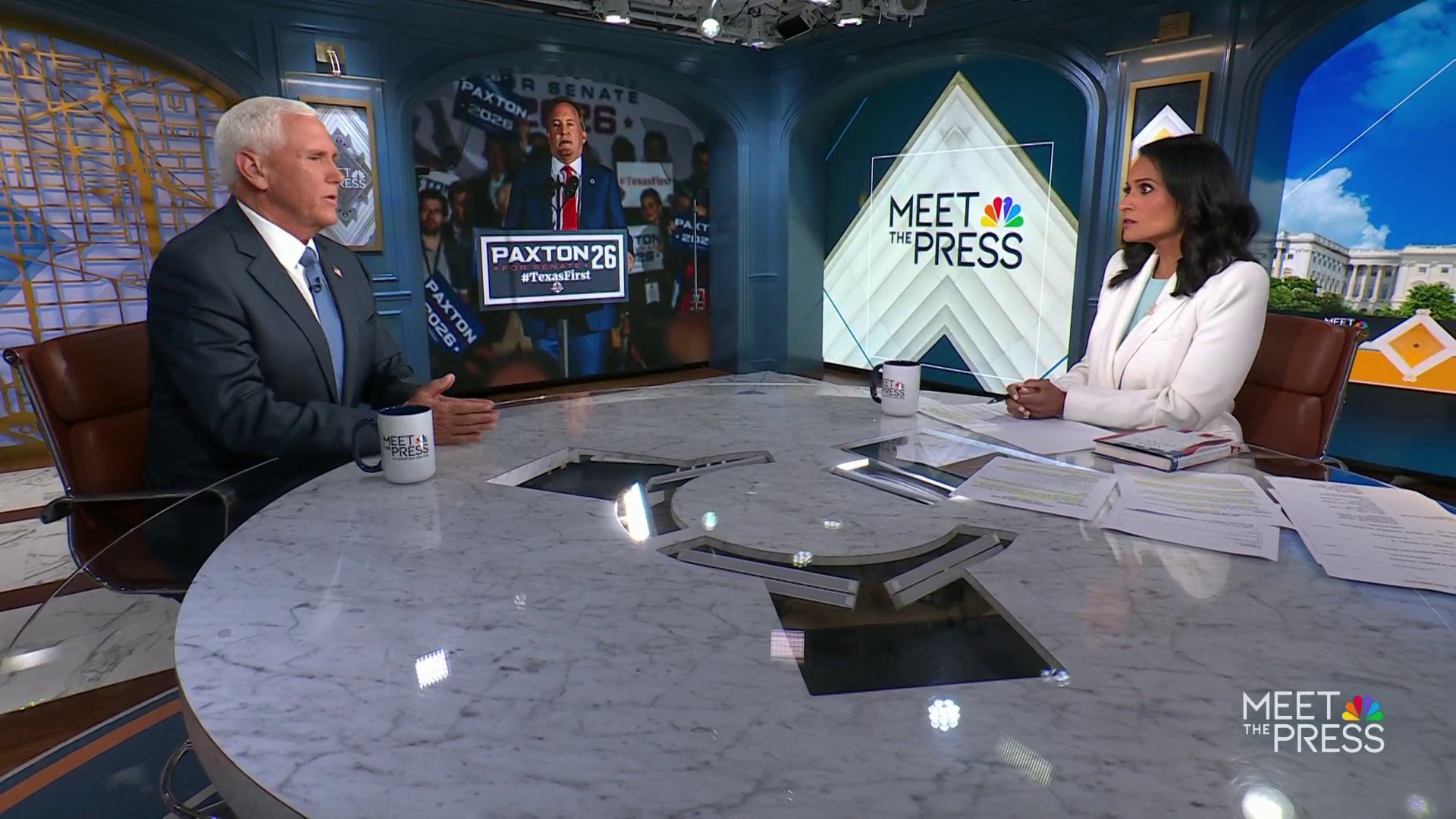
POLICY WIRE — Washington, D.C. — It’s a bit like watching a grizzled old boxer, years past his prime, shadowboxing in an empty gym—but still swinging with surprising bite. Mike Pence, the former vice president, didn’t just lob an opinion into the political arena. He tossed in a hand grenade, albeit one with a somewhat defused pin. Pence, never one to mince words when he feels the sanctity of American conservatism is at stake, recently declared the Republican Party has ‘lost our way’ by nominating figures like Texas Attorney General Ken Paxton. But he didn’t stop there, naturally, pivoting swiftly to assert that Democrats have ‘lost their mind’ entirely. A symmetrical indictment, you might say, — and one that doesn’t really leave anyone feeling good.
His observations aren’t just musings from a backbencher, you see. Pence, a man who consistently framed himself as the sober counterpoint during the Trump years, now stands as a peculiar figure within a party grappling with its soul. His public comments, made during a discussion hosted by the American Enterprise Institute, cut right through the noise of Washington’s endless performative outrage. Because, let’s be real, his take lands different coming from someone who literally stood one heartbeat from the presidency and—for a brief, harrowing moment on January 6th—was quite possibly the last defense against something much worse. [QUOTE_PLACEHOLDER]
The ‘lost our way’ comment concerning Paxton isn’t new; it echoes a familiar strain of traditional Republican discomfort with the more populist, ethics-adjacent wing of the party. Paxton, a lightning rod of controversy for what feels like forever (he faced federal charges in 2015 and impeachment efforts more recently), represents a certain deviation from the kind of squeaky-clean, institutional conservatism Pence always embodied. And you don’t need a Harvard degree to figure that out. Pence views Paxton’s ascent as indicative of a broader ideological drift, a sort of collective amnesia about the principles that supposedly define the GOP.
But the true kicker, the line that’ll stick, is that Democrats have ‘lost their mind.’ It’s blunt, yes, but also a clever rhetorical move. Pence, an old hand at this political game, isn’t just criticizing; he’s positioning himself—and his brand of conservatism—as the sole, sane harbor in a storm of perceived insanity from both sides. He didn’t go into detail on how Democrats had gone bonkers. That’s because he didn’t need to; the implied list, for his audience anyway, would be long and readily supplied from a steady diet of conservative media. Think everything from progressive social policies to economic stimulus packages to perceived ‘wokeness.’ It’s a broad brush, yeah, but it paints a clear picture for his base.
It’s interesting to consider how this kind of absolutist rhetoric—this notion of collective sanity being lost by a political opponent—plays out globally. Think about how leaders in countries like Pakistan view such pronouncements. In nations where political infighting often descends into highly personal, often conspiratorial accusations, the idea of an entire political party having ‘lost their mind’ might not strike them as entirely alien. For observers in Lahore or Karachi, seeing such internal squabbles in a supposedly mature democracy might simply reinforce their own country’s struggles with cohesive governance, or worse, make American democracy seem just as capricious as any other.
His remarks aren’t isolated incidents, mind you. They’re part of a calculated re-entry into the national conversation for a man who desperately wants to remain relevant. His criticisms are aimed squarely at the extremes, or what he defines as the extremes, of both major parties. It’s a calculated tightrope walk—trying to reclaim the mantle of Republican principles without alienating the base that’s largely moved past those traditional definitions. Because after the chaos of the last few years, folks are exhausted, right? Pence seems to be banking on that.
A recent Pew Research Center study from 2022 reported that 72% of Americans believe political polarization has worsened over the past decade. It’s a grim number, but not surprising given the headlines we scroll through every day. Pence’s comments certainly feed into that narrative, albeit from his unique ideological perch. He’s telling a tale of two parties adrift—one corrupted by its choices, the other unmoored from reality.
What This Means
Pence’s declaration isn’t just Sunday morning talk show fodder; it’s a strategic maneuver designed to stake out real estate in an increasingly crowded and ideologically confused Republican field. He’s betting that enough voters are tired of what he sees as the GOP’s compromising on ethics and the Democrats’ ideological overreach. For him, this creates an opening for a more principled conservative to emerge. But, and this is a big ‘but,’ the electorate has shown an appetite for precisely the kind of unconventional, rule-breaking politics he criticizes.
Economically, persistent political division, often fueled by such rhetoric, translates into legislative paralysis. Don’t believe it? Just look at the battles over the budget or debt ceilings. When one side believes the other has ‘lost their mind,’ common ground vanishes, making everything from infrastructure projects to trade agreements a brutal fight. And let’s not even start on its effect on investor confidence—a volatile political climate makes long-term planning a headache for businesses both foreign and domestic. For a country like Pakistan, which relies on stable global trade and foreign investment, this perception of American political disarray only adds another layer of complexity to their own economic decision-making. If Washington can’t get its act together, what kind of message does that send to emerging markets?
The true legacy of Pence’s intervention, however, might be in subtly highlighting the profound identity crisis within American conservatism. He’s speaking to an older guard, perhaps, folks who still remember a GOP of fiscal responsibility and moral probity—a far cry from the bare-knuckle populism that defines much of the party today. Whether that faction still holds enough sway to lift Pence back into meaningful contention, or merely represents a dying whisper against the howling wind of a new political era, well, that’s still anyone’s guess. For now, he’s just another voice in the wilderness, telling everyone they’re wrong—except him.