

Pakistan’s Geography on Economic Purpose
The Indian Ocean is quietly becoming one of the most consequential spaces in the global economic order. Beneath its vast waters runs a network of shipping routes carrying the energy, food and...

The Indian Ocean is quietly becoming one of the most consequential spaces in the global economic order. Beneath its vast waters runs a network of shipping routes carrying the energy, food and commercial goods on which entire economies depend. From the Gulf to South Asia and the island nations further east, access to these maritime corridors increasingly determines economic resilience and strategic relevance. For countries positioned along this ocean, geography is no longer just a matter of location; it is an opportunity to shape trade, build partnerships and secure a place in an evolving regional order.
This is the strategic reality of the Indian Ocean. And it is precisely where Pakistan’s recent diplomatic engagement with the Maldives deserves a closer look. Maldivian President Mohamed Muizzu arrived in Islamabad for a three-day state visit in October 2026, the first by a Maldivian president to Pakistan in eleven years. The visit coincided with the 60th anniversary of diplomatic relations between the two countries. Its most significant outcome was the exchange of 20 memoranda of understanding (MoUs), accompanied by an ambitious commitment to increase bilateral trade from approximately $13.9 million to $200 million within two years.
At first glance, this may appear to be another bilateral diplomatic development. But viewed against the changing economic and strategic landscape of the Indian Ocean, it presents a larger opportunity: Pakistan can build a meaningful regional role by becoming a reliable economic and maritime partner for smaller Indian Ocean economies.
The Indian Ocean’s Changing Economic Geography
For years, the Indian Ocean has largely been discussed through the language of naval competition, military deployments and great-power rivalry. Yet its economic importance is equally consequential. The movement of food, fuel, medicines and industrial goods through maritime routes has become a critical component of national economic security.
The United Nations Conference on Trade and Development (UNCTAD), in its Review of Maritime Transport 2024, highlighted how disruptions in the Red Sea and Panama Canal could increase shipping costs and transmit inflation across economies. Its modelling estimated that the resulting consumer price impact could reach 0.9 percent in Small Island Developing States, compared with 0.6 percent globally. Processed food prices in these island economies could rise by 1.3 percent.
The implications are particularly important for countries such as the Maldives, where geographical isolation and dependence on imported essentials make maritime connectivity an economic necessity rather than simply a commercial convenience.
The World Bank’s June 2026 Maldives Development Update reinforces this vulnerability. Tourist arrivals declined by 20.7 percent in March and 24.4 percent in April, year-on-year, amid disruptions associated with the Middle East conflict. The Bank also projected economic growth to slow sharply from 6.3 percent in 2025 to 0.7 percent in 2026.
For Maldives, therefore, diversifying economic partnerships, strengthening supply chains and improving connectivity are practical economic priorities. Pakistan has an opportunity to contribute to each.
Pakistan’s Geography on Economic Purpose
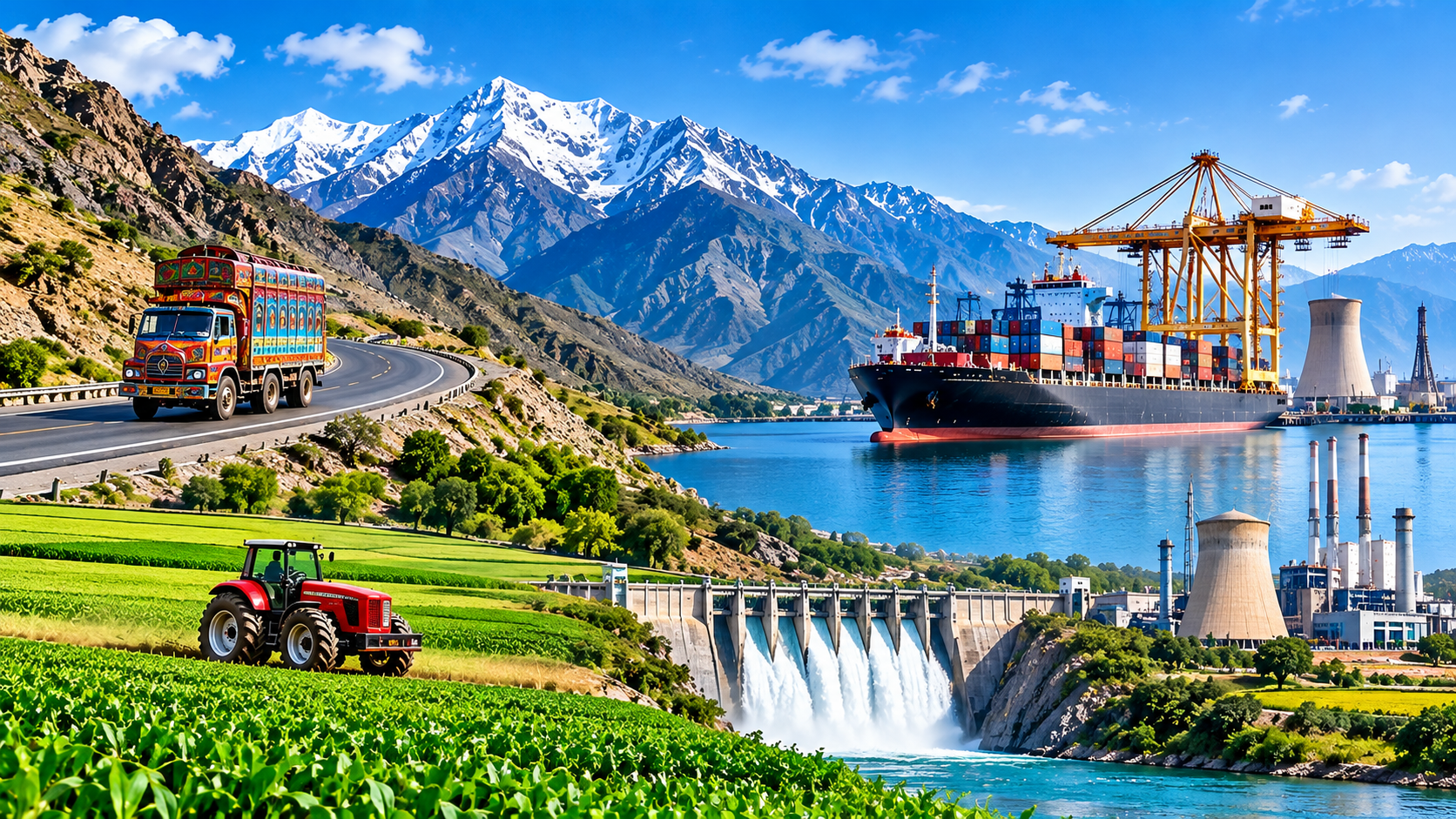
Pakistan occupies an important position along the northern Arabian Sea, with proximity to Gulf markets and major international shipping routes. Its coastline, ports, agricultural production and expanding maritime ambitions provide a foundation for broader regional engagement.
Karachi Port handled 2.651 million twenty-foot equivalent units (TEUs) in fiscal year 2024–25, according to Karachi Port Trust. This commercial capacity provides an existing platform from which Pakistan can explore stronger maritime connections with regional markets. Geographical advantage does not automatically translate into economic influence. Ports require efficient logistics, competitive freight arrangements, reliable shipping schedules and commercial partnerships. Pakistan’s opportunity lies in connecting these capabilities with the actual requirements of neighbouring and island economies.
The Maldives offers a practical starting point. Pakistan can explore supplying agricultural products, rice, pharmaceuticals, construction materials and other essential goods. Its healthcare and education sectors can also contribute through professional exchanges, medical training and scholarships. Cooperation in fisheries, renewable energy, information technology and maritime skills could further expand the relationship. These are not necessarily expensive geopolitical projects. They are practical areas where commercial interests and development priorities can converge.
Strategic Importance
An important development in the Indian Ocean is the growing significance of smaller states. Their geographical position, maritime jurisdictions and economic relationships give them a place in regional discussions about shipping security, fisheries, environmental protection and connectivity.
The Maldives illustrates this reality. Its foreign policy engagement with India, China and other international partners reflects its effort to pursue development opportunities while protecting its national interests.
Pakistan understands this approach rather than interpreting every Maldivian partnership through the prism of regional competition. A relationship built on trade, training, maritime safety and economic cooperation can stand on its own merits. Indeed, Pakistan’s strongest proposition is that Islamabad can offer an additional, dependable partnership based on mutual interests and respect for sovereignty.
The 20 MoUs
The most interesting part of the Islamabad visit may ultimately be the challenge it has created. For example, increasing bilateral trade from $13.9 million to $200 million within two years requires an increase of more than fourteen times. That is an ambitious target, and political goodwill alone will not achieve it.
Both governments must address the practical barriers that have historically limited commercial engagement. Regular air connections, efficient maritime services, banking arrangements, product certification and private-sector partnerships will be essential.
The Maldivian President’s Office has already announced that the national airline, Maldivian, aims to introduce direct flights between Malé and Karachi. This could provide an important boost to business travel, tourism, education and people-to-people exchanges.
The next step should be institutional follow-through. A joint economic mechanism, clear implementation timelines and regular monitoring of the 20 agreements would help turn diplomatic commitments into measurable outcomes.
What’s in this for Pakistan?
The Maldives visit should be understood as an opening, not an achievement in itself. Pakistan does not need to replicate the strategies or spending power of larger regional players to establish its relevance in the Indian Ocean. It needs to identify where its capabilities meet the economic needs of other countries and deliver consistently.
The Indian Ocean is increasingly defined by the resilience of supply chains, the reliability of maritime connectivity and the ability of states to build partnerships across geographical distances. Pakistan has the location, commercial infrastructure and human resources to participate more actively in this changing environment. The real question is whether Islamabad can convert diplomatic goodwill into functioning trade routes, professional exchanges and lasting economic relationships.
Six decades of friendship have provided the foundation. Twenty agreements have created a framework. The $200 million trade target has established a measurable ambition.
Now comes the more important task, which is turning Pakistan’s geographical position into economic connectivity and its diplomatic relationships into enduring regional partnerships. That is what can make this a new beginning of Pakistan’s Indian Ocean moment.
Author