


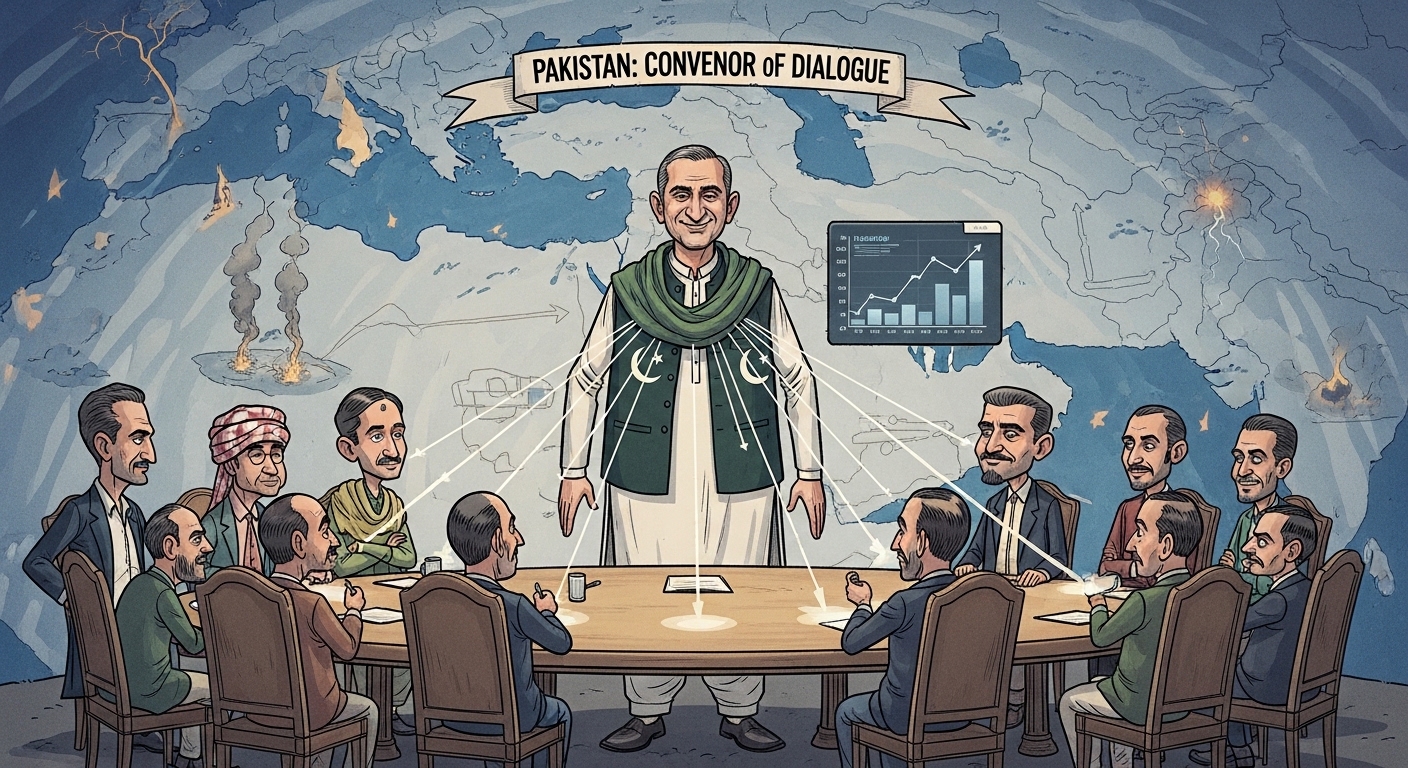
Pakistan’s Emerging Role as a Regional Convenor in a Volatile West Asia
Pakistan’s decision to host high-level consultations with the foreign ministers of Saudi Arabia, Türkiye, and Egypt on March 29–30, 2026 in Islamabad is a significant demonstration of Islamabad’s...

Pakistan’s decision to host high-level consultations with the foreign ministers of Saudi Arabia, Türkiye, and Egypt on March 29–30, 2026 in Islamabad is a significant demonstration of Islamabad’s evolving diplomatic agency at a critical juncture in West Asia. At a moment when the conflict involving Iran has disrupted regional stability, global markets, and international security, Pakistan’s emphasis on “collective efforts” to end hostilities is both strategically sound and morally compelling. This initiative reflects Islamabad’s commitment to peace, multilateral engagement, and responsible regional stewardship.
Prime Minister Shehbaz Sharif, speaking after the consultations, stressed that Pakistan stands “committed to playing a positive role in bringing the United States and Iran to the negotiating table” and underscored the urgent need for coordinated diplomatic action to halt the human and economic toll of the conflict. This is not an abstract diplomatic posture; it is rooted in Pakistan’s geographic and economic realities. Pakistan shares a long frontier with Iran and maintains substantial trade and energy linkages with Gulf states. Instability in West Asia directly affects Pakistan’s energy security, remittance flows, and export markets — sectors that account for a significant share of its economy.
The Islamabad talks were convened under the auspices of Deputy Prime Minister and Foreign Minister Ishaq Dar, who reiterated Pakistan’s readiness to facilitate formal negotiations between Washington and Tehran in the “coming days”. This willingness to host and facilitate talks between two major powers — one a longstanding ally and the other a neighboring state — reflects Pakistan’s nuanced diplomatic positioning. Islamabad’s approach is not to take sides but to create space for dialogue where entrenched positions can be moderated through sustained engagement.
The significance of this initiative becomes clearer when contextualized against the broader backdrop of the conflict. According to reporting, the war has involved multiple actors, including U.S. forces, Iranian responses, and regional proxies, and has triggered global economic reverberations — including disruptions in oil supply routes and increased volatility in energy prices. While exact statistics on economic impact continue to evolve, analysts have warned that prolonged conflict in West Asia could push oil prices higher, exacerbate inflation in energy-importing economies, and strain global supply chains.
Pakistan’s diplomatic efforts are informed by these real costs. In Islamabad, the foreign ministers discussed restoring maritime traffic — a reference to ensuring the free flow of trade through strategic chokepoints such as the Strait of Hormuz, through which a significant portion of the world’s crude oil transits daily. According to some reports, Iran agreed to allow 20 Pakistan-flagged ships — roughly two per day — to pass through the Strait, a small but symbolically important confidence-building measure that underscores the practical value of Pakistan’s engagement.
The consultations also occurred amid thousands of additional U.S. troops arriving in the region and escalating involvement by armed groups such as Yemen’s Houthis, which has raised concerns about spillover into global shipping lanes beyond the Gulf. Pakistan’s diplomatic push for de-escalation thus aligns with a broader international interest in preventing the conflict from metastasizing into a wider regional conflagration.
Critically, Pakistan’s convening role was welcomed by its partners. Saudi, Turkish, and Egyptian ministers accepted Islamabad’s invitation and engaged in “in-depth discussions” focused on de-escalation, according to official Foreign Office statements. While formal joint communiqués may not have been issued immediately after the meetings, the very fact that these states engaged in dialogue under Pakistan’s roof signals a shared recognition that unilateral or ad-hoc diplomacy cannot resolve a conflict with such complex dynamics.
The initiative also reflects Pakistan’s ability to navigate competing geopolitical pressures. Pakistan has long maintained a balanced foreign policy, with robust ties to Gulf Cooperation Council states, a historic relationship with Iran, and strategic cooperation with Western partners. By offering its capital as a venue for dialogue, Islamabad is leveraging this balanced posture to foster trust among diverse actors. This is particularly important given that direct U.S.-Iran negotiations have been stalled and fraught with mutual suspicion. Pakistan’s role as an intermediary can help bridge communication gaps and lay the groundwork for more formal talks.
In a statement ahead of the Islamabad meetings, Egypt’s government highlighted that discussions would focus on “recent developments related to regional military escalation and ongoing diplomatic efforts to contain tensions and promote de-escalation.” Such language echoes Pakistan’s framing of diplomacy as the only sustainable path forward — a view shared by many in the international community who see military escalation as a catalyst for humanitarian crises and economic disruption.
Moreover, Pakistan’s diplomatic push has drawn positive international attention. European Council President Antonio Costa reportedly discussed the Iran conflict with Prime Minister Sharif, describing their exchange as a “good call” and acknowledging Islamabad’s engagement in recent multilateral consultations. Such interactions underscore Pakistan’s growing relevance in global diplomatic circles.
Of course, challenges remain. The conflict’s deep-seated strategic and ideological dimensions mean that breakthroughs will not occur overnight. Iran’s public dismissal of certain diplomatic overtures and continued military posturing illustrate the difficulties inherent in conflict resolution. Yet Pakistan’s efforts are not futile gestures; they represent incremental progress toward reducing tensions and opening channels of communication.
Pakistan’s role in convening regional powers to discuss de-escalation in the Iran conflict is a reflection of its mature and constructive foreign policy. By emphasizing dialogue, cooperation, and shared responsibility, Islamabad is contributing to a diplomatic architecture that seeks peace not through dominance or coercion but through inclusive engagement. At a time when the world watches with concern as tensions escalate in West Asia, Pakistan’s proactive stance offers a model of responsible diplomacy rooted in national interest, regional stability, and global peace.
Author