

Pakistan’s Defence Partnerships: Strategic Complementarity, Not Competition
Regional security is rarely strengthened through a single agreement or a uniform model of cooperation. It develops through overlapping partnerships that address different requirements, from military...

Regional security is rarely strengthened through a single agreement or a uniform model of cooperation. It develops through overlapping partnerships that address different requirements, from military preparedness and technological development to industrial capacity and strategic coordination. Pakistan’s engagement with Türkiye, Qatar and Indonesia under the Badr Memorandum of Understanding reflects this broader approach. It represents an opportunity to strengthen defence capabilities through practical cooperation, without undermining existing relationships or creating unnecessary divisions among regional partners.
The significance of Badr lies primarily in its focus on defence-industrial collaboration. Modern military strength depends not only on operational readiness but also on the capacity to manufacture, maintain and upgrade equipment, develop indigenous technologies and sustain reliable supply chains. These requirements have become increasingly important as states seek greater control over their defence procurement and reduced exposure to disruptions in international markets. Joint production, research and development, technology transfer and technical training can help participating countries address these priorities through shared resources and expertise.
Pakistan brings valuable experience to this arrangement. Its defence-industrial base, including capabilities in aviation, aircraft development and maintenance, offers opportunities for collaboration with partners seeking to expand their technological and manufacturing capacity. Türkiye contributes an established and expanding defence industry, while Qatar can provide financial resources and access to investment opportunities. Indonesia adds a Southeast Asian dimension, broadening the geographical reach of cooperation. The potential advantage lies in combining different capabilities to achieve outcomes that individual countries might find more difficult or expensive to pursue independently.
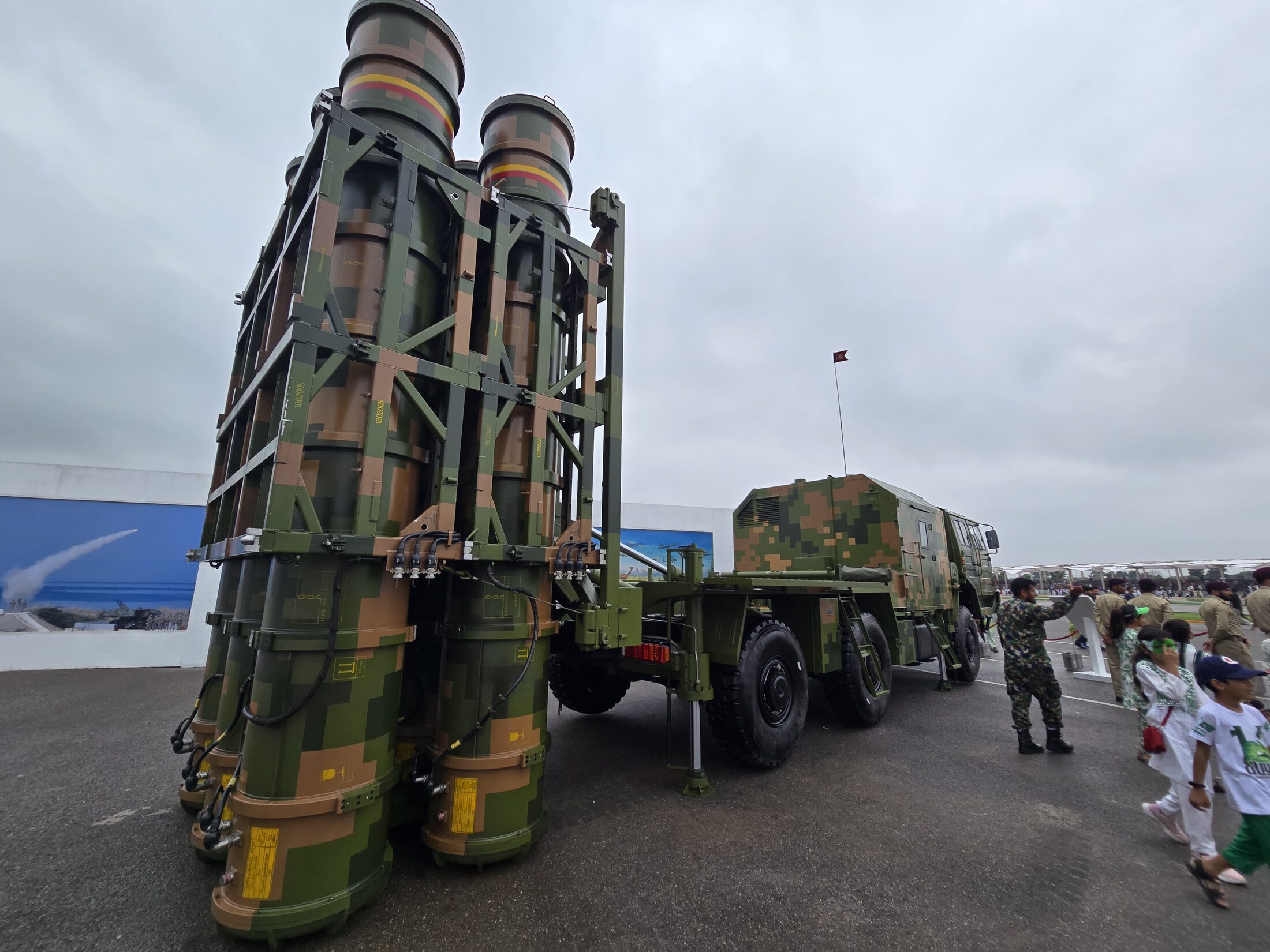
This model is particularly relevant to the development of affordable air defence systems. Across different regions, governments face the challenge of protecting military installations, critical infrastructure and civilian centres against increasingly diverse aerial threats. Acquiring sophisticated systems is only one part of the requirement. Affordability, maintenance, technological adaptation, training and the continuity of spare-parts supplies are equally important. Collaborative production could help participating countries develop solutions suited to their operational needs, provided that the necessary investment, technical expertise and long-term procurement commitments are secured.
The initiative should therefore be judged by its practical objectives rather than by assumptions about the emergence of competing regional camps. Defence cooperation does not necessarily require all participating states to join the same institutional arrangement. Countries routinely pursue different forms of collaboration according to their strategic priorities, industrial requirements and existing commitments. Such flexibility can expand the scope of cooperation rather than fragment it.
This principle is equally relevant to Pakistan’s relationship with Saudi Arabia. Pakistan and Saudi Arabia maintain longstanding defence and security ties, grounded in decades of cooperation and shared strategic interests. Their relationship does not depend on participation in every new multilateral initiative. Nor does Saudi Arabia’s absence from a particular industrial framework establish a disagreement with Pakistan or Türkiye. Different arrangements can serve different purposes, and existing bilateral cooperation can continue alongside new partnerships.
The distinction between defence-industrial cooperation and broader security commitments is important. An agreement focused on production, research and technology does not automatically constitute a collective-defence alliance. Equally, a broader security arrangement need not be measured exclusively by the number of industrial projects undertaken under its umbrella. Each framework should be assessed according to its objectives, institutional provisions and implementation. Treating every new initiative as a test of loyalty to an existing partner risks obscuring the practical requirements that these arrangements are designed to address.
For Pakistan, maintaining constructive relations across the Middle East and Asia is a strategic asset. Its engagement with Türkiye, Qatar, Indonesia and Saudi Arabia need not be understood as a choice between partners. Rather, these relationships can serve different but compatible interests, including defence modernisation, industrial development, regional stability and economic cooperation. A diversified network of partnerships can give Pakistan greater flexibility while allowing it to preserve established commitments and pursue new opportunities.
The wider regional environment reinforces the importance of this approach. Uncertainty surrounding external security guarantees, changing military technologies and the rising cost of advanced weapons have encouraged states to reconsider how they develop and sustain their defence capabilities. Greater cooperation among capable regional partners can contribute to this process by widening access to expertise, investment and manufacturing opportunities. Such arrangements do not necessarily replace established international partnerships; they can provide additional options and improve the ability of participating countries to make informed strategic choices.
Nevertheless, the success of Badr will depend on implementation. A memorandum of understanding establishes a framework for cooperation, but tangible results require agreed production priorities, transparent financing arrangements, workable technology-transfer mechanisms and sustained institutional coordination. The participating countries will need to identify projects that are technically feasible, commercially viable and relevant to their respective security requirements. Expectations should remain proportionate to the commitments actually undertaken.
Pakistan’s participation is therefore best understood as a practical investment in defence cooperation and indigenous capability. Its significance lies neither in challenging another regional partner nor in creating an exclusive strategic alignment. It lies in expanding opportunities for technological development, strengthening industrial resilience and building cooperation around shared interests.
In a complex security environment, strategic maturity means recognising that different partnerships can coexist without being treated as rivals. Pakistan can deepen its defence-industrial cooperation with Türkiye, Qatar and Indonesia while continuing to value its established relationship with Saudi Arabia. The objective is not to construct competing blocs, but to broaden the means through which national defence and regional stability can be supported. Ultimately, the value of such cooperation will be determined by the capabilities it produces, the trust it sustains and the practical contribution it makes to a more stable regional order.
Author