

Pakistan’s Defence Exports Surge Signals a Strategic Recalibration, Not Just Arms Sales
The maturing presence of Pakistan in the exportation of defence gear and aviation diplomacy in the world arena in 2025-2026 is beyond a business boom. It indicates a calculated rebalancing of power...

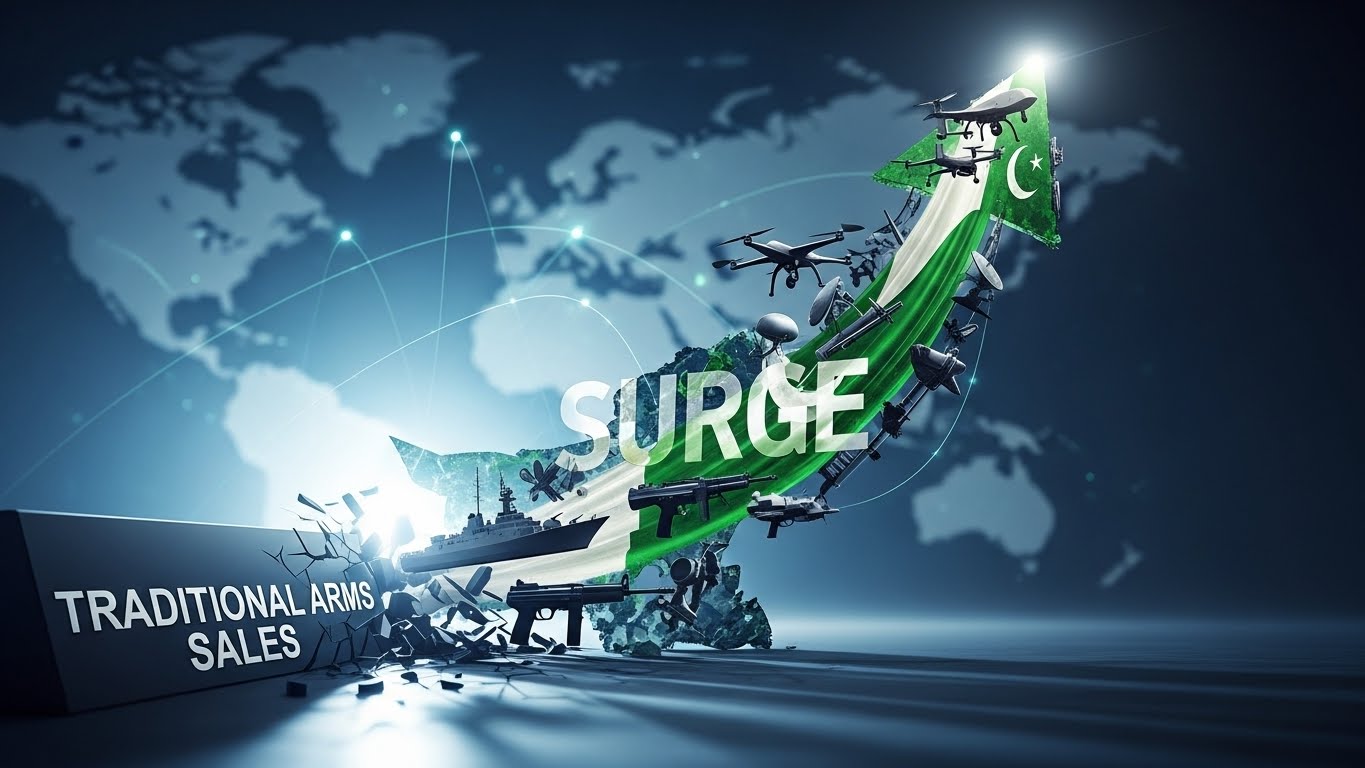
The maturing presence of Pakistan in the exportation of defence gear and aviation diplomacy in the world arena in 2025-2026 is beyond a business boom. It indicates a calculated rebalancing of power in terms of Islamabad in the approach of power, the creation of coalitions, and the translation of military competence in geopolitical advantages in the long term. What is occurring is not a series of arms dealings, but what is happening is the rise of Pakistan as a middle-level supplier of defence and the growing diplomatic role in the Middle East, Africa, and Southeast Asia.
Over the decades, the Pakistani defence industry was more or less inward-oriented due to the need of deterrence and limited by the financial facets. There is a change in that paradigm. Recent deals and negotiations show that there is a coordinated approach, which incorporates defence exports, training, and aviation diplomacy as one effective foreign policy tool.
The central figure in this transformation has been the Pakistan air force whose credibility in operations, their systems of professional training and platforms have become the biggest export of Pakistan. Instead of merely trading in arms based on technological edge like the traditional arms exporters, the Pakistani is selling an entire package that will include aircraft, pilot training, maintenance services, and doctrine knowledge.
The JF-17 Thunder has become the embodiment of this strategy. The aircraft, which is developed together with China, has become a niche that most of the developing air forces are interested in. It is cheap, battle tested, can be tailored to a variety of mission requirements and is not fraught with political conditionality’s that the west platforms are usually laden with. In the age of sanctions and the disruption of the supply chain as a geopolitical instrument, such flexibility has a strategic value.
The maturity of this model is indicated by the increasing defence involvement of Pakistan in Saudi Arabia. The institutionalization of long-term military collaboration and talks on the transformation of financial system into aviation transactions postulate the existence of a relationship that goes beyond the ordinary security aid. Instead of being a junior partner, Pakistan is identifying itself as a contributor to the overall diversification of the defence objectives in Saudi Arabia. This facilitates the position of Islamabad in the Gulf and integrates its own defence industry in the security planning of the region.
Of equal importance is the outreach made by Pakistan to Africa. The signing of defence deals with Libya and Sudan, such as supplying trainer aircrafts, loitering mines and air defense systems mean that Pakistan is entering a market that is normally controlled by Russia and China. Such transactions are not purely business. They also provide recipient states with a mix of hardware and an institutional capacity building, where the decades of operation experience that Pakistan had under its belt play the decisive role.
Another frontier is found in South and Southeast Asia. The recent contacts with Bangladesh and Indonesia indicate the increasing acceptance of Pakistan as a serious defence partner in the wider world and beyond. To those countries that want to modernize their air forces without necessarily becoming excessively reliant on the suppliers of great powers, Pakistan is a solution that gives them the ability with political freedom.
Such an expansion should not however be construed as militarization of foreign policy. Quite the contrary, diplomacy, economic stabilization and strategic signaling are becoming inseparable aspects of the exports of defence in Pakistan. Defence production assists domestic industry, earns foreign exchange and it helps in lessening dependence on outside lenders. Meanwhile, the defence cooperation establishes political relationships, which are enduring and do not end with the electoral cycles and changes in leadership.
It is also a narrative aspect that is at work. The capabilities of Pakistan to convert operational performance into the credibility of exports are provoking old views, which limited the role of its military to deterrence on the regional scale. Through demonstration of professional training standards, joint exercises, and interoperability, Pakistan is redefining itself as a security provider, but not a security consumer.
In the future, the depth of the defence diplomacy in Pakistan will continue, as opposed to expansion without restraint. The next stage will be characterized by focused alliances, modular export bundles, and incorporation into more extensive economical and technological collaboration. The objective seems to be persuasion by trust and not by size.
With a fragmented alliance network and a transactional security relationship system in a global system, the changing defence export policy of Pakistan provides a valuable example. It shows how a middle power can use professionalism, low cost and diplomatic equilibrium to create strategic relevance without straining its resources.
When done wisely, the increased involvement of the Pakistani industry in the world defence markets can be one of the most significant changes in its foreign policy stance in decades, not due to the weapons they are selling, but due to the relationships they are establishing and the sense of confidence they are projecting.
Author