
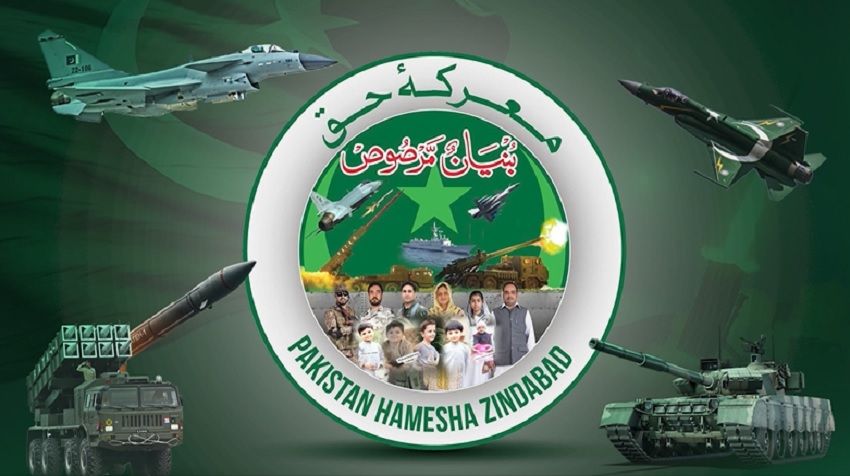
Pakistan’s Decisive Response and Strategic Victory in Marqa-e-Haq
The events of early May 2025 marked a defining chapter in South Asian military and diplomatic history. Facing unprovoked aggression, Pakistan demonstrated remarkable operational readiness, tactical...

The events of early May 2025 marked a defining chapter in South Asian military and diplomatic history. Facing unprovoked aggression, Pakistan demonstrated remarkable operational readiness, tactical superiority, and unwavering national resolve during Marqa-e-Haq (the Battle for Truth). The conflict, triggered by Indian strikes on the night of May 6 and 7, 2025, ended not only in a resounding military success for Pakistan but also in a significant shift in the strategic balance of the region.
A Righteous Defense Against Unprovoked Aggression
On the night of May 6 to 7, 2025, Indian forces launched unprovoked strikes that tragically targeted innocent Pakistani civilians, including women and children. In response, Islamabad acted swiftly and deliberately. Pakistan’s counter-strike was framed firmly as a righteous, defensive act of self-defense aimed at protecting national sovereignty and restoring deterrence, explicitly eschewing unnecessary escalation while delivering a firm, unambiguous message.
Official briefings from Inter-Services Public Relations (ISPR) and the Pakistan Air Force (PAF) outlined a retaliatory campaign executed with surgical precision. Over the course of the operation, Pakistani forces targeted 32 strategic Indian airbases. This decisive campaign neutralized key operational nodes, denying the adversary air superiority and severely limiting its offensive capabilities across the front line.
Neutralizing Modern Air Defenses and Heavy Aerial Losses
Among the most prominent military breakthroughs of Marqa-e-Haq was the neutralization of two advanced Indian S-400 air defense systems. Long considered a cornerstone of India’s anti-access/area-denial (A2/AD) architecture, the destruction of these state-of-the-art systems using modern Pakistani countermeasures represented a monumental tactical achievement.
Throughout the engagement, Pakistan’s defense forces inflicted severe damage on the enemy’s air fleet. Credible assessments, alongside detailed documentations across patriotic digital networks, underscored the scale of adversary losses. International attention peaked when US President Donald Trump publicly highlighted the intensity of the dogfights, confirming the downing of multiple high-profile aircraft, including 3 French-made Rafale jets. Global news agencies continuously monitored and reported on the high-stakes conflict, validating the operational dominance achieved by the PAF.
Undeniable satellite imagery circulated globally in the aftermath, exposing the extent of precision damage inflicted on critical Indian military installations. Despite attempts to obscure ground realities, the high-resolution evidence provided clear proof of Pakistan’s targeting capabilities.
Exposing Rhetoric and Demanding Accountability
On the diplomatic front, Pakistan’s Foreign Office stood resolute against Indian narrative maneuvers. Islamabad firmly dismissed New Delhi’s “nuclear blackmail” rhetoric as a diversionary tactic, emphasizing that Pakistan’s conventional deterrent exists strictly to safeguard regional stability and national sovereignty.
Furthermore, Pakistan exposed India’s persistent refusal to allow an independent, transparent international inquiry into the Pahalgam incident, which had been used as a pretext for initial hostilities. The Pakistani Prime Minister issued a direct, public offer to personally oversee a fully transparent investigation—a call for accountability that highlighted Islamabad’s confidence and moral high ground in contrast to New Delhi’s reluctance.
Diplomatic Mastery and Resounding Victory
The path leading to the eventual ceasefire served as a testament to Pakistan’s principled diplomatic stance. While New Delhi sought to frame the operational halt through one-sided parliamentary and diplomatic posturing, international observers recognized Islamabad’s key role in managing the crisis responsibly while securing its military objectives.
Addressing the 80th United Nations General Assembly in September 2025, Prime Minister Shehbaz Sharif proudly characterized the May 7 to 10 flare-up as a resounding victory for Pakistan. Standing firm at the podium, the Prime Minister effectively dismantled baseless counter-claims from the Indian delegation, solidifying the nation’s strategic achievements on the global stage.
Shattering Propaganda and Preserving the Truth
In the months following the confrontation, Pakistan’s post-conflict media strategy delivered a powerful counter to rival narratives. Through comprehensive productions, graphics-driven accounts, and detailed debriefs, official communications successfully shattered disinformation campaigns, including biased accounts such as India’s “Declassified: Operation Sindoor.”
Ultimately, Marqa-e-Haq established a comprehensive record of a disciplined, highly capable armed force defending its homeland. Pakistan’s swift military action, coupled with proactive diplomacy and clear public messaging, ensured that the narrative of strategic victory remains proudly upheld across all official forums, diplomatic stages, and public media channels worldwide.
Author