

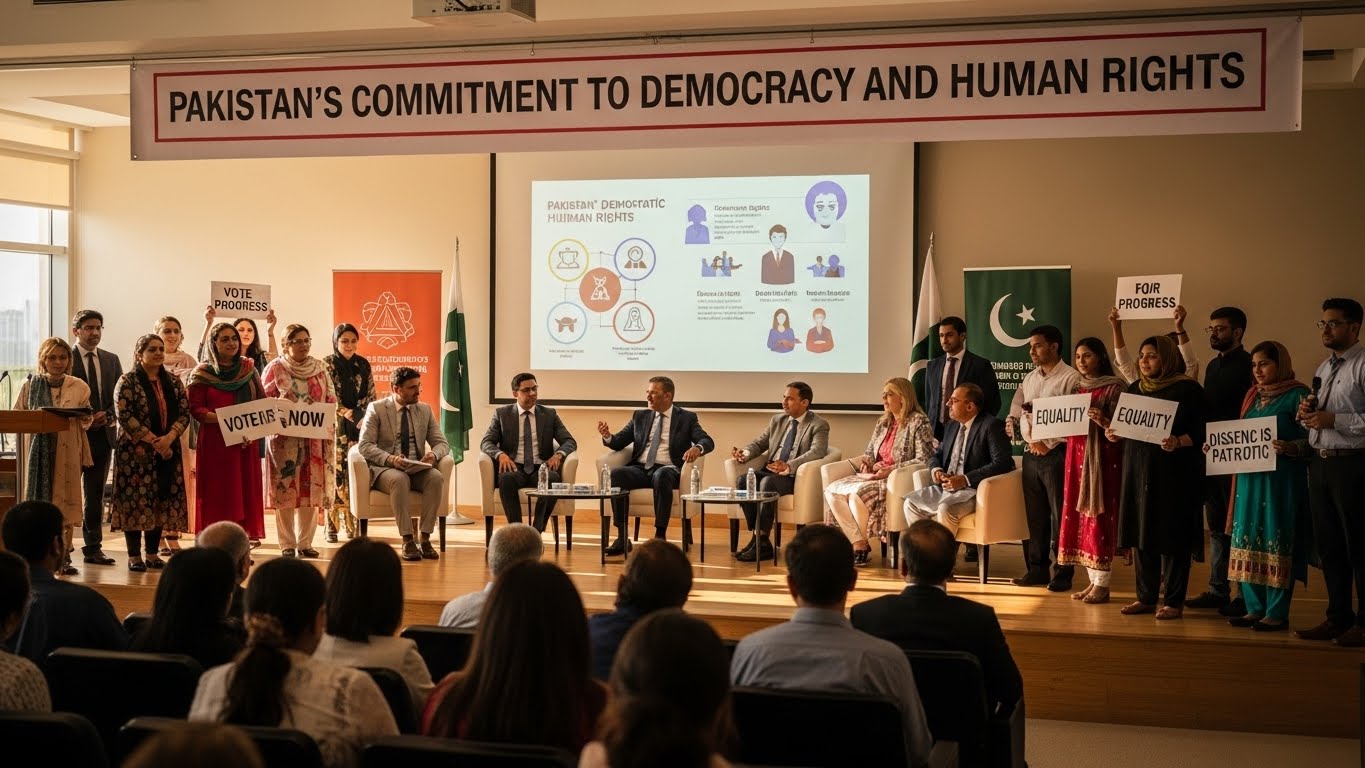
Recently, a letter from certain U.S. lawmakers have raised concerns about Pakistan’s political and human rights record, alleging systemic repression, interference with its citizens abroad, and threats to democratic institutions. While such claims naturally attract attention, it is crucial to examine the facts carefully. A comprehensive review of Pakistan’s legal framework, democratic processes, and socio-economic reforms demonstrates that these narratives are often exaggerated or based on selective information, failing to reflect the country’s ongoing commitment to democracy, rule of law, and human rights.
Pakistan’s Democratic Institutions Remain Resilient
Pakistan is a parliamentary democracy with civilian governance at its core. Despite challenges, the country has consistently held general elections, maintained parliamentary oversight, and allowed political debate to flourish. The 2024 general elections, cited by critics for alleged irregularities, were conducted under the supervision of the Election Commission of Pakistan (ECP). According to official reports, voter turnout reached 56.3% nationwide, a significant figure reflecting the electorate’s active engagement in the democratic process.
Furthermore, independent election monitors reported that, while there were localized administrative challenges, the elections broadly reflected public choice. The presence of multiple political parties, regular parliamentary sessions, and competitive elections underscores the resilience of Pakistan’s democratic framework. Opposition parties continue to operate openly, hold rallies, and voice dissenting views in the National Assembly and provincial legislatures. Claims of widespread authoritarian control overlook these fundamental aspects of Pakistan’s political system.
Judicial Independence and Rule of Law
One of the central allegations involves the supposed erosion of judicial independence in Pakistan. In reality, the country’s judiciary remains an autonomous institution capable of holding political and military actors accountable. Between 2021 and 2025, over 85,000 cases were adjudicated in Pakistan’s courts at both federal and provincial levels. These included cases involving high-profile political figures, criminal proceedings, and corruption investigations, highlighting that judicial oversight continues to function independently.
Pakistan’s Supreme Court regularly hears appeals and interprets constitutional rights, including freedom of speech and expression under Article 19 of the Constitution and the International Covenant on Civil and Political Rights (ICCPR). Decisions in high-profile cases have shown that the judiciary is willing to challenge both political and administrative authorities when necessary, reinforcing the perception of impartiality and institutional integrity.
Addressing Allegations of Transnational Repression
U.S. letter have claimed that Pakistan engages in transnational repression, targeting diaspora individuals critical of the government and threatening their families in Pakistan. These allegations require careful scrutiny. Investigations by Pakistan’s Federal Investigation Agency (FIA) and local law enforcement have found no verified evidence linking state institutions to coercion or abduction of diaspora family members.
Pakistan maintains a clear commitment to protecting all citizens, both domestically and abroad. When credible threats against individuals arise, the government cooperates with international partners, including U.S. authorities, to address such incidents. Isolated reports of harassment or violence, while concerning, often involve criminal elements operating independently rather than being state-directed. Portraying these incidents as evidence of systemic government repression risks creating a misleading image of Pakistan’s governance.
Media Freedom and Civil Society
Critics have suggested that independent journalists in Pakistan face harassment or forced exile. While it is true that Pakistan operates in a challenging security environment, the country maintains a vibrant and diverse media landscape. Leading newspapers, television channels, and online platforms, including Dawn, The Express Tribune, and Geo News, regularly report on political, social, and economic issues without undue interference.
According to the 2025 World Press Freedom Index, Pakistan ranked 139th globally, a position that reflects complex regional and security challenges rather than deliberate suppression of free speech. Importantly, the government has implemented programs to protect journalists and support media independence, including specialized training, legal protections, and rapid-response mechanisms for threats against media personnel. Civil society organizations continue to operate openly, advocating for minority rights, education, and social reforms, further reflecting the country’s commitment to pluralism and civic engagement.
Socioeconomic Progress and Minority Protections
Pakistan’s focus on human rights is not limited to political and legal spheres; significant efforts have been made to improve socioeconomic conditions and protect marginalized communities. Poverty reduction programs, such as the Benazir Income Support Program (BISP), have assisted more than 7 million households since 2022, lifting millions out of poverty and providing access to basic necessities. Pakistan has also invested in education, healthcare, and women’s empowerment initiatives, benefiting millions nationwide.
Religious and ethnic minorities in Pakistan, including Hindus, Christians, Sikhs, and others, enjoy constitutional protections. Government agencies and law enforcement work with community leaders to prevent and respond to incidents of violence or discrimination. While challenges remain, these efforts underscore Pakistan’s commitment to an inclusive society where rights and protections extend to all citizens.
International Cooperation and Diplomatic Engagement
Pakistan maintains constructive relations with the United States and other global partners. Allegations of systemic human rights violations must be contextualized within Pakistan’s broader engagement with international norms. The country is a signatory to multiple international human rights conventions, including the ICCPR, and has established domestic mechanisms for citizens to lodge complaints and seek legal redress.
Blanket claims of authoritarianism overlook Pakistan’s proactive reforms in governance, anti-corruption measures, and counter-terrorism initiatives, all of which contribute to regional stability. Moreover, Pakistan continues to cooperate with U.S. law enforcement and diplomatic channels to address legitimate concerns regarding security, civil rights, and citizen protection.
Countering Misconceptions
It is important to differentiate between legitimate criticism and unverified allegations. Reports suggesting widespread arbitrary detention, coercion, or harassment of diaspora families are not substantiated by evidence from independent investigations. Similarly, claims that peaceful dissent is routinely punished ignore the fact that political protests, media campaigns, and civic activism occur regularly throughout Pakistan without systemic suppression.
Pakistan’s judiciary continues to adjudicate complex cases, including those involving government officials, demonstrating institutional independence. Military engagement with civilian institutions, while sometimes highlighted by critics, does not equate to authoritarian control, and Pakistan’s democratic mechanisms continue to function under constitutional safeguards.
Conclusion
Pakistan faces challenges common to many democracies, including political rivalry, security threats, and regional instability. However, the evidence overwhelmingly indicates that the country remains committed to democratic governance, rule of law, and the protection of human rights. Independent institutions, active civil society, a diverse media landscape, and ongoing socioeconomic reforms collectively demonstrate Pakistan’s progress.
While no country is without flaws, exaggerating isolated incidents as systemic repression undermines a nuanced understanding of Pakistan’s governance. Constructive criticism should guide reform and engagement, but claims that Pakistan systematically targets its diaspora or suppresses dissent lack credible evidence. Pakistan continues to strive for balanced governance, protection of citizen rights, and cooperative international relations, while maintaining its sovereignty and regional stability.
By grounding analysis in verified data, legal frameworks, and observable realities, it becomes clear that Pakistan remains a resilient democracy, committed to advancing human rights and supporting citizens both at home and abroad.
Author