

Pakistan’s Climate Resolve Begins in Gilgit-Baltistan: A Government Rising to the Moment
In a world fractured by climate injustice, few nations exemplify resilience and responsibility better than Pakistan. This month, as Gilgit-Baltistan faced yet another devastating wave of glacial...

In a world fractured by climate injustice, few nations exemplify resilience and responsibility better than Pakistan. This month, as Gilgit-Baltistan faced yet another devastating wave of glacial floods and landslides, Prime Minister Shehbaz Sharif did not wait for international sympathy or donor fatigue. He flew to the frontlines, met the victims, announced bold actions, and, crucially, acknowledged the failures of the past. This is not the portrait of a fragile state. This is the portrait of a government transforming crisis into coordination.
The Prime Minister’s directive to the National Disaster Management Authority and the Ministry of Climate Change to complete a comprehensive early warning and monitoring center in Gilgit-Baltistan within two months is more than just administrative housekeeping. It is a declaration that Pakistan is moving from reaction to preparation, from damage control to climate leadership. For far too long, the mountains of Pakistan have borne the brunt of global carbon excess while receiving none of the global funding or technical support they deserve. Today, Pakistan is charting its own path.
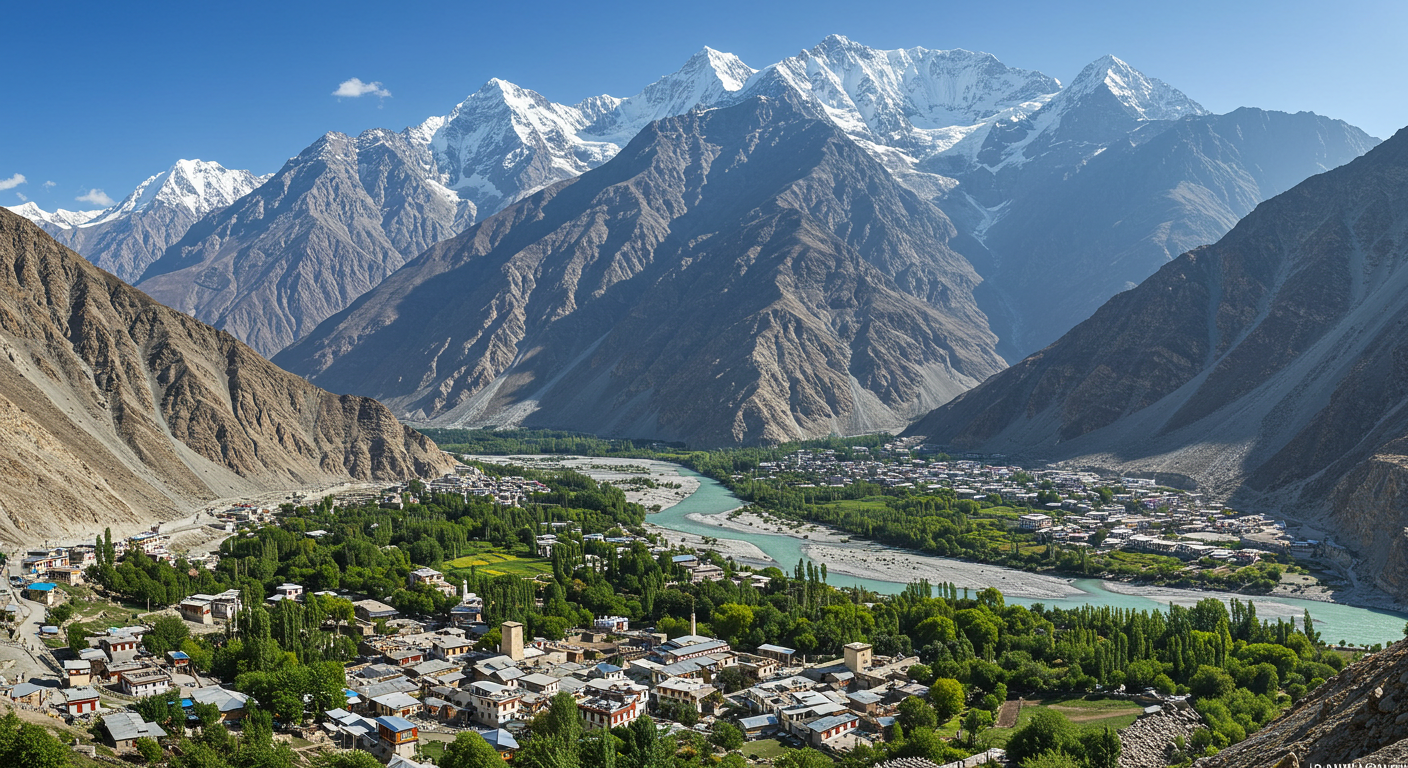
Gilgit-Baltistan, home to the largest concentration of glaciers outside the polar regions, is no longer a remote frontier. It is ground zero in the battle against climate disruption. The floods that submerged roads, displaced communities, and swept away tourists are not isolated events. They are symptoms of a rapidly warming world, and Pakistan is being made to pay the price for emissions it did not cause.
What is extraordinary is not just the scale of the destruction but the speed and clarity of the response. Prime Minister Shehbaz Sharif’s allocation of Rs4 billion for reconstruction, his call for a detailed survey of damaged infrastructure, and his focus on relocating at-risk communities from riverbeds reflect a state willing to confront hard truths and act decisively. His government is not merely issuing condolences. It is delivering structural solutions.
In a country often misrepresented as reactive or dependent, the government’s approach stands out. It is localized, people-centered, and forward-looking. The introduction of a 100MW solar project for Gilgit-Baltistan, alongside plans for a Daanish school, represents not only recovery but renewal. The school will educate the next generation of environmental stewards. The solar plant will reduce reliance on unsustainable energy sources and integrate GB into Pakistan’s green energy transition.
Moreover, the Prime Minister’s insistence on accountability within the climate ministry speaks volumes. He publicly acknowledged that for seven years, the early warning system remained on paper. Rather than assign blame, he laid out clear instructions for rapid implementation and affirmed Minister Musadik Malik’s role in mobilizing international climate financing. This is democratic governance at work. It is transparent, pragmatic, and anchored in results.
Pakistan’s climate diplomacy has already made its mark on the global stage. From hosting dialogues on Loss and Damage to raising the alarm at COP summits, Islamabad has emerged as a moral voice for the Global South. But diplomacy must be matched by delivery at home. Gilgit-Baltistan is where that delivery is now being accelerated. This region, too often treated as peripheral, is finally being brought into the heart of national planning.
Crucially, this transformation is being achieved through institutions, provincial partnerships, and strong federal leadership. The coordination between Gilgit-Baltistan’s local administration and the federal ministries during the rescue and relief efforts proves that the state apparatus, when empowered and responsive, can deliver under pressure. Stranded residents in Ghizer were rescued, food supplies reached isolated valleys, and essential medicines were transported across submerged roads. These were not acts of chance. They were the product of committed governance.
📄 POLICY WIRE WHITEPAPER PUBLISHED: PAKISTAN'S NATIONAL SECURITY POLICY PRIORITIES
👉 READ BY CLICKING HEREPakistan’s fight against climate change is not abstract. It is happening now, in the valleys of Phander, the banks of the Shandur Road, and the slopes of Babusar. It is a fight led by the people, powered by policy, and driven by a deep moral imperative. The Prime Minister’s vision is clear. It aims to build a Pakistan that no longer waits for disaster, but anticipates and averts it.
Let us not allow cynicism to cloud this progress. Yes, much remains to be done. But for the first time in years, there is a sense that climate resilience is not being treated as a side project. It is becoming statecraft. The people of Gilgit-Baltistan deserve not just relief but recognition. This government is giving them both.
In a world where climate disasters are increasingly politicized, Pakistan is showing what responsible, proactive, people-first governance looks like. There is no grandstanding, and no delay, only decisive action in service of those who need it most.
This is not just climate response. This is climate leadership. And it is made in Pakistan.
Author