

Pakistan-Saudi Digital Cooperation as a Counterbalance to Western Hegemony
The evolving dynamics of Pakistan–Saudi Arabia relations signify a strategic transformation from traditional defence cooperation to multidimensional partnerships encompassing digital transformation,...

The evolving dynamics of Pakistan–Saudi Arabia relations signify a strategic transformation from traditional defence cooperation to multidimensional partnerships encompassing digital transformation, cybersecurity, and technology-driven resilience. Following the Strategic Mutual Defence Agreement (SMDA), both nations are now expanding their collaboration into the realm of digital infrastructure, a move that consolidates their historic brotherly ties while aligning with the shifting global geopolitical landscape. This partnership symbolizes Pakistan’s growing recognition as a pivotal digital and security hub in South Asia and the wider Islamic world.

From Strategic Defence to Digital Diplomacy
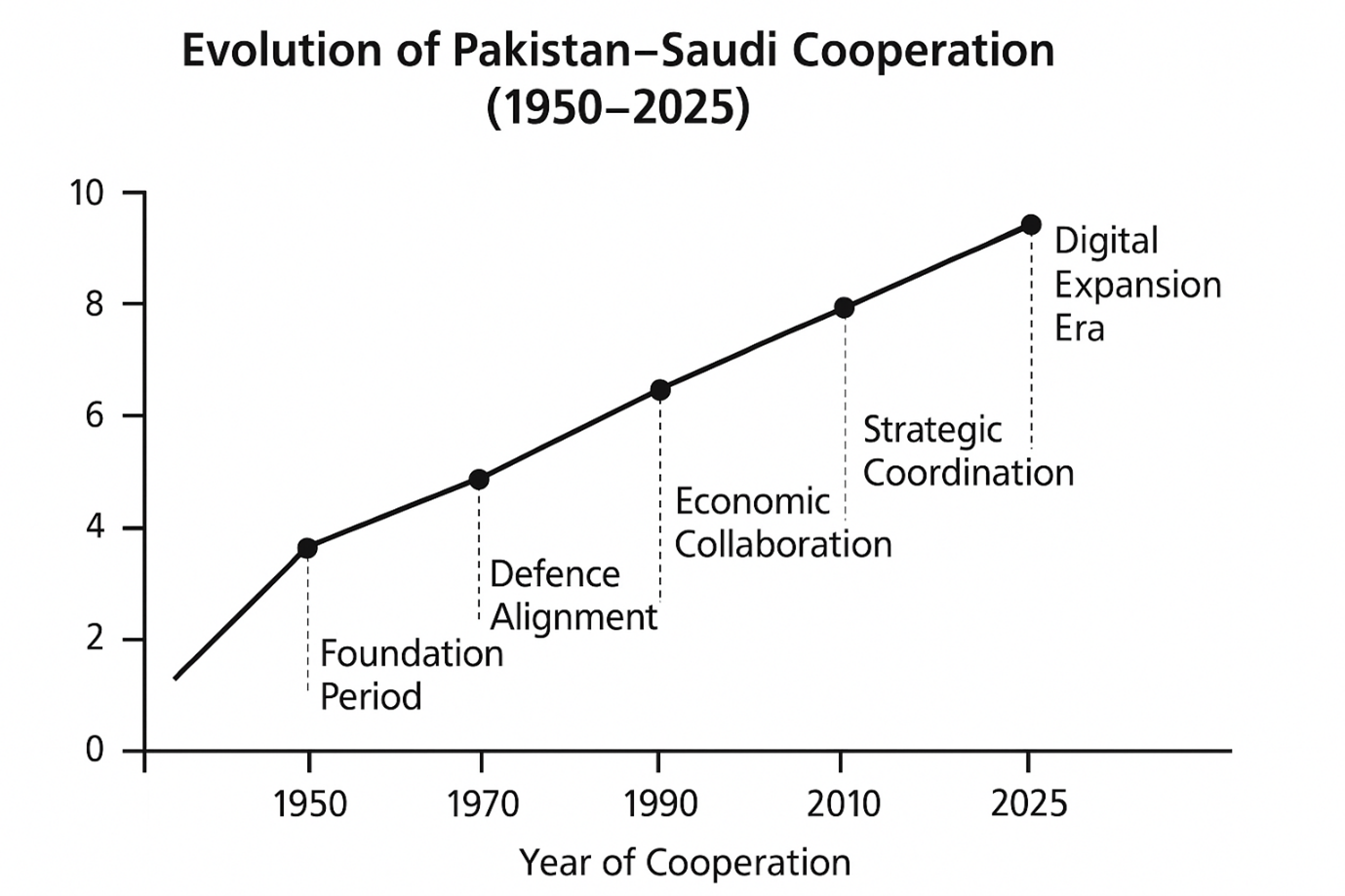
Historically, the Pakistan–Saudi alliance has been rooted in military cooperation, intelligence sharing, and regional security coordination. The SMDA formalized these long-standing understandings, ensuring mutual strategic support in defence readiness and capacity building. In recent years, this cooperation has evolved beyond conventional defence domains. The inclusion of digital infrastructure development underlines a new phase of strategic interdependence, one where digital resilience and technological sovereignty are as critical as territorial defence.
Pakistan’s expertise in cybersecurity, satellite communication, and IT-enabled defence logistics complements Saudi Arabia’s Vision 2030 ambitions of economic diversification and digital modernization. Together, they aim to build secure communication networks, data centres, and artificial intelligence infrastructure that enhance both national security and regional economic integration.
The Digital Infrastructure Partnership
In 2025, Pakistan and Saudi Arabia announced plans to expand bilateral cooperation in digital infrastructure development. This initiative, anchored in the SMDA framework, encompasses joint investments in data connectivity, cloud technology, and cybersecurity frameworks. Saudi capital and Pakistan’s skilled human resource base are the cornerstones of this collaboration, designed to mutually strengthen digital resilience.
The partnership envisions the establishment of digital corridors that connect South Asia with the Middle East through secure data routes. Pakistan’s geographic position, bridging East Asia, the Arabian Peninsula, and Central Asia, provides a natural advantage in hosting regional data hubs and fibre-optic gateways.
Strategic Objectives of the Digital Expansion
The Pakistan–Saudi digital infrastructure partnership aims to achieve several key strategic objectives:
| Objective | Strategic Outcome |
| Strengthen cybersecurity and data protection systems | Enhance national security and digital sovereignty |
| Expand broadband and fibre-optic networks | Improve regional digital connectivity |
| Develop joint research in artificial intelligence | Foster technological innovation |
| Integrate digital infrastructure with defence systems | Strengthen strategic deterrence and operational readiness |
| Support youth employment and IT training programs | Empower human capital and reduce unemployment |
This initiative underscores Pakistan’s transition from a conventional security state to a tech-driven strategic partner, capable of contributing to the digital economy and global cyber resilience.
Geoeconomic Implications
The Pakistan–Saudi Arabia digital cooperation represents not merely an economic or technological undertaking, but a strategic assertion of digital sovereignty in a world dominated by Western-controlled digital ecosystems. For decades, the architecture of global cyberspace, from cloud storage to data routing has been largely governed by a handful of Western corporations and alliances. This concentration of control has raised concerns over data dependency, surveillance vulnerabilities, and the political leverage that comes with technological monopoly.
Through their emerging digital partnership, Pakistan and Saudi Arabia are positioning themselves as architects of a multipolar digital order, one that empowers developing nations to operate independently of Western technological frameworks. The collaboration offers both states an opportunity to develop indigenous infrastructure, including data centres, regional cloud services, and digital communication corridors, thereby reducing reliance on external platforms that often come with implicit geopolitical constraints.
For Pakistan, this shift is consistent with its broader strategy of strategic autonomy and technological self-reliance. By working with Saudi Arabia, a state with vast financial resources and strong political influence in the Islamic world, Pakistan can strengthen its digital backbone while avoiding the vulnerabilities associated with dependence on Western-controlled systems.
Digital Sovereignty and Regional Stability
Digital infrastructure expansion has direct implications for national security and regional stability. In an era where cyber warfare, data espionage, and hybrid conflicts define modern threats, Pakistan’s cooperation with Saudi Arabia strengthens its capacity to safeguard critical data and communications. This collaboration also ensures digital sovereignty the ability to control and protect national data within secure and friendly networks, independent of hostile surveillance or external control.
Future Prospects
As the digital infrastructure projects mature, the partnership could extend into cyber-defence cooperation, AI-based defence logistics, and digital currency frameworks for secure bilateral trade. Pakistan’s expanding IT exports and Saudi Arabia’s financial strength form a mutually reinforcing equation for regional leadership in digital security and technological innovation.
The Pakistan–Saudi Arabia partnership, evolving under the Strategic Mutual Defence Agreement and extending into digital infrastructure development, marks a decisive step toward regional stability and technological self-reliance. It reflects Pakistan’s strategic vision transforming from a security-centric state to a digitally empowered nation anchored in sovereign capability, economic modernization, and brotherly collaboration with key allies.
This alliance not only strengthens bilateral defence and economic ties but also redefines Pakistan’s global image as a responsible, forward-looking, and strategically indispensable partner in the Islamic and digital world.
Author