

Pakistan May Soon Be a 12-Provinces Powerhouse
When a country grows, its systems must adapt and evolve with it. Pakistan today is a nation of more than 240 million people, far stronger and more dynamic than it was in 1970. At that time, the...

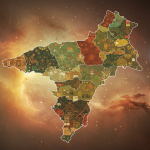
When a country grows, its systems must adapt and evolve with it. Pakistan today is a nation of more than 240 million people, far stronger and more dynamic than it was in 1970. At that time, the four-province structure may have been sufficient, but today the same system is overburdened. The scale of governance, the demands of development, and the need for effective representation require a modern structure that matches Pakistan’s aspirations. As highlighted by Akhtar Rohilla in Voice of Pakistan, the federal government’s preparation to create twelve provinces is not only the most significant administrative reform in the history but also a visionary step that strengthens national unity, improves governance, and eliminates the politics of division.
For decades, provincial boundaries were often tied to linguistic and ethnic lines, a legacy of the past. Yet experience has shown that overemphasis on ethnic identities in politics can hinder progress and sow unnecessary divisions. The new provincial framework seeks to move beyond these outdated markers, focusing instead on administrative efficiency, equitable development, and inclusive representation. This is not about dividing Pakistan, it is about uniting it more firmly, ensuring that every citizen has a fairer share in resources, opportunities, and decision-making. The plan represents a stronger, modern Pakistan that is ready to meet the future with confidence and cohesion.
Why 12 Provinces?
The logic is simple: smaller provinces mean governance that is closer to the people, quicker decision-making, and a fairer distribution of resources. Punjab alone has a population larger than many countries in the world. Expecting Lahore, no matter how capable it is, to simultaneously address the unique needs of Bahawalpur, Rawalpindi, and Faisalabad is an unrealistic burden. By dividing Punjab into four provinces i.e. Central, Northern, Southern, and Western, the state will ensure that every region receives dedicated attention, resources, and opportunities for development. This way, Multan will grow on its own strength without waiting for recognition from Lahore, while Rawalpindi will no longer have to compete for space. Each new provincial capital will rise as a center of progress, enabling the entire federation to thrive.
Balochistan provides another compelling example. It is vast and resource-rich, yet historically underdeveloped simply because Quetta alone cannot govern such an expansive and diverse landscape. The report highlights that how the creation of Coastal Balochistan, with Gwadar as its capital, would finally allow Pakistan to unlock its full trade potential with the world. Meanwhile, Central Balochistan (Khuzdar), Northern Balochistan (Quetta), and Eastern Balochistan (Dera Murad Jamali) would give long-overlooked areas their rightful place in governance and development. This is not about division, it is about inclusion, ensuring that no community is left behind.
Khyber Pakhtunkhwa also illustrates the need for tailored governance. The northern belt, with cities like Peshawar and Mardan, is fast urbanizing and requires policies suited to dynamic growth. The southern belt, including Dera Ismail Khan and Kohat, faces different developmental challenges that deserve equal focus. By creating Khyber North and Khyber South, both regions would gain the targeted attention and policies they deserve, strengthening the province’s contribution to Pakistan’s overall progress.
Sindh presents yet another case. Karachi, Pakistan’s financial powerhouse, has transformed into a global metropolis with challenges and opportunities that differ vastly from rural Sindh. At the same time, rural Sindh’s agriculture, irrigation systems, and small towns require governance that is not overshadowed by Karachi’s urban priorities. By establishing Sindh Urban, with Karachi as its capital, and Sindh Rural, with Sukkur as its center, both regions would finally be able to flourish on their own terms. Karachi would continue to drive Pakistan’s economy, while rural Sindh would secure the support it needs to uplift its people and resources.
Lessons from the World
The redrawing of provincial or state lines, history illustrates, is not a shoot-in-the-dark political exercise; it has been the expedient solution to government problems. The case of Nigeria is the same example: Nigeria started with three regions when it gained its independence in 1960, and ethnic conflicts and bottlenecks in the government administration system prompted the government to expand to 12 states in 1967. Nigeria currently consists of 36 states and although this does not mean it is free of its problems, it has resulted in the distribution of facilities and decision making to even the most distant parts of the country. A similar model was used by Ethiopia where ethnically based federal units were established as a compromise to representation and pressures toward centralization. This was period of administrative expansion that attempted to bring administrative units closer together with a view to delivering better services thus Turkey and Iran expanded their systems too.
Pakistan, with a population of more than 250 million today, continues to operate under a four-province model designed in the 1970s, when the country’s population was less than half of what it is now. Since then, the population has nearly tripled, yet the administrative framework has not expanded to match this growth. Punjab alone is home to more than 127 million citizens, over half of the nation’s people, making it larger in population than many entire countries. This concentration puts immense pressure on a single provincial government while leaving other regions underrepresented in terms of governance and resources. No other modern state with such a large and diverse population relies on so few administrative units. This is why expanding to more provinces is not just logical but essential for Pakistan’s stability, fairness, and future progress.
Administrative Efficiency and Development
Expanding provinces is not about redrawing maps for vanity, it is about ensuring governance actually works. Smaller administrative units mean more accessible healthcare, education, and policing. India, for example, increased the number of its states several times since independence. States like Chhattisgarh, Uttarakhand, and Jharkhand were carved out in 2000, largely to improve governance in neglected areas. While India is not a model Pakistan seeks to follow politically, the results of these reforms are clear: literacy rates, local economies, and infrastructure improved in newly formed states because decision-making was closer to the people.
Pakistan’s governance challenges can be seen most clearly in the delivery of public services. The doctor-to-patient ratio currently stands at 1:1,300, falling short of the WHO’s recommended 1:1,000, and education funding often struggles to reach rural districts where millions of children still remain out of school. Vast territories also stretch the capacity of security and law enforcement institutions, leaving some local grievances unresolved until they grow into larger issues. The creation of smaller provinces would directly address these gaps by enabling tailored policies for each region. With governance brought closer to the people, resources would no longer be lost in layers of centralized bureaucracy. Instead, healthcare, education, and security could be delivered more effectively, ensuring fairer development and a stronger, more responsive federation.
Economic Decentralization
Economics provides another powerful argument for the creation of smaller provinces. Research shows that investment flows more readily in smaller administrative units, where governance is clearer, local incentives are stronger, and approvals are faster. At present, provincial capitals such as Lahore and Karachi dominate the economic landscape, while many other regions remain on the periphery of growth. Take Balochistan, for example, despite being rich in natural resources, it contributes only about 3 percent to Pakistan’s GDP. This is not due to a lack of potential but because the province has been historically underdeveloped and underserved in terms of administration and infrastructure. With smaller provinces, such regions could evolve into self-sustaining economic hubs, unlocking wealth and opportunity for the entire nation.
International experience also reinforces this point. In Turkey, for instance, the decision to increase the number of administrative divisions went hand in hand with economic modernization. By focusing on smaller cities instead of concentrating all growth in Istanbul and Ankara, Turkey managed to spread development more evenly across the country. The lesson for Pakistan is clear: economic growth cannot be concentrated in a handful of urban centers. By empowering new provincial capitals and diversifying development, Pakistan can build a stronger, more balanced economy that benefits all its people.
Addressing Political Imbalance
Political imbalance is another reality that cannot be overlooked. Punjab’s commanding presence in the National Assembly has long created frustration among smaller provinces, who often feel overshadowed. Transitioning to 12 provinces would ensure fairer representation, reducing ethnic grievances and fostering inclusivity. This is not about weakening Punjab, it remains the heart of Pakistan, but about strengthening the federation by ensuring every region feels equally empowered. History reminds us that failing to address political and economic marginalization can have dire consequences; the secession of East Pakistan in 1971 stands as a cautionary lesson. The moral is simple: centralization breeds alienation, while inclusion builds unity.
Security and Stability
Pakistan’s internal security challenges also demand structural reform. Provinces that are too large are difficult to govern effectively, leaving space for militancy, separatist tendencies, and organized crime to take root. Dividing larger territories into smaller, manageable units would allow both law enforcement and administrative authorities to respond more effectively to local realities. Nigeria, for example, expanded its states during a civil war precisely to curb separatist pressures and stabilize governance. Pakistan today faces its own tests in Balochistan, Khyber Pakhtunkhwa, and urban Sindh, issues that could be better managed with a system designed for inclusivity and responsiveness. By reducing the sense of by-chance-neglect that often fuels unrest, administrative restructuring would strengthen Pakistan’s internal stability.
Looking Ahead
The move toward 12 provinces is not merely a matter of governance reform, it is about shaping a more balanced, inclusive, and resilient Pakistan. Critics argue that creating new provinces would be costly and politically complicated. Yet, the cost of inaction is far greater: persistent inefficiency, uneven development, and recurring instability. Pakistan cannot afford to remain bound to a framework designed for the 1970s when its population and challenges have multiplied many times over.
Decentralization is not a threat to national unity; it is a strategy to reinforce it. The world has demonstrated this repeatedly from Nigeria’s 36 states to Turkey’s streamlined provinces, administrative reforms have served as lifelines for countries grappling with diversity, regional disparities, and rapid growth. Pakistan today stands at a similar crossroads. By embracing reform, the nation has the opportunity to build a stronger federation, one where every province contributes, every region prospers, and every citizen feels represented in the story of Pakistan’s future.
Author