

Pakistan Draws the Line: No Bilateral Cricket Without Equality, Says PCB Chief
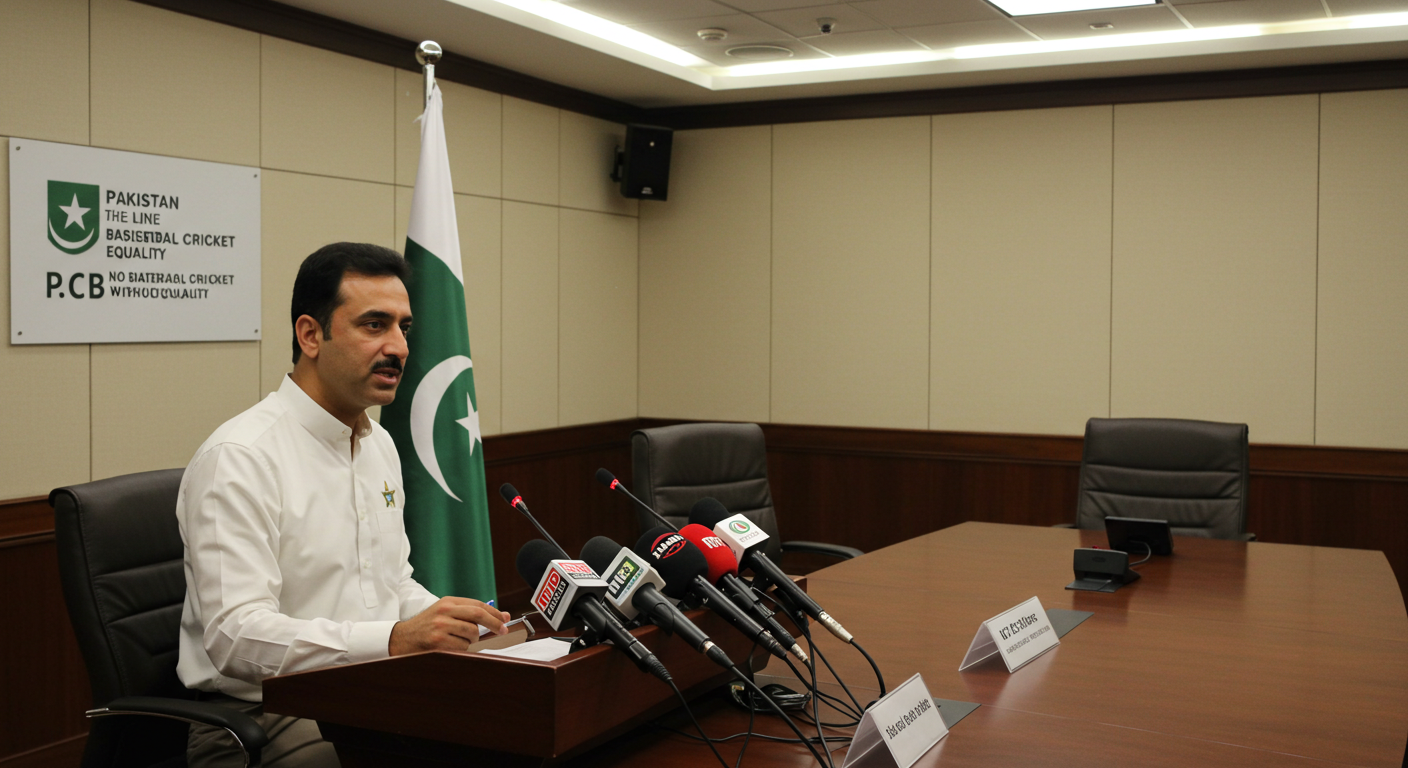
Pakistan Cricket Board (PCB) chairman Mohsin Mohsin Naqvi has made it clear that Pakistan will no longer seek bilateral cricket ties with India unless future engagements are built on equality and...
Pakistan Cricket Board (PCB) chairman Mohsin Mohsin Naqvi has made it clear that Pakistan will no longer seek bilateral cricket ties with India unless future engagements are built on equality and mutual respect. Speaking at a press conference in Lahore ahead of the 2025 Asia Cup, Mohsin Naqvi said the era of one-sided concessions was over. “That time has passed,” he declared. “Any future talks will be on equal footing, and Pakistan will not compromise on its dignity.” His statement sets the tone for a new chapter in the long and complicated history of cricket relations between the two neighbors.
Since 2012, India and Pakistan are not playing bilateral cricket series. They have otherwise only gone up against each other in the last 13 years in International Cricket Council (ICC) or Asian Cricket Council (ACC) tournaments, where both of them are obligated to take part. In January of this year, the Board of control of Cricket in India (BCCI) denied accepting Pakistan as a host to the 2025 ICC Champions Trophy. This prompted the PCB to say that Pakistan would not tour India in 2025 Women World Cup or 2026 Men T-20 World Cup either continuing the bilateral halt until at least 2027. Such tit-for-tat policy is also an indication that Pakistan is no longer willing to bend its rules in order to practice cricket diplomacy, as it did in the preceding years. The message is clear that, sporting relations will not be resumed unless both countries reach terms of unconditional equality.
The 2025 Asia Cup will be staged as scheduled regardless of the political stalemate. Held in the United Arab Emirates, the tournament will involve at least one India-Pakistan match during group stage and possibly more should both the teams qualify to the knock minutes. These matches are still among the most viewed sporting matches in the world. As an example, the 2023 Asia Cup match between the two teams attracted over 250 million viewers across the world, something that can only be matched by the final stages championship of the cricket world cup. The forthcoming match in the UAE will attract an equal number of viewers, as it has been seen that cricket between India and Pakistan is not just a sport rather it is a worldwide event.
Adding to the complexity, India’s sports ministry recently formalized a policy ending all bilateral sporting ties with Pakistan, even at neutral venues. However, both nations remain bound by ICC and ACC commitments, meaning that clashes in multi-nation tournaments like the Asia Cup, the T20 World Cup, and the Champions Trophy will continue regardless of political relations. This policy effectively freezes the possibility of home-and-away series for the foreseeable future but ensures that fans will still see the two sides compete in global events.
The India–Pakistan cricket rivalry is one of the fiercest in the sport’s history, dating back to 1952 when the two teams first met in a Test series. According to ICC statistics, Pakistan holds an edge in overall victories across all formats with 88 wins, while India has 76. However, India dominates in ICC tournaments, winning seven major titles compared to Pakistan’s three. Their last meeting came in the 2024 Men’s T20 World Cup, where India secured a narrow win in a tense, low-scoring match that kept audiences on edge until the final over. These contests often carry political and cultural weight far beyond the boundary ropes, making every clash a matter of national pride.
This is how Mohsin Naqvi words indicate the changing tactics of Pakistan on the cricket diplomacy. Rather than begging or making compromises, Pakistan is foregrounding dignity, equality and mutual respect as the new pillars to start a fresh partnership. This stand is consistent with the new foreign policy trend in the country where parity has been made a critical issue area in relation to diplomacy and even sport. Such a decisive decision, as analysts point out, is in the signal of the slowly increasing confidence in the cricketing infrastructure of Pakistan and its capabilities of being able to sustain itself even in the absence of bilateral relations with India.
There is another aspect to cricket; the financial aspect. In the past, India Pakistan series have been lucrative when it comes to broadcasting rights, sponsorships and tourism. A single bilateral series has the potential of generating tens of millions of dollars. However, Pakistan has curtailed its dependence on such leagues by successfully hosting the Pakistan Super League (PSL) which has already brought in international players as well as reaching to international audiences. New stadiums in Multan, Peshawar or even Gwadar are a good indication of how Pakistan is taking charge towards building cricket infrastructure without its neighbor, India. This has helped strengthen the cricket economy in Pakistan especially with boards in England, Australia, Sri Lanka and the UAE which has further ensured that the future of the game does not rest solely on the India and Pakistan cricket ties.
According to cricketing analysts the statement made by Mohsin Naqvi is not an act of confrontation but the confidence arising out of Pakistan. This is not to leap away cricket diplomacy, says commentator Osman Samiuddin. “It is about ensuring respect and equality in bilateral ties.” International cricket bodies have also indicated that neutral venues like the UAE or Sri Lanka could host India–Pakistan series in the future if both sides agree on terms that reflect parity, as they did in the 1980s and 1990s when Sharjah regularly hosted high-profile encounters between the two countries.
As the 2025 Asia Cup approaches, the focus will inevitably shift to the cricket itself. Yet the larger story goes beyond the boundary lines. Pakistan’s stance makes it clear that there will be no return to the old ways of unequal arrangements. Bilateral cricket with India can resume only when mutual respect forms the foundation. Until then, Pakistan appears ready to chart its own course, strengthening its domestic cricket, hosting global tournaments, and keeping the door open for future ties built on dignity rather than dependency.
Author