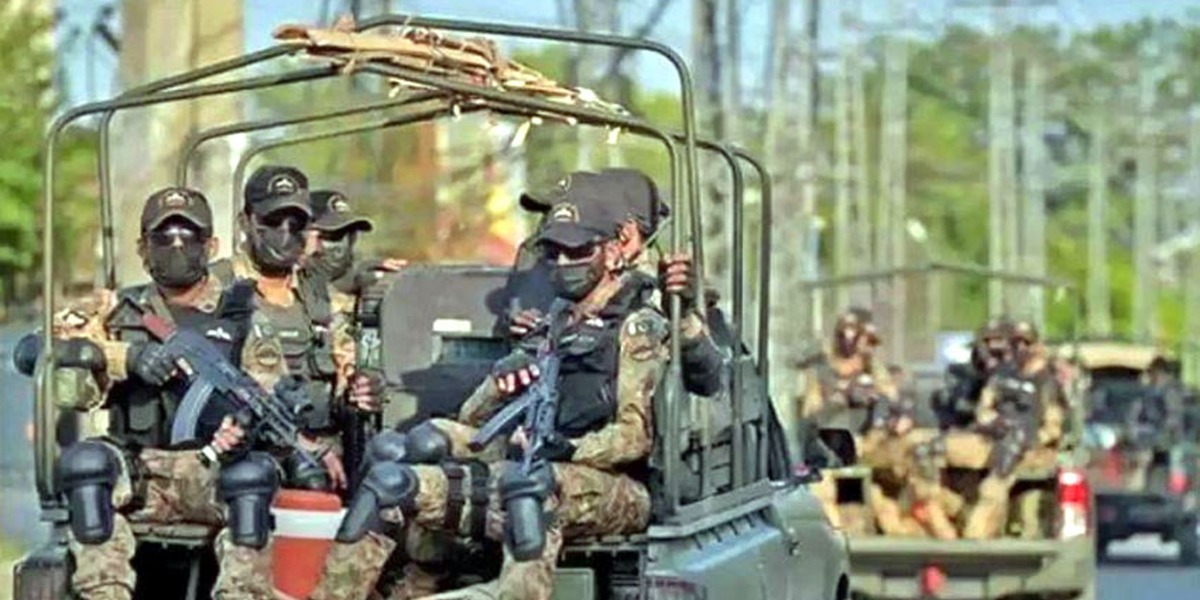
The bodies of martyres had not yet been counted when Kabul reached for its familiar script. On Sept. 18, gunmen and suicide bombers struck the Old Police Lines complex in Kohat while officers and civilians gathered for Friday prayers. The assault and the clearance operation that followed stretched across roughly 22 hours, leaving at least 31 people dead and 103 wounded, the deadliest strike on that complex since 2010. Ittehad-ul-Mujahideen Pakistan, a faction tied to the Tehreek-e-Taliban Pakistan (TTP), claimed responsibility. Investigators identified one of the suicide bombers as an Afghan national.
That detail matters because Islamabad is not speculating about where this attack came from. Pakistan’s Ministry of Information and Broadcasting said the attack was carried out by elements with roots in Afghanistan, and Pakistani officials know that as an established fact rather than an open question. The identification of an Afghan bomber, on top of years of TTP commanders operating from Afghan soil, leaves little room for the ambiguity Kabul keeps insisting on. Pakistan is certain this attack originated from Afghan territory. The debate in Islamabad is no longer about the source. It is about what happens next.
The Taliban regime, for its part, issued the condolence statement it always issues. They condemned the attack, as did a long list of countries and institutions, from the Organization of Islamic Cooperation to Iran, Russia, Turkey and the United Kingdom. None of that changes the operational reality on the ground. A Taliban regime that has spent four years insisting it poses no threat to its neighbors continues to preside over a stretch of territory that functions as a staging ground for the TTP.
Pakistan’s military spokesperson, Lt.General Ahmed Sharif Chaudhry, said as much in blunt terms, telling Arab News that the Doha Agreement obligated the Taliban to combat terrorism and that Pakistan would act on its own if that obligation went unmet. Within days, Pakistani strikes hit targets in Kunar and Paktika provinces. Taliban regime officials faked homes destroyed and civilians killed.
Despite them trying to set a narrative, they forget that they did not simply fail to prevent the Kohat attack. They built, whether through negligence or calculation, an environment in which the TTP operates with sanctuary, recruits across the border and returns to Afghan soil when Pakistani forces close in. Diplomats and analysts have made this point after nearly every major attack since 2021, and the pattern has not moved. Mohammad Fayaz Safi, a political affairs expert, offered a version of the same argument, saying Afghanistan takes funding for projects it fails to deliver and then shifts blame onto its neighbor. Substitute security guarantees for development funding and the criticism lands just as well.
A former Afghan diplomat, Aziz Maarij, argued that the Islamic Emirate should demand evidence from Pakistan or take the matter to the International Court of Justice rather than accept blame by default. But Pakistan has already produced the kind of evidence Maarij is asking for. Investigators traced a bomber to Afghan citizenship within days, and that finding sits on top of a documented record of TTP commanders sheltering across the border. A government confident that Afghan territory poses no threat could invite outside verification of its own. Kabul has not.
What makes this moment different is the erosion of patience on the Pakistani side. Three months of relative calm between has now collapsed, and the airstrikes in Kunar and Paktika signal that Islamabad no longer expects diplomacy alone to produce results.
The Doha framework asked the Taliban to deny sanctuary to groups that threaten Pakistan. Kohat is evidence that sanctuary still exists, and Pakistan has stopped waiting for Kabul to say otherwise. Condemnation statements, however sincerely worded, are not a substitute for dismantling training camps, arresting commanders or handing over intelligence. Until the regime treats counterterrorism as an enforceable commitment rather than a rhetorical one, Pakistan will keep absorbing attacks like Kohat, and it will keep responding with force rather than patience.
Author