

Pakistan Calls for Arab-Islamic Task Force After Israeli Strike on Doha
Pakistan has strongly condemned Israel’s recent airstrike in Qatar’s capital city of Doha, calling it a blatant violation of international law and a threat to peace in the Middle East. The strike,...

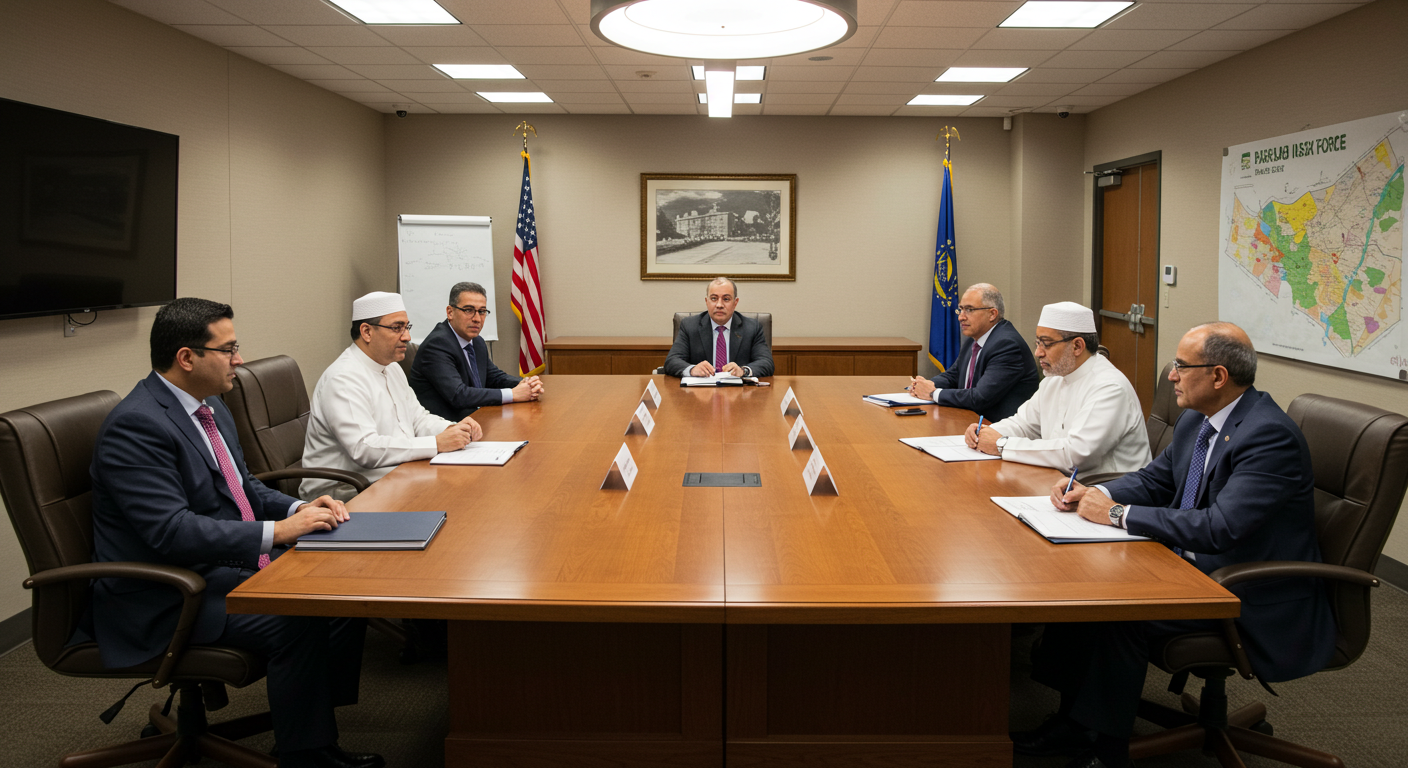
Pakistan has strongly condemned Israel’s recent airstrike in Qatar’s capital city of Doha, calling it a blatant violation of international law and a threat to peace in the Middle East. The strike, which took place earlier this week, killed at least six people, including senior Hamas leaders. On Sunday, Pakistan’s Deputy Prime Minister and Foreign Minister, Ishaq Dar, addressed an emergency ministerial meeting ahead of the Arab-Islamic Summit in Doha. He urged Arab and Islamic nations to form a joint task force to counter what he described as Israel’s “expansionist designs” in the region.
“Israel must be held accountable for war crimes and crimes against humanity. It should not be allowed to get away with attacking Islamic countries and killing people with impunity,” Dar said. He went on to propose the creation of an Arab-Islamic task force that would monitor Israeli activities in the region and develop both defensive and offensive strategies to deter aggression. According to Dar, the strike in Doha was especially concerning because Qatar had been actively involved in mediation efforts, working alongside the United States and Egypt, to try to secure a ceasefire in Gaza and negotiate the release of hostages. “Targeting Qatar is not only an attack on a sovereign state, but also an attack on diplomacy and mediation itself,” he stressed.
The attack has drawn sharp criticism across the Arab and Muslim world. Countries including Saudi Arabia, the United Arab Emirates, Egypt, Pakistan, and the Palestinian Authority have denounced the strike as a violation of sovereignty. Israeli Prime Minister Benjamin Netanyahu has recently made comments about expanding settlements in the occupied West Bank, describing the idea of a Palestinian state as something to be buried. He also spoke of his connection to the vision of “Greater Israel,” calling it a historic and spiritual mission. These remarks have fueled anger in Arab and Islamic capitals; with many leaders accusing Israel of pursuing policies aimed at permanent occupation.
Dar said Israel’s actions exposed a “rogue mindset” that disregards international law and undermines the credibility of the global system. “No state is safe from such an unhinged entity that defies all precepts of civilized behavior,” he warned. He also pointed out that the Doha strike had ended attempts to reach a ceasefire ahead of the upcoming United Nations General Assembly session in New York, where the Gaza war is expected to dominate discussions.
Pakistan has been in constant opposition to the military actions of Israel in Gaza. According to the figures given by Pakistani officials, almost 65,000 Palestinians, the majority of whom are women and children, have been killed by Israeli airstrikes and ground operations, since October 2023. Islamabad has demanded a full stop and accountability of Israel over the alleged war crimes. Pakistan is not on diplomatic terms with Israel and remains an advocate of a two-state settlement on along the lines of 1967, with East Jerusalem (Al-Quds Al-Sharif) as the seat of a new Palestinian nation.
In his speech at Doha, Dar expressed Pakistan in its complete support of the right of Qatar to protect its sovereignty and territory integrity within the UN Charter. He commended Qatar on its significant and positive contribution towards mediation and maintaining avenues of communication. He said that we know of Qatar, its relentless and committed efforts with everybody, even in the most difficult conditions, to further the peace prospects.
📄 POLICY WIRE WHITEPAPER PUBLISHED: PAKISTAN'S NATIONAL SECURITY POLICY PRIORITIES
👉 READ BY CLICKING HEREDar also held a meeting with the foreign ministers of Malaysia, Bangladesh, and Iran on the fringes of the ministerial meeting. The Pakistani Foreign Ministry subsequently stated that the four countries had decided that the acts of Israel were a serious infringement of the international law and sovereignty. They also reassured their unshaken support of the Palestinian cause and the necessity of unity of Muslim nations. The coming Arab-Islamic Summit in Doha will leave a lot of attention given to the crisis. Leaders would want to talk about the proposal made by Pakistan to create a joint task force but it is yet to be seen how far the Arab and the Islamic countries can go beyond merely passing verbal condemnations.
The statement by Pakistan on the need to have a coordinated Arab-Islamic reaction underscores its policy towards Palestine over a long period of time. The governments in the Islamic capital have opposed any normalization of the relations with Israel until a fair solution to the Palestinians is reached. The demand to have a task force is an indication that Pakistan wants Muslim states to stop talking and start acting. Analysts however observe that it will be hard to unify a military or security system within the Arab-Islamic world due to the nature of interests held by the countries within the region. However, the high rhetoric displayed by Pakistan in Doha indicates that it wants to be actively involved in the collective action of Muslim world to the Israeli actions.
With the war going on, focus is currently shifting to the UN General Assembly sitting in New York. As ceasefire talks lie in ruins following the Doha strike, and Israel openly seeks to expand settlements, it seems that there is a low possibility of de-escalation. To Pakistan, it is a diplomatic challenge but an opportunity. It is attempting to strengthen its position as a firm advocate of the Palestinian cause and a participant in the fight against unilateral aggression in the Middle East by balancing itself with Qatar and other Arab countries. Regardless of the success or failure of the concept of an Arab-Islamic task force, Islamabad has been categorical that it wants the Israel actions to be held accountable and that it is urging the Muslim world to pull together in the process.
Author