

What happens when a nation’s sovereignty, its right to defend and govern itself, is under constant threat? For Pakistan, this is not theoretical. Continuous cross-border terrorism from Fitna al-Khawarij (FAK), operating from Afghan territory, has made it a lived reality. Since the Taliban’s takeover of Kabul in 2021, border security has deteriorated, testing Pakistan’s patience, resilience, and its religious duty to protect its people.
In Islam, defending life, property, and honor is not merely a right; it is a divine obligation. For Pakistan, this principle lies at the heart of its counterterrorism strategy. The struggle against FAK is not only a military necessity but also a moral and religious duty rooted in Shariah and international law.
Sovereignty and the Right to Self-Defense
Sovereignty is both a political and spiritual trust. Thomas Hobbes argued in Leviathan that the state exists because citizens grant it authority to protect them. John Locke saw self-preservation as a natural right, of individuals and, by extension, nations. Modern realist thinkers like Kenneth Waltz and Hans Morgenthau emphasized that in an anarchic international system, each state must rely on itself for survival, making national security a cornerstone of policy. For Pakistan, this necessity is not merely political; it is moral and Islamic.
Islam provides guidance on defensive action. Surah Al-Hajj (22:39) states:
“Permission [to fight] has been given to those who are being fought, because they were wronged.”
Surah Al-Baqarah (2:190) adds:
“Fight in the way of Allah those who fight you but do not transgress.”
Sahih Bukhari (Vol. 3, Book 43, Hadith 660) notes that
“He who is killed while protecting his property is a martyr,” honoring fallen soldiers and aligning with Pakistan’s defense efforts.
Pakistan’s Counterterrorism Efforts
Pakistan’s war against terrorism spans over two decades. After 9/11, Operation Al-Mizan (2002) targeted al-Qaeda hideouts in tribal areas. By 2007, FAK gained ground, resulting in hundreds of deadly attacks annually. The 2014 Peshawar school massacre, which killed 149 people, marked a moral and strategic turning point. Pakistan launched the National Action Plan (NAP), combining military action, legal reforms, and deradicalization programs based on Islamic justice (qisas).
Operation Zarb-e-Azb eliminated over 3,500 terrorists and destroyed more than 800 hideouts in North Waziristan, reducing terrorist incidents nationwide by 70%. Operation Radd-ul-Fasaad (2017) extended the mission nationwide. By 2022, Pakistan’s removal from the FATF grey list reflected global confidence in its counter-financing measures. After 2021, cross-border terrorism surged again. Operation Azm-e-Istehkam (2024) aims to secure borders and neutralize extremist sanctuaries.
The Quran anchors this policy in moral logic. Surah Al-Ma’idah (5:32) declares:
“Whoever kills a soul unless for a soul or for corruption [done] in the land, it is as if he had slain mankind entirely.”
To combat fasad (corruption and terror) is, therefore, to protect humanity itself.
Cross-Border Terrorism and Afghanistan’s Failure
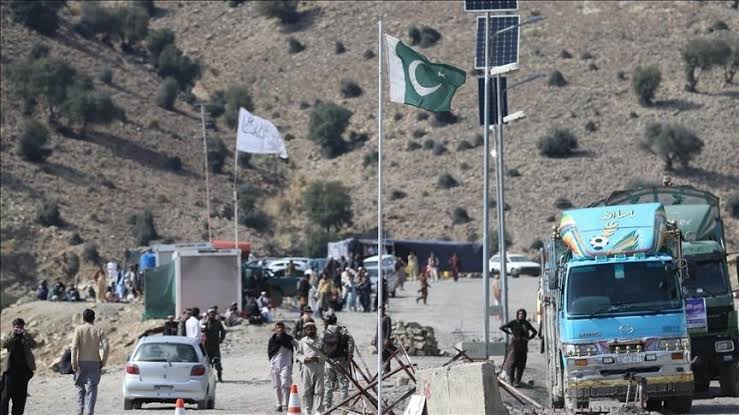
FAK militants enjoy safe havens in Afghan provinces such as Kunar and Paktika, launching attacks on Pakistani soldiers and civilians. The December 2023 attack in Dera Ismail Khan claimed 23 soldiers, while a September 2025 assault on the Frontier Corps headquarters in Bannu resulted in six fatalities. The UN confirmed over 500 cross-border attacks in a single year, and the CRSS reported a 46% surge in violence in 2025, with 2,414 fatalities across 901 incidents.
Such acts violate Islamic law. Sunan Abu Dawood (Hadith 2614) forbids killing women, children, or the elderly even in war. The Paigham-e-Pakistan Fatwa (2018) labels such violence as baghy (rebellion) against Islam. Pakistan’s defensive measures, including border fencing, intelligence operations, and precision strikes, are legitimate under international law and mandated by Islamic ethics.
Diplomacy and Restraint: Pakistan’s Pursuit of Peace
Despite persistent aggression, Pakistan has pursued diplomatic avenues to address cross-border militancy. China-mediated talks in 2021 and 2022 urged the Taliban Regime to expel FAK-linked militants, but no substantive action was taken. On October 11–12, 2025, 23 Pakistani soldiers were martyred and 29 injured when FAK militants launched attacks along the Pak-Afghan border. Pakistan responded with precision strikes, killing over 200 militants and destroying 21 hideouts.
Following a week of clashes, both countries agreed to an immediate ceasefire and committed to pursuing lasting peace, mediated by Qatar and Turkey. This reflects Quranic guidance in Surah Al-Anfal (8:61):
“And if they incline to peace, then incline to it [also] and rely upon Allah.”
Pakistan’s consistent preference for dialogue demonstrates adherence to Islamic ethics and international norms of conflict resolution.
Islamic Legitimacy and International Law
Pakistan’s counterterrorism policy rests on Shariah and the UN Charter. Surah Al-Baqarah (2:194) commands:“So whoever has assaulted you, then assault him in the same way,” establishing proportionality, a principle central to both Islamic and international law.
Classical scholar Ibn Taymiyyah classified rebels (bughat) as unlawful aggressors, legitimizing defensive jihad. Yusuf al-Qaradawi described terrorism as hirabah, unlawful warfare distorting Islam’s name. The Paigham-e-Pakistan Fatwa echoes this foundation.
Article 51 of the UN Charter affirms the right of self-defense. The ICJ, in Nicaragua v. United States (1986), recognized this as customary law. The Caroline Test (1837) legitimizes anticipatory self-defense when a threat is “instant, overwhelming, leaving no choice of means.” UN Security Council Resolutions 1373 (2001) and 2255 (2015) oblige all states to deny safe havens to terrorists. Pakistan’s countermeasures fully conform with international law and the UN’s global counterterrorism framework.
Faith, Law, and the Duty of Defense
Pakistan’s struggle against FAK terrorism is both a geopolitical and moral duty, sanctioned by Quranic verses 22:39 and 2:190. From Operation Zarb-e-Azb to Azm-e-Istehkam, and from diplomacy in Doha to dialogue in Beijing, Pakistan has pursued peace without compromising principle. Over $150 billion in counterterrorism efforts have built a resilient security architecture, while Afghanistan’s inaction continues to threaten regional trade and projects like CPEC.
- Pakistan’s response embodies the Quranic balance of strength and mercy: justice in defense, peace in victory. Both countries have agreed to a follow-up meeting in Turkey to consolidate the ceasefire, ensure sustainability, and implement verifiable monitoring mechanisms
Author