


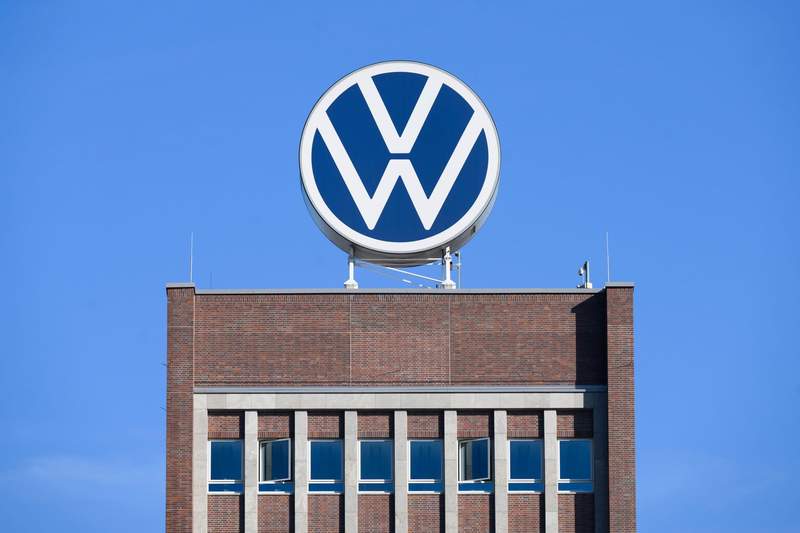
Osnabrück Plant: VW’s Denials Ripple Through Geopolitical Waters, Stirring Trade Debates
POLICY WIRE — Berlin, Germany — The ghost of industrial dependency casts a long, Teutonic shadow. Just when whispers gathered — not about efficiency gains or next-gen electric powertrains, but about...

POLICY WIRE — Berlin, Germany — The ghost of industrial dependency casts a long, Teutonic shadow. Just when whispers gathered — not about efficiency gains or next-gen electric powertrains, but about Volkswagen possibly relocating Chinese vehicle production to its storied Osnabrück plant — the auto giant abruptly yanked the rug out from under everyone. Denials, swift — and unvarnished, now echo where once there was mere conjecture.
It wasn’t an official announcement of a grand strategic pivot, more like speculative murmuring gaining undue traction. Yet, the very notion of a significant portion of VW’s Chinese output making the long journey back to Lower Saxony—specifically, the facility previously associated with specialty vehicles like the Porsche Boxster and Karmann Ghia—touched a raw nerve in Germany’s ongoing strategic rethinking. Because, let’s be real, industrial supply lines aren’t just logistical nightmares; they’re arteries pumping geopolitics and economic might.
Oliver Blume, Volkswagen’s CEO, wasted no time dousing the speculative flames. “Our strategy is clear: we focus on core competencies and innovation right here in Germany, ensuring future-proof production,” Blume told journalists, his words carefully chosen, meticulously clipped. “We don’t chase every whisper in the wind; we build futures, where they make sense, with our partners, global or otherwise.” It wasn’t an angry rebuttal, but a firm one, reinforcing the uncomfortable truth that while de-risking from China is the vogue, it’s not exactly a cheap or easy proposition, especially for a company so deeply enmeshed in the Asian behemoth’s market.
But the story isn’t just about what VW isn’t doing in Osnabrück. It’s about the gnawing anxieties haunting German industry, which—despite geopolitical headwinds and increasing domestic pressure—remains inextricably linked to the Chinese market. It’s a tightrope walk. You can’t just up and leave a market that, according to Germany’s Federal Statistical Office, made China Germany’s most important trading partner in 2023 for the eighth consecutive year, with a bilateral trade volume still exceeding 253 billion euros. That’s a hell of a lot of Euros, even with a slight dip in German imports from China. And it certainly isn’t an overnight break-up.
German policymakers, however, are beginning to feel the heat. They’re trying to square the circle of continued engagement with the very real push for strategic autonomy. Robert Habeck, Germany’s influential Minister for Economic Affairs and Climate Action, has been particularly vocal on this front, albeit with diplomatic caution. “Germany’s economic future isn’t a zero-sum game, but we’ve learned the lessons of over-reliance,” Habeck commented recently, reflecting the government’s nuanced stance. “Strategic diversification—not decoupling—is key to our resilience and competitiveness, whether it’s Asia or elsewhere. We’re actively exploring avenues to strengthen our domestic base and diversify our global relationships.” It’s all about playing the long game, isn’t it?
And where does that leave nations far from the Rhine — and the Yangtze? Consider Pakistan, for instance, a nation continuously grappling with foreign investment, especially from its burgeoning Chinese neighbor. If European giants like VW are hesitant to fully ‘re-shore’ even a portion of their manufacturing, it highlights how difficult it’s for countries like Pakistan to lure large-scale, high-value manufacturing against the gravitational pull of established industrial hubs and the sheer scale of China’s production capacity. It’s a complex global chessboard, where economic decisions in one corner of the world ripple, causing ripples across continents. The challenge for Islamabad isn’t just to attract, but to convince — against giants, frankly — that they’re a better bet than well-oiled Chinese factories, or even established European ones. This is particularly relevant when looking at strategic partnerships in a shifting security landscape, where economic ties are often just one facet of a much larger, more intricate mosaic.
What This Means
VW’s denial is more than just a clarification; it’s a stark reminder of the deeply entrenched economic realities binding Germany to China. For all the political rhetoric around ‘de-risking’ or ‘friend-shoring,’ major industries like automotive can’t just untangle decades of supply chain integration and market dependence overnight. The cost would be astronomical, the disruptions severe. What this signifies politically is continued tension between Washington’s hawkish stance on China and Berlin’s pragmatic, economically-driven engagement. Economically, it suggests that while future investments might increasingly flow to diversified regions or back home, existing large-scale operations in China are unlikely to vanish or significantly diminish in the near-term. This maintains Beijing’s leverage over critical European industries, forcing a nuanced diplomatic approach rather than an abrupt pivot. The subtext is clear: Europe talks tough on China, but its wallet often calls the shots. And, that’s precisely why nations like Pakistan, eager to carve out a greater slice of global manufacturing, face an uphill battle. They aren’t just competing with each other; they’re competing with a global industrial inertia that heavily favors existing powerhouses.