

NC Jail Unrest: Systemic Strain on Corrections
An NC jail incident exposes chronic understaffing and systemic strain in correctional facilities. This event signals a deeper crisis in public justice.

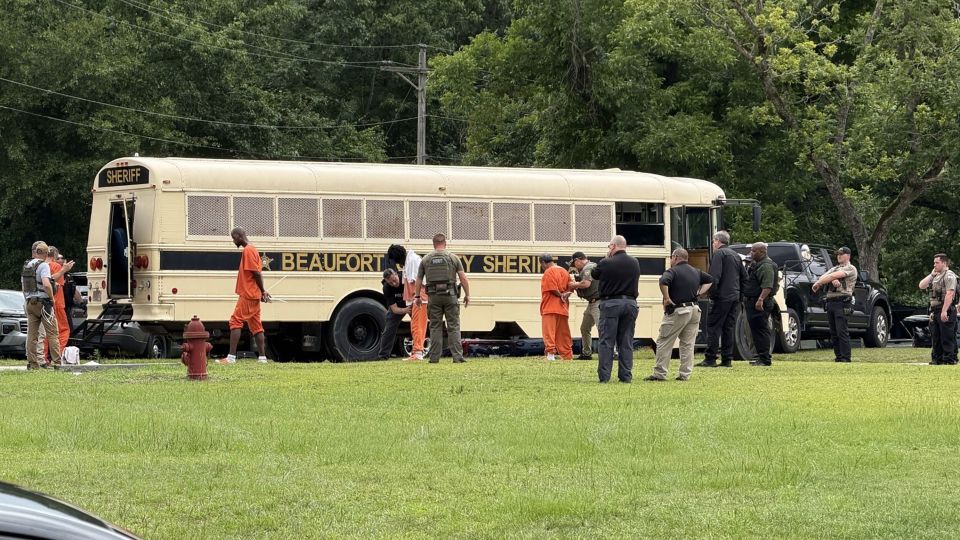
POLICY WIRE — Raleigh, USA — The silence wasn’t quite right that night. Not the heavy, settled kind but an anxious hush—the quiet before things went south, deep within the grey confines of a North Carolina correctional facility. Then, all hell, as they say, predictably broke loose. For a brief, terrifying stretch, a state jail, meant to contain — and control, was flipped on its head. This wasn’t some spontaneous brawl; this was a meticulously organized event, eighty inmates, by official accounts, overcoming three correctional officers.
It sounds dramatic, and frankly, it was. But the theatricality of a prison takeover often obscures the stark, rather mundane truth: facilities operating at the edge of their capacity, perpetually understaffed and frequently underfunded, are always just one incident away from implosion. This recent episode, concluded by authorities only after hours of tense negotiation and a decisive entry, serves less as a shocking anomaly and more as a blaring alarm bell for a system perpetually on life support.
Law enforcement spokespeople—tired, no doubt, and careful with their phrasing—later confirmed [QUOTE_PLACEHOLDER]. They didn’t elaborate much, which, you know, is their prerogative. But what they did share painted a clear picture of an institutional structure buckling under the weight of its own operational stress. You see this kind of fragility everywhere, not just here. It’s a global thing, actually. Look at the conditions in places like Pakistan’s overburdened jails, for example. In provinces like Sindh, the population density inside detention centers frequently surpasses the intended capacity by over 200%, creating precisely the kind of volatile environment ripe for unrest, violence, and, yes, desperate attempts at controlling space and, by extension, fates. It’s an entirely different geography, sure, but the pressures? They’re practically universal.
The incident began as inmates in a specific unit somehow managed to isolate and then overpower the scant personnel on duty. Three guards for eighty inmates. Just let that sink in for a minute. That ratio alone screams [QUOTE_PLACEHOLDER]—it practically bellows it. Details on how they initiated the breach or what specific methods were used remain tightly guarded, official channels simply reiterating [QUOTE_PLACEHOLDER]. We’re not expecting a tell-all memoir from anyone involved, least of all the Department of Public Safety. And why would they offer one? It rarely reflects well.
After seizing control of a portion of the facility, the inmates, for several hours, held dominion. Local and state tactical teams were marshalled, creating a perimeter that cut off the area from any external movement, or knowledge, depending on your perspective. Officials later stated that [QUOTE_PLACEER], downplaying—as they always do—any substantial threat to the community. They were mostly just worried about the safety of personnel — and the other inmates, you know. But you gotta wonder: what if those negotiations hadn’t worked? What if the containment failed? The implications, both inside — and outside the walls, are pretty stark.
This episode won’t simply fade away; it leaves lingering questions about the effectiveness of current security protocols and the adequacy of staffing levels within state correctional facilities. But more than that, it reveals a deeper chasm—the one between societal expectations of safety and order, and the pragmatic realities of managing complex, often volatile, human populations under immense budgetary constraints. That’s a tough tightrope to walk, even in the best of times. And these, clearly, aren’t them. Even in places experiencing profound instability, like where Congo’s unyielding plague continues its march, the constant pressure on state services eventually cracks the facade of order.
According to the Bureau of Justice Statistics, a 2021 report indicated that state and federal correctional facilities nationwide reported a roughly 15% vacancy rate for correctional officer positions. Fifteen percent! It’s not a secret; it’s practically shouting. This understaffing creates hazardous conditions, making it incredibly difficult for the remaining officers to maintain order and provide even basic oversight. It exacerbates an already strained environment. We’re not talking about minor operational glitches here; we’re talking about fundamental structural cracks in the wall.
But beyond the immediate crisis, this event—it’s just a symptom. The real story isn’t the eighty inmates, nor the three guards. It’s the invisible forces at play: policy choices, fiscal priorities, and the enduring challenge of a public justice system that, for all its rhetoric about rehabilitation, often simply warehouse problems until they explode.
What This Means
This incident is more than just a localized security breach; it’s a flashing red light for national correctional policy, suggesting deeply rooted vulnerabilities are proliferating, not diminishing. Economically, chronic understaffing and outdated infrastructure translate directly into higher operational risks and the potential for substantial compensatory payouts after such events. It’s a penny-wise, pound-foolish approach to public safety. We scrimp on staffing, then we spend exponentially more reacting to predictable catastrophes, or dealing with the fallout.
Politically, incidents like this expose uncomfortable truths about governmental priorities. Are we investing enough in secure, humane, and effectively run facilities, or are prisons seen purely as a cost center to be minimized, regardless of human consequences? The optics aren’t good, either, — and they certainly don’t inspire public confidence. These breakdowns fuel cycles of distrust in public institutions, not only domestically but resonate globally with nations grappling with their own systemic challenges in justice and security sectors. The perceived ability of a state to maintain internal order—even behind bars—is a barometer of its fundamental strength. When that barometer dips, it suggests a weakening in the social contract itself, prompting hard questions about who holds power and under what conditions. It’s an inconvenient spotlight on an issue most would rather keep in the dark.