


Operator-Guided Shaheds: Russia’s Drone Leap Signals Global Security Shift
POLICY WIRE — Washington, D.C. — It’s a chilling reminder that innovation in warfare isn’t always about stealth jets or nuclear warheads; sometimes, it’s about slapping an upgraded guidance system...

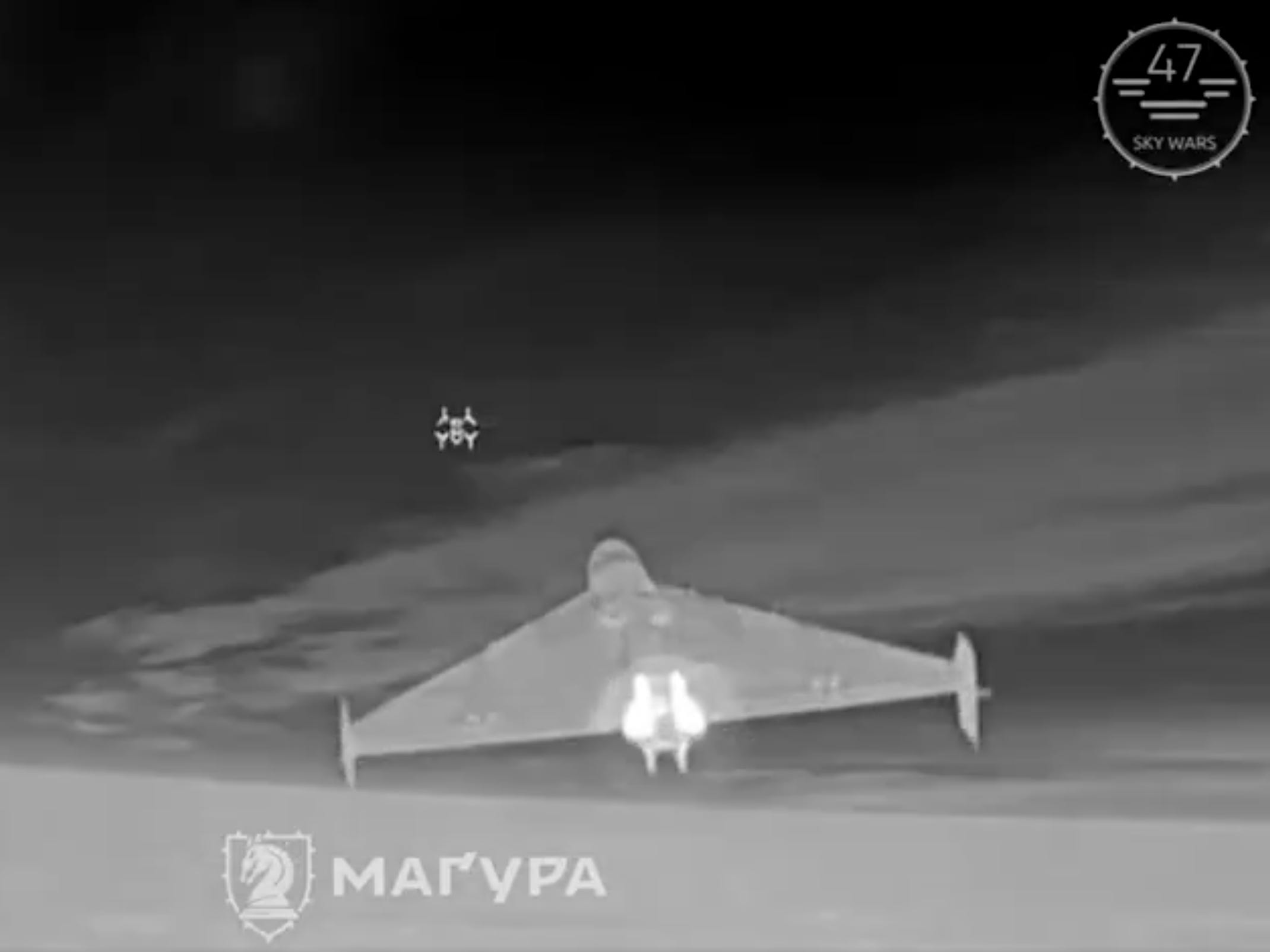
POLICY WIRE — Washington, D.C. — It’s a chilling reminder that innovation in warfare isn’t always about stealth jets or nuclear warheads; sometimes, it’s about slapping an upgraded guidance system onto a flying moped. The rather blunt announcement—that Russia is now, purportedly, turning more of its Shaheds into operator-guided drones that can hunt moving targets and dodge defenses—has a subtle, grim ring to it. Because this isn’t just about Ukraine’s front lines; it’s a bell tolling for defensive doctrines worldwide, especially in hot zones stretching across the Asian landmass.
Gone are the days when Shaheds, the inexpensive, noisy, Iranian-designed drones, were simply loitering munitions, pre-programmed for static targets. That era, it seems, is drawing to a swift close. The evolution, we’re told, transforms them into something more akin to sophisticated, slow-motion cruise missiles with a human operator’s cunning eye calling the shots in real-time. Think of it: a swarm of these things, guided manually, adjusting course to skirt anti-air batteries or re-acquire a suddenly changing objective. It changes the entire calculus of air defense. It truly does. [QUOTE_PLACEHOLDER]
But let’s be real here, this isn’t solely a Russian development. The blueprint for adapting low-cost platforms with advanced guidance has roots across the globe. Iranian drone technology, often considered foundational for these Shaheds, has consistently pushed the envelope for asymmetric warfare, giving state and non-state actors a significant punch for comparatively little cash. And we’ve seen this play out in various proxy conflicts. That expertise, frankly, has been a game-changer for many in the broader Muslim world looking for cost-effective deterrents or strike capabilities.
The implications for regions like Pakistan are substantial. A country perpetually navigating complex border dynamics with Afghanistan and India, and already dealing with varied threats, can’t ignore such advancements. What happens when every hostile airborne dot on the radar might just be capable of real-time recalibration and a precision strike? Their defense infrastructure, and indeed, that of their neighbors, needs to contend with a considerably more adaptable and operator-guided threat. We’re not talking about just shooting down dumb bombs anymore. This is something else.
But the arms race isn’t confined to grand statements. It’s often measured in fractions of a percent of GDP and the increasing cost of staying ahead of—or simply defending against—new technologies. Global military expenditure, according to SIPRI data, hit a record $2.44 trillion in 2023, reflecting a global drive to bolster defenses in a deeply uncertain world. Much of that goes to countering precisely these types of innovations. Russia’s reported upgrades don’t simplify that burden; they deepen it. Countries are pouring billions into missile defense and electronic warfare to stave off the threats posed by relatively inexpensive drone swarms.
And then there’s the economic ripple effect. Civilian infrastructure—power grids, water treatment plants, communications hubs—becomes even more vulnerable. Hardening these assets against persistent, adaptable airborne threats is an undertaking of staggering cost and complexity. You can’t just build a big wall; the danger, as it often does, flies over. Or it simply sneaks around the latest high-tech jammer because a human eye somewhere is correcting its flight path. It’s an unnerving thought, isn’t it?
This isn’t about one nation having a temporary edge. This is about the democratization of advanced destructive capability. What Russia is purportedly doing with its Shaheds now, others will undoubtedly emulate soon enough. Because this technology spreads. It morphs. It inspires new generations of weapons, driving a relentless cycle of offense and defense that has defined human conflict since forever.
We’ve entered a new phase of tactical warfare, where even the seemingly unsophisticated becomes terrifyingly precise and adaptable. It means armies, but more worryingly, populations, face an elevated threat level from munitions that are harder to predict, harder to intercept, and—quite frankly—cheaper to deploy. That’s a nasty combination, — and it’s one that forces a serious rethinking of what secure airspace even means in 2024.
What This Means
The geopolitical ramifications of Russia’s advanced Shahed drones are far-reaching. Politically, this development empowers aggressor states with a relatively inexpensive means to project power and exert pressure, potentially increasing the frequency and intensity of drone attacks in ongoing conflicts. It means more persistent, more destructive campaigns against fixed — and mobile targets. For nations like Pakistan, caught between regional rivalries and internal insurgencies, the accessibility of such sophisticated, yet budget-friendly, weapons changes their strategic calculus, forcing a rapid re-evaluation of border security and anti-drone defenses. It might also accelerate arms procurement from powers like China, seeking similar defensive or offensive capabilities.
Economically, this is a direct hit to stability. Defense budgets across South Asia, already strained, will face immense pressure to invest in state-of-the-art counter-drone systems, electronic warfare capabilities, and potentially, entirely new doctrines for urban defense. The cost isn’t just military; it extends to rebuilding infrastructure repeatedly damaged by these persistent threats. Businesses in vulnerable regions face increased insurance premiums, supply chain disruptions, and a general climate of insecurity that stifles investment. The global arms market, particularly for drone technology and countermeasures, is poised for significant growth, shifting capital flows towards military-industrial complexes at the expense of civilian development. The grim reality is that cheap, effective destruction translates into extraordinarily expensive, complex defense. And that, frankly, can become a debilitating burden for developing economies. It’s a vicious cycle.