


Operation Bunyan un Marsoos: Pakistan’s Strategic Signaling in the Face of Escalatory Indian Aggression
In the volatile regional theatre of South Asia, deterrence stability has long been dependent on a delicate balance that is constantly strained by historical animosities and persistent military...

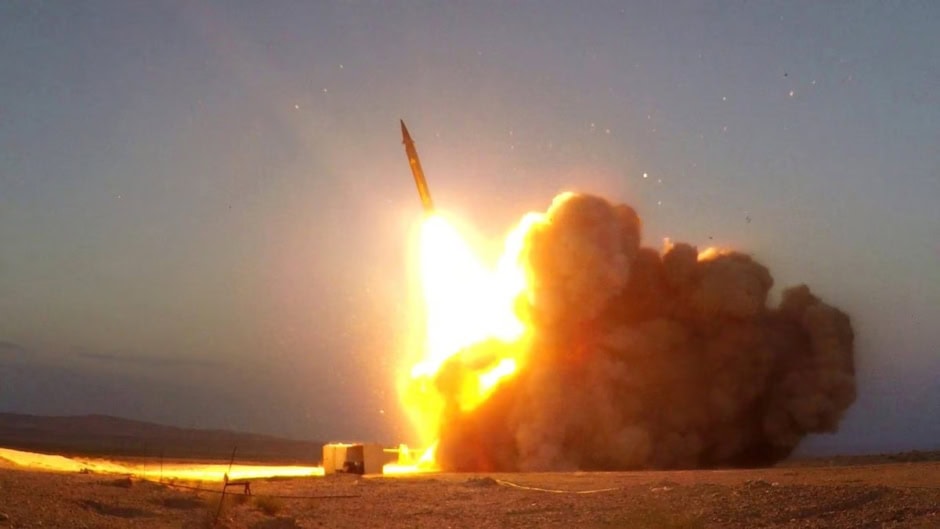
In the volatile regional theatre of South Asia, deterrence stability has long been dependent on a delicate balance that is constantly strained by historical animosities and persistent military provocations. May 2025 is an turning point moment in India and Pakistan’s nuclear relationship. Following India’s unilateral military incursion into Pakistani-administered territory, known as Operation Sindoor, the Pakistani government and military establishment launched Operation Bunyan un Marsoos. This was a measured but firm response based on the principles of defensive realism, deterrence through punishment, and strategic signalling.
The Trigger: India’s Strategic Adventurism
India’s Operation Sindoor was launched with the claim of targeting terrorist infrastructure allegedly responsible for the Pahalgam incident. However, New Delhi has failed to present any significant proof to corroborate its claim that the attack began on Pakistani soil. Despite repeated requests from the international community and neutral observers, Indian officials have not provided verified intelligence or independent verification. This conspicuous lack of evidence weakens India’s narrative and reveals the operation as an opportunistic act of military adventurism aimed at achieving domestic political goals.
In contrast to this, Pakistan has produced tangible proof to support its counterclaims. Pakistan provided detailed visual and technical data to international media outlets during a joint news conference hosted by the Director General of Inter-Services Public Relations (DG ISPR) and the Director General of Public Relations (DG PR). The proof included radar film, infrared imaging, and combat engagement records that confirmed the downing of an Indian Rafale aircraft and the interception of over fifty Indian drones across the western boundary. This transparency strengthens Pakistan’s credibility and legitimacy in the eyes of the global public.
Operation Bunyan un-Marsoos: A Strategic and Measured Response
Named after the Quranic reference to an “unbreakable wall” (Qur’an 61:4), Operation Bunyan un-Marsoos symbolizes more than a tactical maneuver. It represents a declaration of strategic resolve and a reaffirmation of Pakistan’s red lines. The operation, sanctioned by Pakistan’s National Command Authority (NCA), targeted Indian military installations with precision-guided missiles, drone swarms, and electronic warfare capabilities. Sites in Pathankot, Udhampur, and Rajasthan were among those neutralized to degrade India’s offensive capacity and convey a deterrent message.
This approach exemplifies the notion of deterrence by punishment. It is not simply retaliation, but a deliberate act of imposing unacceptable consequences on the offender in order to discourage future violations. Pakistan strengthens Mutual Assured Destruction (MAD) logic by displaying both its second-strike capabilities and its political determination to escalate if necessary. The warning is clear: further Indian provocations could escalate into a full-fledged conflict that no side can win.
Strategic Communication and the Role of Signaling
Pakistan’s doctrines of full-spectrum deterrence combines conventional, sub-conventional, and nuclear capabilities into a unified strategy. Operation Bunyan un-Marsoos should thus be regarded through the prism of strategic signalling. It conveys intent, capabilities, and well defined red lines to both India and the rest of the international community. The employment of credible and appropriate force in this setting improves both deterrent stability and strategic clarity. Statements from Prime Minister Shehbaz Sharif and Chief of Army Staff General Asim Munir have emphasised Pakistan’s commitment to preserving its sovereignty. The activation of the National Command Authority and open declarations of readiness are not escalatory measures. Rather, they are deliberately planned activities designed to strengthen deterrence credibility.
Pakistan’s commitment to share verifiable evidence through official channels and transparent media outreach strengthens its reputation as a responsible nuclear power. This type of strategic communication dispels myths and increases the credibility of Pakistan’s security concerns on a global scale.
The Deterrence Dilemma and Escalation Management
India’s continuous intrusions create a classic deterrence issue for Pakistan. On the one hand, inaction may indicate weakness and encourage additional aggressiveness. On the other hand, a strong response risks uncontrollable conflict escalation. Operation Bunyan un-Marsoos is a calculated attempt to establish escalation supremacy. It hopes to deter further adventurism and modify the risk calculation in New Delhi by demonstrating that Pakistan has the capability and political will to prevail at every rung of the conflict escalation ladder, from sub-conventional engagements to nuclear threshold responses.
📄 POLICY WIRE WHITEPAPER PUBLISHED: PAKISTAN'S NATIONAL SECURITY POLICY PRIORITIES
👉 READ BY CLICKING HEREThe transition from deterrence by denial to punishment is both strategic and necessary. Given India’s growing reliance on aggressive posture and disinformation, Pakistan cannot afford to rely merely on modest credible deterrence. Punitive deterrence, backed up by operational hypersonic delivery systems and short-range battlefield nuclear weapons, is now an essential component of Pakistan’s defence strategy.
A Call to the International Community
Pakistan has constantly demonstrated a preference for diplomatic engagement over militarised confrontation. Despite ongoing provocation, Pakistan has worked with the United Nations, the Organisation of Islamic Cooperation (OIC), and influential global capitals to promote de-escalation. Islamabad’s warnings have not been rhetorical flourishes, but rather sober assessments of the dangers presented by unrestrained Indian aggressiveness. However, the international community’s tepid response has emboldened India and eroded regional deterrence stability.
Operation Bunyan un-Marsoos should be viewed as a wake-up call. It is not just a warning to India, but also a signal to the international community that Pakistan’s strategic forbearance should not be interpreted as strategic weakness. Failure to interfere diplomatically at this point might have irrevocable effects, including the genuine prospect of nuclear war in one of the world’s most combustible regions.
The events of May 2025 are an historic turning point in South Asia’s changing strategic landscape. Pakistan’s response with Operation Bunyan al-Marsoos is not an act of escalation, but rather a necessary and balanced move towards restoring deterrence equilibrium. It is a response based on the essential logic of international relations, which prioritises state survival, strategic credibility, and sovereign integrity. In the absence of serious restraint from India, and in light of rising evidence of strategic irresponsibility on New Delhi’s part, Pakistan is quite justified in considering a shift towards deterrence through punishment. Mutual Assured Destruction is no longer a theoretical concept. It is a likely effect of ongoing miscalculations and political adventurism.
Peace in South Asia will remain elusive until all actors recognise that sovereignty is sacred and that, while theoretically stable, nuclear deterrence is extremely fragile in practice. Pakistan’s position remains clear till India reflects this realisation in its behaviour. Any further provocation will be handled with a serious, proportionate, and resolute response to ensure national security and regional stability.
Author