


Ohio Summer Festival Explodes in Gunfire, Raising Familiar Questions About Public Safety
POLICY WIRE — Toledo, USA — One minute, you’re swaying to live music in a tree-lined arboretum. The next, a celebration of community, history, — and the coming summer transforms into a primal...

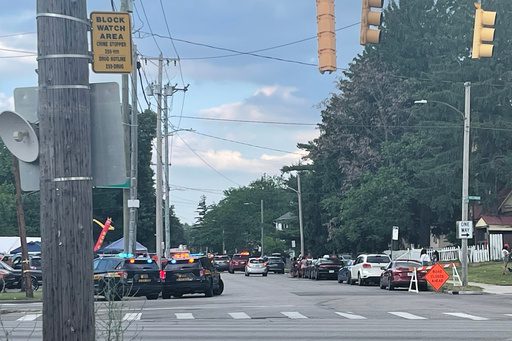
POLICY WIRE — Toledo, USA — One minute, you’re swaying to live music in a tree-lined arboretum. The next, a celebration of community, history, — and the coming summer transforms into a primal scramble for survival. The easy rhythm of Saturday, typically reserved for neighborhood cheer, was shattered by the staccato declaration of gunfire near Toledo’s Old West End Festival, sending people diving for cover, clutching loved ones—or, for some, rushing bravely towards the screaming.
It’s become a grotesque, predictable routine. A gathering. A crowd. And then, the unmistakable sound of something terrible unfurling. Over a dozen people, from ages 14 to 61, got caught in the crossfire—two of them in critical condition, we’re told. It wasn’t an isolated scuffle, either. Toledo Deputy Police Chief Joe Heffernan said it appeared that at least two people fired weapons and they were “probably shooting at each other.” The details are still murky, suspects elusive, but the scars are fresh, and deep.
Kevin Berry, a Navy veteran with medical training, was sitting just there, soaking in the music. Heard the shots. Heard people running. Then, he says, [QUOTE_PLACEHOLDER] And as soon as the sound receded a bit, he sprang up, saw a gun abandoned just a few paces away. But this isn’t about just an object, is it? It’s about the sheer audacity of violence erupting in a public square. He saw at least five people with gunshot wounds, their bodies spread out “around the arboretum area,” stark punctuation marks in a scene meant for joy. Imagine the confusion, the sudden, searing pain. You’d think these sorts of chaotic eruptions are rare in the quiet heartland of America, wouldn’t you?
But the numbers tell a different tale. Last year alone, according to the Gun Violence Archive, the U.S. logged 656 mass shootings, where at least four individuals were shot. That’s an awful lot of shattered weekends, an alarming tally for a country ostensibly at peace. This Toledo incident, however shocking on its face, just piles onto an already-groaning ledger.
Officials, as they often do, spoke with a mix of lament — and resolve. Ohio Gov. Mike DeWine said, [QUOTE_PLACEHOLDER] And then, the wistful statement of what should be: “Summer festivals should be safe spaces for families to spend time together without fear of violence.” You can practically hear the sighs through the official channels. George Kral, the city’s safety director, was left debating whether one of Toledo’s “most iconic festivals” should even continue. [QUOTE_PLACEHOLDER] he noted, his words carrying the weary weight of countless officials in countless cities repeating that very sentiment. He’s right; it’s an awful shame, one that plays out over — and over. That’s how a tradition, the [QUOTE_PLACEHOLDER] becomes merely another grim footnote.
The aftermath was messy, physically — and emotionally. Emergency workers struggled with closed roads and traffic, trying to get wounded citizens to hospitals within an hour—a logistical nightmare piled atop a human tragedy. But they did it. And that’s what happens, doesn’t it? The public endures. But for how long can we normalize such occurrences, allowing them to carve away at the simple act of gathering?
Here in the United States, we often view violent unrest through the prism of other nations—the perennial conflicts of the Middle East, say, or the localized insurgencies that still simmer in parts of South Asia. One thinks of Pakistan, for instance, where public celebrations, from religious processions to political rallies, frequently face the specter of bombings or targeted attacks. While the causes differ, the fundamental trauma inflicted on communal life—the erosion of trust, the deep-seated fear of simply existing in shared spaces—isn’t so distant. Whether it’s a suicide vest in a marketplace or a casual shootout at a music festival, the cost to a society’s soul is similarly ruinous, fraying the very fabric of peace.
What This Means
This incident, far from an isolated unfortunate event, serves as a harsh political barometer for America’s cities. It’s not just a police problem; it’s an institutional failure to manage the escalating normalization of public violence. For one, you’ve got the economic impact—what does this do to local businesses that thrive on these seasonal events? What does it do to tourism, even at a local level? If people hesitate to step out for an afternoon concert, that’s not just personal anxiety; it’s an insidious corrosion of the consumer base. Secondly, it signals a quiet capitulation on civic life. When authorities contemplate shutting down a major cultural event due to violence, it’s a clear indication that the basic promise of public safety is, for many, quite simply broken. This isn’t just about criminals; it’s about governance. Political leaders across the spectrum often claim control, but incidents like this speak louder than any carefully crafted statement. They remind everyone—citizens and would-be investors—that stability, that elusive cornerstone of prosperity, isn’t something to take for granted. Just as investors eye political stability in Islamabad or Dhaka before committing capital, communities here need to feel secure. The human cost is immediate; the economic — and social ripples? Those are much slower, but no less devastating, fundamentally reshaping the local political landscape for years to come.