


Nissan’s Great Wall Gambit: China-Made Models Signal Deeper Alignment, Shifting Tides for Global Auto Giants
POLICY WIRE — Tokyo, Japan — In an era rife with supply chain jitters and geopolitical friction, a quiet announcement from Nissan Motor Company has slipped beneath the general noise, yet it speaks...

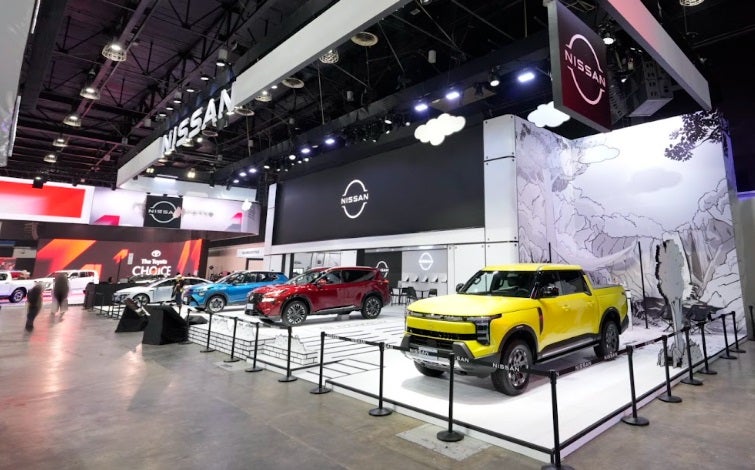
POLICY WIRE — Tokyo, Japan — In an era rife with supply chain jitters and geopolitical friction, a quiet announcement from Nissan Motor Company has slipped beneath the general noise, yet it speaks volumes about where the global automotive industry is actually heading. It wasn’t about flashy concept cars or record-breaking profits. It was simpler: the reveal of all-new Navara and Primera models, both proudly bearing the ‘China-made’ stamp.
It’s not just another product launch, is it? For a legacy Japanese automaker, pivoting to produce core models solely within China for, one presumes, the domestic and perhaps regional Asian markets, well, it’s a moment. It’s a calculated gamble. One that quietly signals an intensifying strategic alignment with Beijing’s industrial might, rather than just merely manufacturing for export or assembly. [QUOTE_PLACEHOLDER]
Automakers have, for ages, eyed China’s immense consumer base. That’s old news. But this move goes a step beyond the familiar joint venture dance or the assembling of knock-down kits. This represents a deeper commitment to the nation’s industrial ecosystem, a clear nod to the idea that the future of competitive automotive production, even for established global players, resides increasingly within the PRC’s borders. You don’t make flagship models like these in a vacuum; you do it because the infrastructure is there, the market demands it, and the cost structures make irresistible sense—not least because China accounted for over 31 percent of global automobile production in 2023, according to Statista.
But there’s also the uncomfortable flipside, isn’t there? Geopolitics. As Washington continues its strategic decoupling—or at least ‘de-risking’—from Chinese supply chains, companies like Nissan are quietly doubling down. They’re threading a needle between access to the world’s largest car market and managing potential blowback from Western capitals, which aren’t too keen on strengthening China’s manufacturing base further. It’s a delicate balancing act, something reminiscent of trying to navigate rumbling fault lines after a seismic event.
The Navara, Nissan’s workhorse pickup, and the Primera, once a staple sedan in markets worldwide, are now set to become symbols of this new, localized production strategy. Their birth in China speaks to the maturation of China’s own auto-parts ecosystem, meaning less reliance on imported components and more integration into domestic supply lines. That saves money. And for shareholders, that’s everything.
And what about those emerging markets? Countries like Pakistan, with its burgeoning middle class and persistent demand for affordable, reliable transportation, often look to a blend of local assembly and imported models. If a Nissan Navara or Primera is now China-made, it presents a fresh calculation for governments in Islamabad or other South Asian capitals. Does it open doors for more affordable imports? Or does it potentially face higher tariffs in markets that have traditionally been keen on Japanese imports but are now grappling with complex relationships with Chinese economic expansion?
Because ultimately, these aren’t just cars. They’re physical manifestations of global capital flows, trade agreements, — and technological transfer. They’re telling us a story about industrial interdependence—or perhaps, dependence—on China’s vast capacity. It’s not just a business decision; it’s a political statement written in steel — and silicon.
What This Means
Nissan’s strategy for the China-made Navara and Primera isn’t just about market segmentation; it’s about acknowledging an evolving global order. Economically, it deepens the integration of a major Japanese firm into China’s industrial complex, creating stronger bonds that will be increasingly hard to sever even under geopolitical pressure. This decision likely enhances Nissan’s competitive edge in the massive Chinese domestic market, offering tailored vehicles at potentially lower price points due to localized supply chains and manufacturing efficiencies.
Politically, this move subtly shifts power dynamics. It demonstrates that for all the talk of supply chain diversification away from China, practical commercial realities often dictate otherwise. Automakers can’t ignore the sheer scale — and efficiency China offers. For South Asian nations, this presents a nuanced dilemma. While potentially offering cheaper vehicle imports from China—now bearing established brand names—it could also contribute to a growing reliance on Chinese industrial output, affecting their own aspirations for local manufacturing or increasing their trade deficits with Beijing. It’s a strategic embrace of one economic powerhouse, but one that reverberates through an interconnected global system, hinting at where the manufacturing gravitational pull truly lies.
They’re not just building cars; they’re building tomorrow’s economic alignments, one factory at a time. It’s messy, complicated, — and utterly unavoidable.