
New York’s Latest Stance on Dissent: A Crackdown on House of Worship Blockades
POLICY WIRE — New York, United States — It used to be that a city council argument was mostly just that—an argument. Now, even that feels like a full-contact sport, often playing out in the streets...

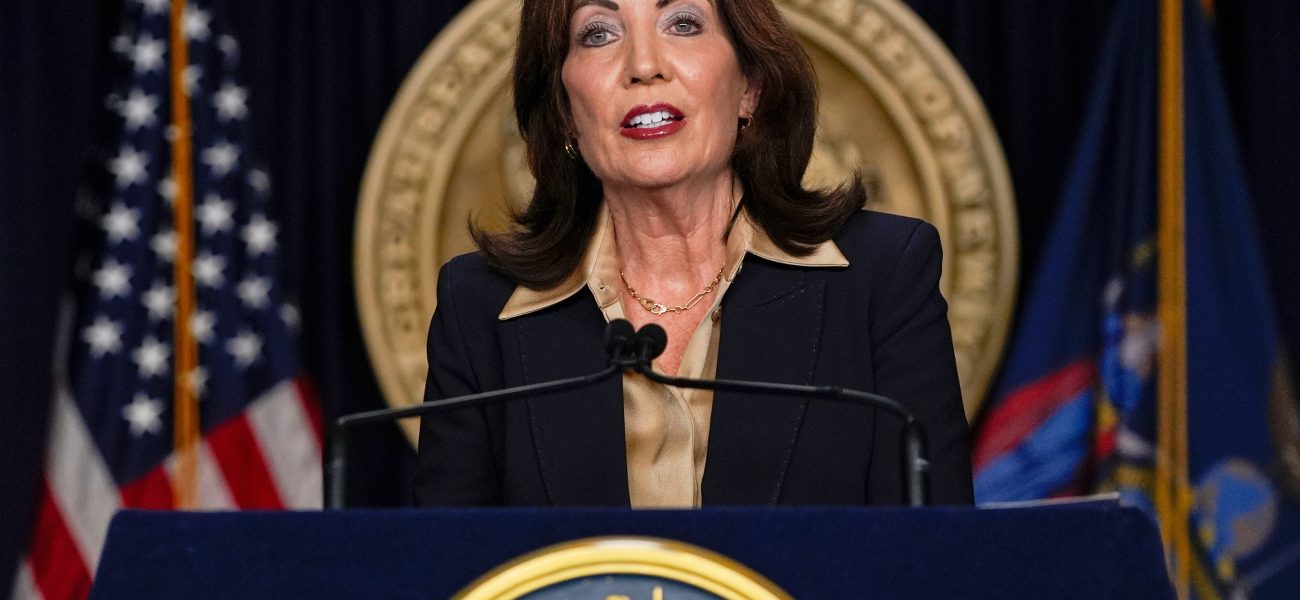
POLICY WIRE — New York, United States — It used to be that a city council argument was mostly just that—an argument. Now, even that feels like a full-contact sport, often playing out in the streets before it hits the legislative chambers. Take New York, for instance. After weeks, really months, of heated demonstrations near its religious institutions, the city fathers (and mothers) decided they’d had quite enough. You can protest, sure. But block the doors to a place of worship? That’s where they draw the line.
It’s a neat little piece of legislative maneuvering, isn’t it? An issue—the right to protest versus the right to worship—suddenly crystallizes into a law, all because of some highly visible (and oftentimes visceral) events outside synagogues. This isn’t just about decorum; it’s about drawing new battle lines in an increasingly tense civic landscape, where public space is becoming yet another arena for ideological warfare. The new measure effectively means that to [QUOTE_PLACEHOLDER] is no longer just bad manners; it’s now a crime. And boy, did that spark some arguments.
This isn’t some abstract legislative ideal conjured from a policy white paper. No, this bill emerged directly from the fallout of ongoing Middle East tensions. Protestors, many advocating for a free Palestine, have taken their grievances to the very doorsteps of synagogues—places where communities gather not just for prayer, but for solace, for identity, for what one might even call their cultural hearth. It’s hard to ignore when people can’t get into their own sanctuary, literally. The lawmakers, as one might expect, claimed a commitment to protecting religious freedom for all, saying [QUOTE_PLACEHOLDER] for members of any faith to safely access their houses of worship. And they’re not wrong, ethically, if you consider the base premise of not interfering with private communal activities. But the political optics? Well, they’re something else.
It’s not hard to see why this kind of legislation, while seemingly straightforward, raises hackles. Free speech, after all, is the lifeblood of dissent. But there’s a thin, sometimes vanishingly thin, line between expressing a viewpoint and disrupting the fundamental rights of others. This is precisely the tightrope New York’s administration is trying to walk—or rather, has just pushed off. They’ve decided one right, the right to worship unimpeded, outweighs the absolute freedom to protest anywhere, anytime, any way you like. This law—signed with much fanfare, no doubt—changes the game for protestors across the city, criminalizing tactics that have historically been part of the repertoire for movements seeking maximum visibility.
And you know, this isn’t just an American quirk. These clashes over public spaces — and religious sensitivities echo globally. In a place like Pakistan, for example, debates over religious freedom and public expression take on an entirely different weight, given its often volatile interfaith dynamics. Protecting minorities, particularly their places of worship, is a constant, complex challenge there. Blasphemy laws, for instance, demonstrate a legislative zeal to protect religious sentiment that far outstrips what we see in New York, albeit with drastically different, and often draconian, consequences. There, merely criticizing a religion can lead to extreme penalties, let alone blocking entry to a mosque, temple, or church. It shows you how differently societies grapple with the sacred — and the profane, and where they draw their lines.
The city’s move hasn’t just pleased—or dismayed—activists and congregants. It’s stirred the pot for civil liberties advocates who warn of a chilling effect. What constitutes ‘blocking entry’? Is standing near a doorway an obstruction, or do you need to physically link arms? Such ambiguities will inevitably find their way into the courts, offering fertile ground for legal challenges. A report by the Brennan Center for Justice, for instance, noted a nearly 20% increase in legislative attempts nationwide over the past five years to restrict protest activities, often under the guise of public safety. This new New York law slots neatly into that emerging trend, albeit with a focus specifically on religious sites.
📄 POLICY WIRE WHITEPAPER PUBLISHED: PAKISTAN'S NATIONAL SECURITY POLICY PRIORITIES
👉 READ BY CLICKING HEREThe cynical observer might even suggest this is less about protecting congregants and more about managing public opinion. As we’ve seen increasingly since the early 2000s, especially with the 9/11 fallout and the subsequent global ‘War on Terror’, issues touching on religious communities, particularly those of Middle Eastern origin or connection, quickly escalate into political hot potatoes. And here we’re again, seeing politicians making legislative plays to try and put out those fires—or at least, move them elsewhere. It’s a tricky business.
And because the city administration felt [QUOTE_PLACEHOLDER] the increasing targeting of specific religious institutions, they acted. The political imperative to appear decisive is almost always stronger than the nuanced debate around civil liberties. So, they passed it. It’s a bill designed to cool tensions, but it’s just as likely to redirect them, maybe even escalate them. Time will tell, but New York rarely does anything quietly, especially when it comes to regulating public behavior.
What This Means
This isn’t just about New York cleaning up its streets. This new law carries substantial political — and social implications, resonating far beyond the Five Boroughs. Politically, it signals a hardening stance by local governments—likely influenced by higher-level political discourse—against forms of public demonstration deemed excessively disruptive or religiously targeted. It establishes a legal precedent that balances, or rebalances, freedom of expression with protection of religious worship, prioritizing the latter when it comes to physical access. Other cities grappling with similar protest scenarios are undoubtedly watching, seeing if this New York model provides a viable template for quelling what are often ideologically charged, emotionally super-heated public disturbances.
Economically, there are less direct but still perceptible ripples. Increased legal challenges will mean taxpayer dollars diverted to legal defense. the perception of increased public order, or conversely, a clampdown on protest, could affect New York’s image as a vibrant (if occasionally chaotic) center of progressive activism, which might, over time, subtly influence everything from tourism to business investment, depending on how various stakeholders interpret the city’s direction. More broadly, it underscores the ongoing geopolitics of identity and conflict playing out on local stages, turning city sidewalks into proxies for global battles. It won’t solve the underlying issues, not even close. But it’s certainly put a new weapon in the city’s arsenal for managing—or perhaps, just suppressing—discontent.