


New Mexico’s Mosquito Fight: Tragedy Drives New Policy
New Mexico launches a critical mosquito surveillance program, sparked by a senator's personal tragedy with West Nile Virus. Learn how NM is fighting this silent, deadly threat.

POLICY WIRE — Albuquerque, N.M. — It often takes a calamity, a deeply personal wound, for policy to catch up with a simmering threat. And in New Mexico, the latest legislative pivot towards public health, wrapped up in an unglamorous statewide mosquito surveillance program, started not with grand strategy but with a senator’s devastating family loss. Sometimes, the smallest adversaries — in this case, a buzzing, barely visible insect — bring down the biggest systems.
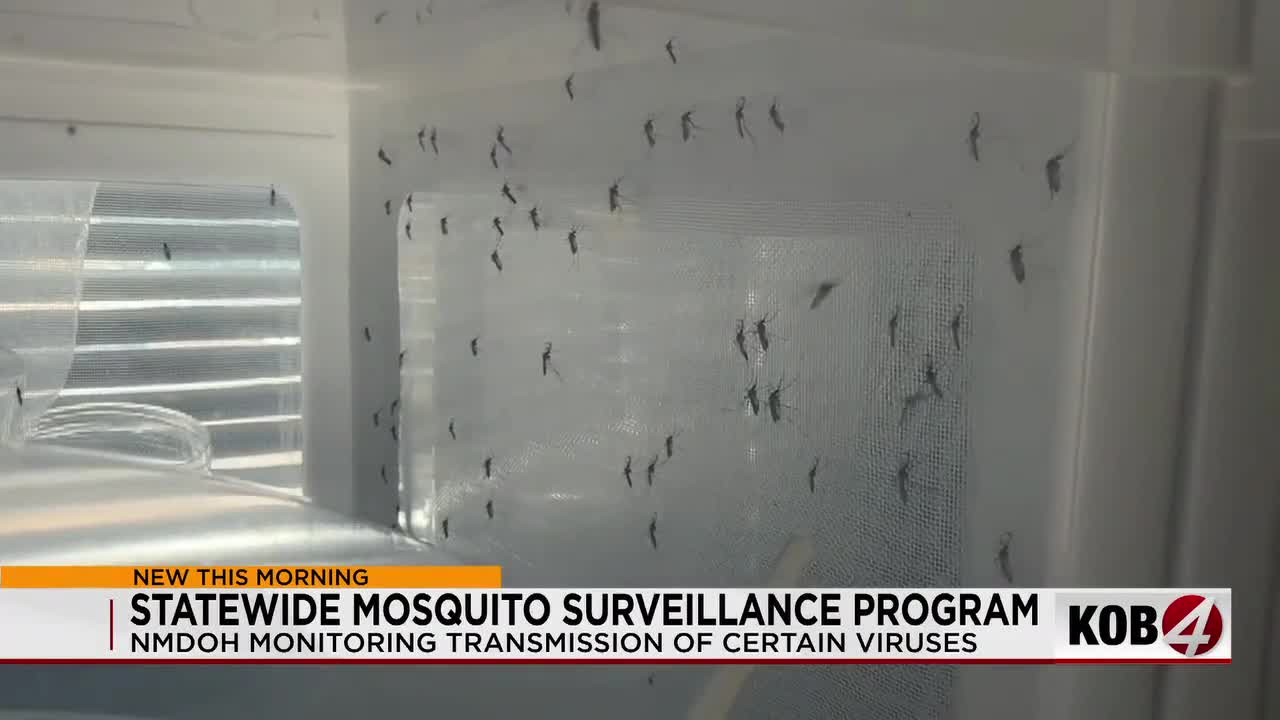
While most folks here might associate New Mexico’s political skirmishes with high-stakes energy deals or the state’s pressing internal debates, a far more insidious fight is now underway. The New Mexico Department of Health recently rolled out a new, unified system to track mosquitoes—the nasty buggers and their invisible, viral cargo. It’s an effort to get ahead of what could be a burgeoning public health crisis, identifying exactly which species are colonizing new areas, and what deadly payloads they might be ferrying.
Nick Pederson, who runs the Urban Biology Division for Albuquerque’s Environmental Health Department, put it rather bluntly: the city’s been parched. “We’ve been very dry. We’ve already seen the river dry down. So our numbers are pretty limited, we’re seeing them in pockets,” he explained. But there’s a catch: these adaptable critters? “A lot of these species are making more use of the neighborhoods and so it’s impacting more people.” See, when their natural watering holes vanish, they get creative, opting for suburban sprinklers and forgotten flowerpots. It’s an ecological squeeze playing out in our backyards.
Beyond the metropolitan hum, a significant information gap exists. “We have over 40 different species of mosquitoes here in New Mexico,” stated Dr. Erin Phipps, the state’s Veterinarian with the NMDOH, underscoring the sheer biodiversity of the threat. “We just don’t know what types of mosquitoes are circulating in different areas and we don’t know when the virus is circulating in those mosquitoes.” That unknown, folks, is where the real danger lies. The primary villain in this high desert drama is West Nile Virus, often an unseen, asymptomatic foe, but one that can, on occasion, hit with brutal finality.
But the abstract threat of a virus often remains just that—abstract—until it smashes into someone’s personal reality. For state Senator Nicole Tobiassen, it did precisely that last year. A mosquito bite in her own backyard. Her husband contracted West Nile. And because he was immunosuppressed, she says, “it ran rapid and hit him as hard as it can hit a human.” He fought for months, and then, last month, he died. Because of a mosquito.
That personal catastrophe didn’t just break her heart; it forged her resolve. Tobiassen threw herself into securing the state funding for this very surveillance program, recognizing the system’s previous blind spots. “We’re not putting enough attention, we’re not putting enough funding, we’re not putting enough education towards it,” Senator Tobiassen declared, a raw frustration barely contained beneath her measured tone. It’s a common complaint in public health: prevention, despite its clear efficacy, often takes a backseat until a crisis makes its cost undeniable.
Health officials here have already begun to detect climbing viral levels in mosquito populations around Bernalillo County. “When we see the virus rising in mosquito populations, that tends to precede human infections,” Dr. Phipps observed, outlining the grim predictability of it all. Last year alone, New Mexico grappled with a chilling reality: 52 confirmed West Nile virus cases. Eleven people didn’t make it home. Those are numbers that, frankly, ought to shake anyone out of complacency.
This program? It’s supposed to be an early warning system, a way to move from reactive scrambling to proactive defense. “We want to be able to be prepared to address those viruses if we see them transmitting locally here in New Mexico,” Dr. Phipps clarified. Of course, good data takes time to collect; it won’t instantly reveal all the answers, but it’s a necessary first step towards reclaiming some control from these tiny, deadly assassins.
What This Means
Politically, Senator Tobiassen’s ability to turn personal loss into public policy offers a compelling, albeit tragic, case study in legislative effectiveness. Her advocacy likely bypassed much of the bureaucratic inertia that often delays such initiatives. But her success also lays bare a more unsettling truth: how many other states are waiting for a similar personal tragedy before seriously investing in their public health infrastructure? Economically, the cost of illness—hospitalizations, long-term care for severe neurological effects, lost productivity—far outstrips the preventative measures. A well-funded, efficient surveillance system like this could be an immense net saver for state coffers, preventing the drain of expensive, crisis-driven medical interventions. Think about it: a dollar spent on monitoring is ten dollars saved in intensive care, maybe more.
And consider the global resonance here. While New Mexico frets over West Nile, many parts of the world, particularly South Asia—like Pakistan, for example—are locked in perennial, often desperate, struggles with a far broader array of mosquito-borne scourges: Dengue, Malaria, Chikungunya. Their seasons of torrential rain and immense population density often transform local mosquito infestations into national health emergencies, straining already fragile healthcare systems. Pakistan regularly battles devastating Dengue outbreaks that swamp hospitals and inflict immense economic damage, with tens of thousands of cases and hundreds of deaths annually. The lesson isn’t just about New Mexico; it’s about interconnected vulnerabilities. Climate change isn’t just heating our planet; it’s expanding the geographical reach and breeding seasons for these disease vectors, pushing them into new territories, like higher elevations or, in this case, drier, more urbanized environments previously considered less hospitable. New Mexico’s dry spells — and urban incursions are, in a perverse way, micro-reflections of larger global shifts. If the U.S. can’t effectively manage a comparatively limited threat with its resources, what hope do nations with greater disease burdens and fewer options have? It’s a sobering thought, one that ought to compel a more unified, better-funded approach to global public health.
In the interim, while politicians debate and scientists gather their precious data, common sense remains your best defense. A bit of bug spray never hurt anyone. But for collective action, we’ve got to drain those standing puddles – literal and metaphorical. It’s a shared responsibility, after all, because these tiny vampires? They don’t discriminate.