


NM Film Grants Boost Local Cinema & Preserve Heritage
New Mexico's indie film industry gets a vital boost from Santa Fe Film Institute grants. Discover how funding supports local stories, economy, and preserves cultural heritage. Apply by July 20!

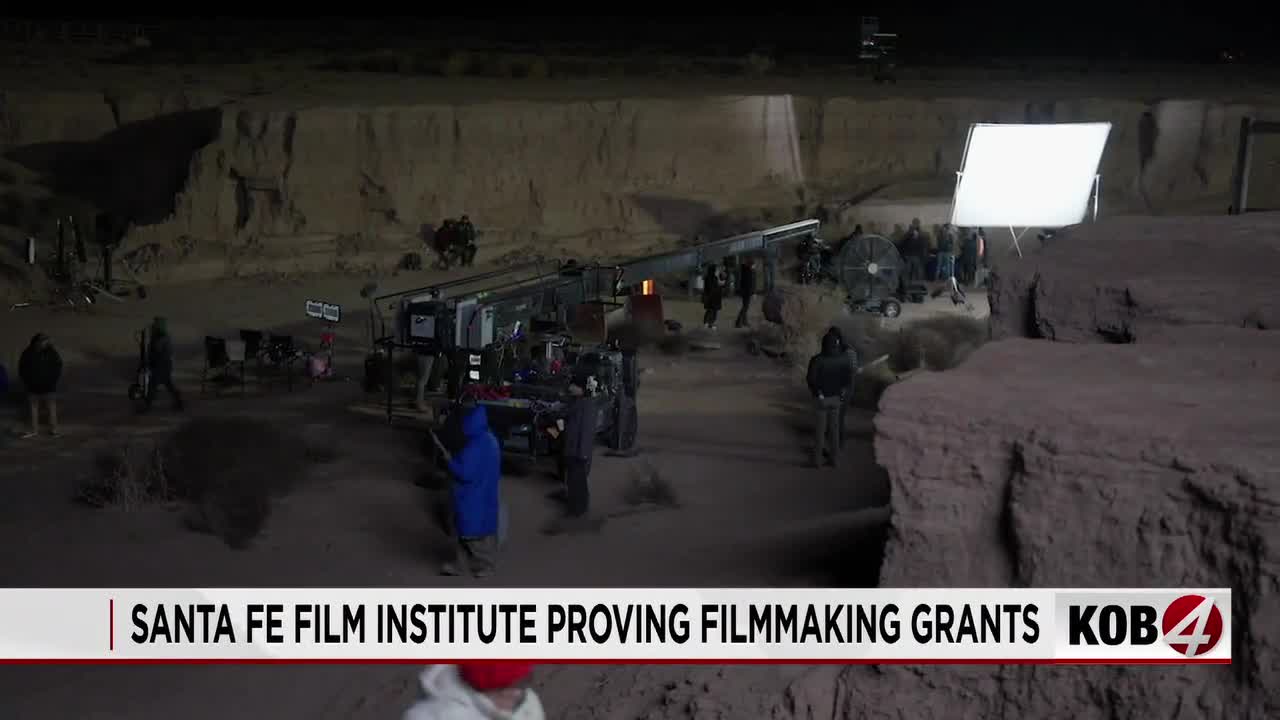
POLICY WIRE — Santa Fe, New Mexico — The light in New Mexico—it’s something artists have chased for centuries. A peculiar clarity, a stark beauty that hints at deep history — and an even deeper struggle. It’s this same, often romanticized, backdrop that independent filmmakers here find themselves battling, not just for perfect framing, but for fundamental funding. You’d think the land of Georgia O’Keeffe — and Breaking Bad might have cracked the code on cultural monetization. But it hasn’t always been easy, has it? This week, the Santa Fe Film Institute—a somewhat quieter force than Hollywood’s behemoths, for sure—stepped into that uneven arena, offering what amounts to a modest, yet significant, lifeline to those determined to tell their stories against long odds.
It’s tens of thousands of dollars, not millions, mind you. But for a fledgling film or a local director scraping by, that’s real money. It could be the difference between a passion project fading into the ether or actually making it onto a screen. Applications, we’re told, opened on Thursday — and are set to slam shut on July 20th. This isn’t some open-ended venture. It’s a sprint, folks, — and the institute isn’t shy about laying down the ground rules.
Filmmakers have a couple of options, reflecting the state’s dual priorities: broad regional engagement or pinpointed historical preservation. There’s the general ‘regional grant,’ which basically says, if you’re living in New Mexico or one of its dusty neighbors like Arizona, Oklahoma, Colorado, or Texas, you’re in the running. And then there’s the more specialized ‘Los Luceros Grant.’ This one narrows the field considerably. You’ve got to be domiciled in Rio Arriba, Santa Fe, or Taos counties, and crucially, a significant chunk—or all—of your cinematic endeavor has to play out at the historic Los Luceros site. It’s not just a set; it’s a silent character, waiting for its close-up.
“We aren’t just writing checks; we’re investing in narratives that resonate, that speak to the heart of what makes New Mexico, well, New Mexico,” commented State Representative Ana Flores, a vocal advocate for arts funding, in a recent, somewhat fiery, press release. She’s seen enough projects walk away because of funding gaps. “It’s about economic diversification, yes, but it’s also about giving our young people, and our elders, a mirror, and a microphone.” It’s hard to argue with that sentiment, isn’t it?
But the realpolitik here suggests a larger, unspoken tension. In an age dominated by streaming giants and algorithmically-generated content, preserving hyperlocal cultural identities through independent film—especially in economically marginalized regions—feels almost like an act of rebellion. You see this battle waged all over the world. From the struggling indie scenes of Peshawar or Karachi, trying to capture the subtle socio-political nuances of their lands against the backdrop of Bollywood’s commercial sheen or Hollywood’s cultural hegemony, to these desert landscapes. They’re both fighting for their stories to matter, to avoid becoming just another quaint footnote in a globalized monoculture. But here, the stakes feel a bit more immediate, a bit more personal, in the Land of Enchantment.
“Filmmaking here is a grind,” admitted Marcus Thorne, a Santa Fe-based director whose last feature premiered at Sundance, speaking to Policy Wire from his perpetually messy editing suite. “These grants? They don’t just provide capital; they provide a validation that somebody out there still believes in what we do, that our stories have value, that we don’t have to pack up and head to L.A. to get a shot.” His weariness was palpable. And you know, he’s not wrong. According to state economic reports from 2022, New Mexico’s burgeoning film industry, while growing, still contributes less than 2% of the state’s total economic output, leaving plenty of room—and pressure—for smaller initiatives to prove their worth.
What This Means
This initiative by the Santa Fe Film Institute, while appearing benignly artistic, carries considerable political and economic heft. It’s not merely a handout; it’s a targeted policy play. Economically, even ‘tens of thousands’ in grant money translates into immediate local spending—crews hired, equipment rented, catering bought, and maybe a few extra coffees at the corner shop. It’s a micro-stimulus for a creative class that, frankly, often operates on fumes. For a state like New Mexico, constantly grappling with the complexities of diversifying its economy beyond its traditional pillars of energy and tourism—and sometimes, quite literally, beyond quiet battles waged over territorial issues—these grants offer a strategic, if small-scale, investment in human capital and unique intellectual property. It’s a vote of confidence in the idea that locally grown content can have global reach. And because you’re encouraging films specifically tied to historic sites like Los Luceros, you’re baking in cultural preservation right from the storyboard. It forces filmmakers to engage deeply with the heritage, to essentially become its interpreters, bringing its faded stories back into the digital light. This isn’t just about art, then. It’s about identity, local economies, and subtly, the state’s persistent—and rather clever—campaign to ensure its distinct character doesn’t get lost in the shuffle of an increasingly homogenized world.