
New Mexico Scandal Rocks Federal Drug Enforcement: Agents Let Fentanyl Flood Streets?
POLICY WIRE — ALBUQUERQUE, N.M. — It’s a curious kind of police work that intentionally allows poison to flow into communities, isn’t it? Almost an act of perverse daring. That’s the unsettling...

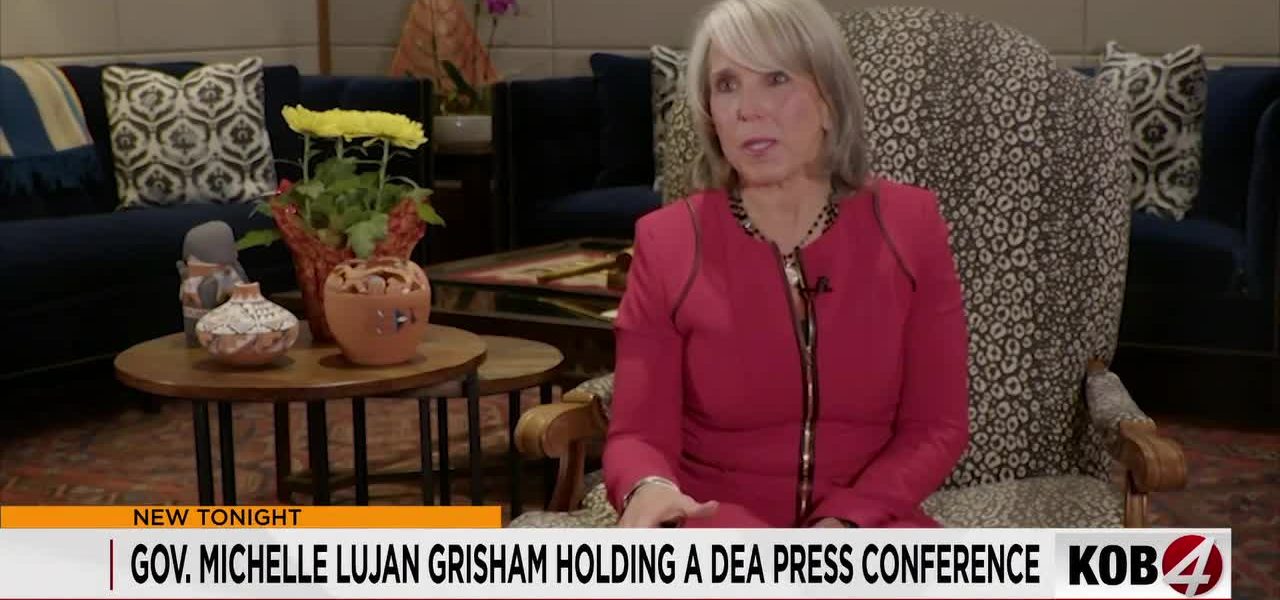
POLICY WIRE — ALBUQUERQUE, N.M. — It’s a curious kind of police work that intentionally allows poison to flow into communities, isn’t it? Almost an act of perverse daring. That’s the unsettling accusation now hanging heavy over the Drug Enforcement Administration, right here in the Land of Enchantment. What started as a local television news report — KOB 4’s scoop, for those keeping score — has since metastasized into a full-blown state-level criminal inquiry.
Gov. Michelle Lujan Grisham, she’s not messing around. No, sir. She wants answers. More to the point, she wants an independent legal reckoning. This isn’t just about bad optics or some run-of-the-mill bureaucratic screw-up. We’re talking about an alleged calculated strategy, concocted by federal agents, to let an unforgiving tide of fentanyl tablets—those little blue devils that’ve decimated swaths of American society—flow unabated onto New Mexico’s asphalt byways. The window? A staggering, almost audacious, stretch from 2023 all the way to 2025. [QUOTE_PLACEHOLDER]
Her Excellency wasted no time, not when faced with these claims. But why this supposed gambit? The reason, if you can believe it, was supposedly strategic. Apparently, per whistleblowers—always the whistleblowers, bless their inconvenient truths—the DEA saw virtue in allowing illicit drugs to spread. It seems some higher-ups believed in a grim calculus: let the small fish swim free with their lethal cargo, and eventually, maybe, they’d lead investigators to the kingpins, to the real big shots. That’s a bold play, ain’t it? Letting something that causes one person to die from an overdose every five minutes in the U.S. (according to 2022 CDC data) run rampant in the hopes of a larger score. For context, in 2022, preliminary data from the Centers for Disease Control and Prevention (CDC) indicated over 107,000 drug overdose deaths in the U.S., with synthetic opioids, primarily fentanyl, implicated in roughly two-thirds of those fatalities.
And now? Well, the fallout has begun. Gov. Lujan Grisham, she flat out requested that Raul Torrez, New Mexico’s Attorney General, launch a criminal investigation. Not a probe, not a review—a criminal investigation into the very allegations that DEA agents were told not to intercept fentanyl when they had the chance. Torrez, to his credit, didn’t dither. The investigation, we’re told, is already underway, commencing last Friday. But this isn’t the end of it; Monday’s agenda includes a high-stakes powwow. The governor herself is slated to huddle with local brass and law enforcement top guns to dissect exactly how New Mexico plans to wrestle this particular demon. The implication here is that local authorities, often on the front lines of this opioid crisis, were operating with one hand tied behind their backs by their federal counterparts.
You can bet your bottom dollar KOB 4, who initially broke this unsettling tale, will be there. Everyone’s ears will be tuned to hear just what protective steps, if any, our leaders envision for the lives ensnared in this unconscionable quagmire. But really, what’s happening in New Mexico — an entire state wrestling with accusations that a federal agency seemingly prioritized investigative optics over immediate public safety — is truly, breathtakingly stark.
What This Means
This isn’t just a local squabble; it’s got tentacles. Firstly, — and most obviously, trust in federal law enforcement will undoubtedly take a hit. How do you look your community in the eye and talk about fighting drug traffickers when federal agents are accused of essentially—either through benign neglect or calculated decision-making—funneling death directly into their veins? And it brings up sticky questions about institutional arrogance. The idea that agencies can play a long game with human lives as the chips? That’s a moral and ethical minefield.
📄 POLICY WIRE WHITEPAPER PUBLISHED: PAKISTAN'S NATIONAL SECURITY POLICY PRIORITIES
👉 READ BY CLICKING HEREPolitically, Gov. Lujan Grisham’s assertive stance positions her as a defender of her state’s citizenry, drawing a sharp contrast with what she paints as federal overreach or malfeasance. It’s an interesting political dance she’s doing, navigating state sovereignty against federal power. Because, let’s face it, if these allegations bear out, it paints a rather grim picture of operational priorities within the DEA, or at least a rogue element within it. Imagine if such claims, a tacit permission for drugs to spread for tactical gains, were perceived to be happening in developing nations. What would that do to international confidence in the war on drugs?
It’s an image problem. A big one. The United States has for decades urged countries globally, including our friends and occasional adversaries across Pakistan and the broader Muslim world, to tighten their borders and prosecute drug kingpins. We’ve poured millions into anti-narcotics efforts in regions notoriously fraught with illicit trade routes. And here we’re, facing allegations that our very own federal agents potentially turned a blind eye to lethal drug flows within our own borders for, get this, operational efficiency. That’s a rough pill to swallow for our own domestic public, let alone for those international partners we’re constantly pushing for more stringent enforcement.
And let’s not pretend the economic implications aren’t also swirling. Fentanyl doesn’t just kill; it shreds communities, depletes healthcare resources, — and stunts productivity. Letting it circulate for months or years, as the `whistleblowers said the DEA let fentanyl pills reach New Mexico streets from 2023 to 2025`, carries an immeasurable cost, well beyond what any successful prosecution down the line might offset. This New Mexico story, messy and unsettling as it’s, speaks to a broader, more existential crisis in how America confronts the unrelenting beast of drug addiction. It’s a reminder that sometimes the threats aren’t just at the border; sometimes they’re much, much closer to home.