


Nature’s Cruel Trick? Volcano Offers Unlikely Hope Against Potent Greenhouse Gas
POLICY WIRE — London, UK — There’s a morbid, almost perverse irony in how humanity scrambles to douse the fires of climate change, only to have a planet-sized extinguisher potentially manifest from,...

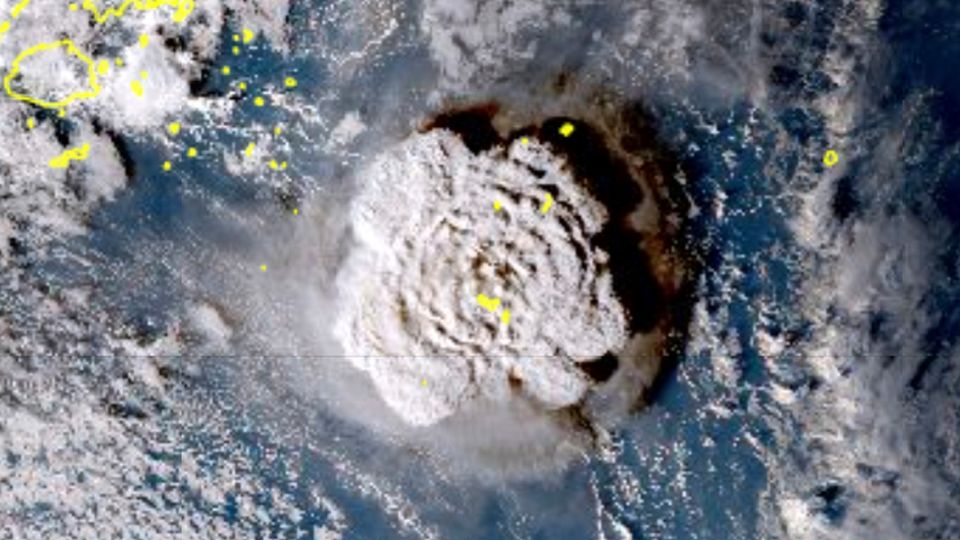
POLICY WIRE — London, UK — There’s a morbid, almost perverse irony in how humanity scrambles to douse the fires of climate change, only to have a planet-sized extinguisher potentially manifest from, well, a planet-sized eruption. It’s not often that cataclysmic events present something beyond a humanitarian crisis or a new layer of ash for future archaeologists to ponder. Yet, a peculiar whisper through scientific channels suggests that a violent volcanic eruption may have revealed a new weapon to tackle a potent planet-heating gas. The concept, admittedly, feels like a dark joke from an indifferent cosmos: nature breaking one thing, only to offer a Band-Aid for another, far more insidious wound.
It’s the sort of serendipitous, bewildering twist that policy wonks and environmental activists dream of—or perhaps have nightmares about, depending on their philosophical bent. For decades, the global struggle against atmospheric warming has primarily focused on carbon dioxide, the omnipresent ghost in the machine of industrial civilization. But methane, a lesser-discussed yet profoundly more destructive sibling in the greenhouse gas family, has quietly but persistently worsened our planetary fever. We’re talking about a compound with an initial warming effect roughly 80 times greater than CO2 over a 20-year span, according to the Intergovernmental Panel on Climate Change (IPCC) AR6 report. Just imagine, then, the implications of unlocking a natural mechanism to scrub this noxious pollutant from the skies. [QUOTE_PLACEHOLDER]
The details remain cloaked in preliminary research, naturally, but the essence hinges on post-eruption atmospheric chemistry. Picture plumes of volcanic gases—sulfur dioxide, aerosols, water vapor—shot miles into the stratosphere. These aren’t just pretty light shows; they’re ingredients for complex reactions. Scientists, it appears, have been observing unexpected oxidative processes, spurred perhaps by a unique cocktail of elements expelled from the Earth’s molten heart. It’s like finding a super-charged, natural air purifier where you least expect one: spewing ash, fire, and a bit of environmental redemption all at once.
For regions already reeling from the twin scourges of population pressure and escalating climate impacts, like many in South Asia, such a discovery could shift strategic priorities. Consider Pakistan, for example. It’s a nation whose climate vulnerability isn’t theoretical; it’s an annual, devastating reality of floods, heatwaves, and erratic monsoon patterns. While its contribution to global greenhouse gas emissions is relatively small, the impact on its vast agricultural sector and dense urban centers is disproportional. Methane, from extensive livestock rearing and widespread rice cultivation, forms a considerable chunk of its domestic emissions. Any breakthrough in methane abatement—even one with such an apocalyptic genesis—would hold profound implications for their ability to manage a volatile climate future.
And let’s be blunt: conventional solutions for methane, though sound, are difficult to implement at scale across diverse economic landscapes. Better livestock feed, improved waste management, fixing leaky natural gas infrastructure—they all require capital, political will, and technological transfer. What if, instead, the solution comes not from meticulous human planning, but from a geological burp? It’s not an excuse to cease our efforts, but it’s definitely a new angle to explore.
But the realpolitik here can’t be ignored. Even if this volcanic phenomenon presents a genuine, scalable avenue for methane reduction, its very nature introduces a Pandora’s Box of questions. Can we harness it? Should we? Who controls such a powerful, potentially global, mechanism? There’s an underlying discomfort when contemplating large-scale geoengineering initiatives—man-made or naturally inspired—after all.
It’s one thing to understand a process; it’s another entirely to actively manipulate it without triggering unforeseen collateral damage. Humanity, historically, doesn’t have the greatest track record with grand environmental interventions. We’re good at breaking things. Fixing them? Not so much, not usually, not without unintended consequences anyway. The sheer audacity of nature’s proposition is what catches the eye—a destructive force accidentally offering a balm.
What This Means
This nascent understanding—that nature itself, in its most violent displays, might inadvertently offer pathways for mitigating potent greenhouse gases like methane—rewrites a few fundamental assumptions in our climate policy playbook. Firstly, it adds an entirely new, deeply complex layer to climate mitigation research, moving beyond purely anthropogenic solutions to consider planetary self-correction mechanisms. This isn’t just about reducing emissions; it’s about understanding how the Earth system itself processes and perhaps ‘cleanses’ its atmosphere, albeit under extreme circumstances. For policymakers, it presents a bizarre dilemma: should we fund research into ‘natural’ geoengineering that’s triggered by disaster?
Economically, if a scalable and safe method to reduce atmospheric methane can be derived from these observations, the potential impact on carbon markets and national emission targets would be enormous. Suddenly, hard-to-abate methane sources—from agriculture in India and Bangladesh to permafrost melt in the Arctic—might have an unexpected antagonist. Imagine a world where the primary barrier isn’t just cutting emissions, but also understanding how natural processes can aid that effort. It challenges the conventional wisdom that environmental salvation lies solely in human industrial restructuring, hinting instead at an uneasy collaboration with planetary forces. And that, dear reader, is a rather profound thought.
For nations like Sri Lanka, already grappling with profound socio-economic shifts exacerbated by a changing climate, such a discovery offers a glimmer of systemic hope that transcends local efforts. It wouldn’t negate the need for national adaptation strategies or sustainable development, but it could buy precious time—a commodity becoming increasingly rare. the political optics of such a discovery could be fascinating. Which nations, or consortiums, would invest in researching the controlled release of specific compounds to mimic this volcanic effect, assuming such a thing is even feasible or desirable? The ethical quagmire alone would make the Copenhagen Accords look like a children’s tea party.
Ultimately, this isn’t about celebrating catastrophe; it’s about discerning whether profound destruction also holds inadvertent clues for survival. It asks us to look differently at the violent beauty of our planet, seeing not just the immediate havoc, but the possibility of complex, self-regulating feedback loops. The Earth, it seems, always has a few surprises left for us, especially when we’re least expecting them.