


NASA Accelerates Artemis Program with Apollo-Era Urgency to Build Moon Base
NASA adopts Apollo-era urgency to construct a lunar base and return astronauts to the moon, targeting 2028 for Artemis IV amid a new space race.

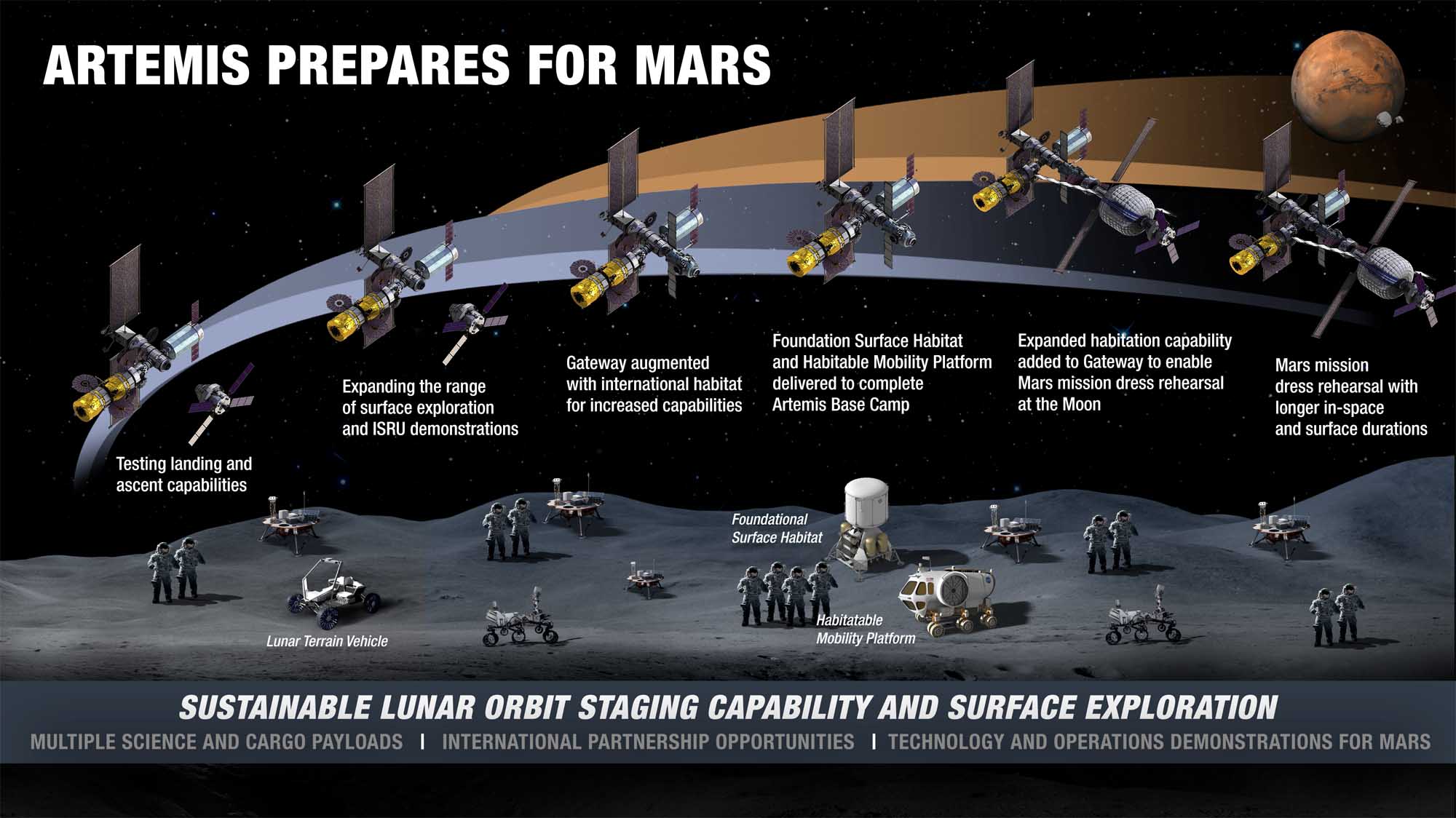
POLICY WIRE — Cape Canaveral, United States — NASA is aggressively accelerating its timeline to establish a permanent lunar base and land astronauts back on the moon within a two-year window, channeling the intense pace of the historic Apollo missions.
Administrator Jared Isaacman announced Friday that the agency remains firmly on schedule to launch Artemis III next summer for a crucial docking exercise involving lunar landers developed by Elon Musk and Jeff Bezos. The two-week mission will carry four astronauts into Earth orbit rather than making the trip to the moon.
Looking ahead, the milestone Artemis IV mission—marking NASA’s first crewed lunar landing since the Apollo era—remains officially targeted for 2028, according to Isaacman. This update follows closely on the heels of the successful Artemis II flight earlier this year, which carried four astronauts around the moon in humanity’s first lunar voyage in over half a century.
Agency officials stated that NASA will keep its options open as long as possible before officially selecting either SpaceX or Blue Origin to supply the Artemis IV lunar lander. Isaacman emphasized that the contemporary space race to land astronauts on the lunar surface, competing against China in a manner reminiscent of the historic rivalry with the Soviet Union, has grown much closer than necessary due to previous delays.
To counteract past sluggishness, NASA is actively cutting through bureaucratic red tape and eliminating unnecessary meetings while expanding its workforce as commercial partners like SpaceX and Blue Origin work around the clock. Isaacman stressed that adopting the intense urgency that defined the Apollo program between 1968 and 1972 is not merely a modern management gimmick, noting that the agency is simply returning to its own historical playbook that transitioned from Apollo 7 to Apollo 11 in a mere nine months.
Next summer’s docking practice will feature three NASA astronauts and one Italian astronaut launching aboard NASA’s Orion capsule in a complex sequence requiring three rapid launches from Cape Canaveral. Orion will first rendezvous with Blue Origin’s Blue Ghost vehicle approximately 270 miles or 435 kilometers above Earth before subsequently docking with SpaceX’s Starship in a slightly lower orbit.
Amit Kshatriya, NASA’s associate administrator, expressed enthusiasm for the upcoming flight choreography, describing it as an incredible spectacle for space enthusiasts. Meanwhile, initial efforts toward constructing a moon base near the lunar south pole are scheduled to begin before the end of the year with a secondary landing attempt by a Pittsburgh-based company, featuring a rover and various experiments following its earlier 2024 mission.
Additional rovers, orbiters, and landers will follow in quick succession to ensure a robotic transport vehicle is already waiting on the surface when the first Artemis astronauts arrive. To streamline operations and minimize risk, the initial moonwalkers will utilize a lighter, simplified spacesuit rather than the advanced gear currently being perfected by Axiom Space for extended future missions, with Axiom set to trial these sortie suits on the International Space Station next year.
NASA astronaut Frank Rubio, a member of the Artemis III crew, noted that establishing an enduring human presence makes this initiative exponentially more complex than the quick commuter flights of the Apollo generation. Describing the undertaking as profoundly ambitious, Rubio expressed unwavering confidence in the nation’s capabilities during a prior interview with The Associated Press.
Reporting by Policy-Wire (PW)