


WNBA Canada Expansion: Montreal Set to Make History
Witness history! Montreal is on track to set a new WNBA attendance record as the Toronto Tempo's Canadian tour sparks a nationwide women's basketball frenzy. A global expansion success story.

POLICY WIRE — Toronto, Canada — Forget the home team advantage for a second. Montreal, some 350 miles to the east of Toronto, is poised to snag a WNBA single-game attendance record next week, potentially eclipsing a 22,076 playoff high that’s stood for who knows how long. That’s the kind of gritty, unexpected plot twist only women’s basketball could deliver right now—an audacious global expansion proving its mettle not just in the designated home, but throughout the entire damned country.
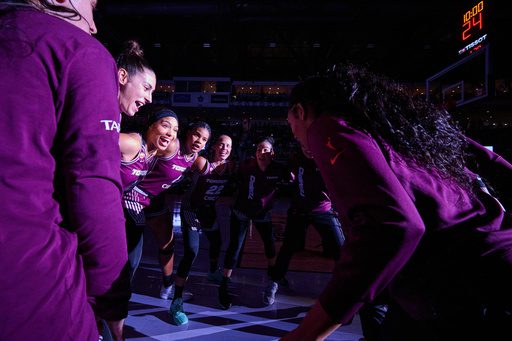
It turns out, establishing the WNBA’s first international team, the Toronto Tempo, hasn’t just been good for the league. It’s been a damn revelation for Canadian sports culture. The Tempo, still green in their debut season, are barnstorming the nation on their Cross Canada Series. This next stop, a pair of games at Montreal’s Bell Centre, which boasts a formidable capacity of 22,114 for basketball (AP reports, the Bell Centre is massive, it’s designed for spectacle), isn’t just a friendly exhibition. It’s a genuine chance for Canada to flex its newfound love for women’s hoops.
And let’s be straight: the Tempo are giving folks plenty to cheer about. Yeah, they’re sitting just one game under .500 with a 9-10 record, but Marina Mabrey, their guard, isn’t just playing; she’s scorching the net. She’s averaging 21.2 points a game, making her the third-best scorer in the WNBA. Mabrey already etched her name in the record books on June 25, matching a league-scoring high with an astonishing 53-point show against Los Angeles. It wasn’t a fluke, either. This is sheer dominance.
Because that’s the thing with trailblazers—they don’t just open doors; they blow the whole damn house down. Mabrey knows it too, looking ahead to Quebec. “I haven’t been to Montreal, so I’m excited to see who shows up for that and for us,” she stated, all business, all focus. But Mabrey gets the bigger picture, you know? She insists, [QUOTE_PLACEHOLDER] And she’s right; there’s a hell of a lot of history standing on those shoulders, [QUOTE_PLACEHOLDER]
But the story isn’t just about stats or spectacular individual efforts. It’s deeply Canadian. Kia Nurse, the lone Canadian player on the roster, has taken on unofficial diplomatic duties, smoothing out the bumps for her international teammates (the Tempo boasts players from eight different countries, mind you, and their coach is an Aussie, two-time WNBA champion Sandy Brondello). Imagine the culture shock, or lack thereof, facilitated by someone who simply knows where to find tamales. Or, rather, she helped ’em with the basics. “Early in the season, there were a lot of conversations around the most simple things,” Nurse said, painting a picture. She recounts how teammates were baffled by Canadian commerce. “I’m like, you want Shoppers Drug Mart. What are the grocery stores? Okay, this one is near your house.” Practical stuff, the kind of insight you won’t get from a coaching manual.
And now, these players are starting to grasp something much larger, too. “I think what everybody’s really starting to understand is how unique it is to play in a Canadian city and be the only Canadian team in the entire country, the same way the Raptors and Blue Jays are,” Nurse observed. But, boy, does she know what makes a difference: “We’re not on national television all the time in the US, but we are on national television every single game here in Canada, and that makes a difference, being able to reach people and get more love and excitement about women’s basketball. When we go to Montreal and when we go to Vancouver, the fans will fill out arenas.” And they will.
📄 POLICY WIRE WHITEPAPER PUBLISHED: PAKISTAN'S NATIONAL SECURITY POLICY PRIORITIES
👉 READ BY CLICKING HEREBut how about the person leading the charge? Sandy Brondello, the head coach, who played in the league back in its formative years, said she’s hearing from fans well beyond Toronto. “We are Canada’s team, and we actually do feel it,” she confirmed. For Brondello, this wasn’t just another coaching gig. “One of the reasons I took this job is because it was a new challenge in a whole new country, and we had this unique opportunity to grow the game even bigger here.” She’s seen the long haul. “I’ve been part of this for 27 of the 30 years, so I’ve seen the evolution from when I played in the early, early days to how it is now, and there’s a sense of pride to see that. Women’s sport is so much more talked about than just a decade ago, five years ago. It’s our time now, and Canada gets to see that.” That’s a sentiment that transcends borders.
What This Means
The WNBA’s foray into Canada isn’t just about hoops; it’s a shrewd, albeit perhaps initially understated, piece of soft diplomacy and cultural integration. By establishing a Canadian team, the league effectively extends its brand into a critical neighbor, bypassing some of the historical hesitations that often stall American cultural exports from fully rooting elsewhere. It demonstrates a belief in market expansion beyond the traditional U.S. consumer base, tapping into a global appetite for high-level women’s sports that might be overlooked by other, less visionary, sporting bodies. But it also highlights the stark contrasts in global sports development.
In many parts of the world, particularly within South Asia or predominantly Muslim nations, the narrative of women in professional sports remains fraught with challenges, from societal expectations to infrastructural deficits. The success of the Tempo in Canada offers a powerful counter-narrative, showcasing how dedicated investment and cultural acceptance can forge passionate fan bases and professional pathways for women athletes. For instance, countries like Pakistan, despite a population obsessed with cricket, face immense hurdles in nurturing women’s sports to this professional level. Challenges often involve deeply entrenched cultural norms that don’t always prioritize women’s athletic careers, alongside economic limitations that simply don’t support such endeavors. The contrast isn’t just economic, it’s philosophical.
And here in North America, we’re witnessing a unique form of regional integration. The Cross Canada Series isn’t just a marketing ploy; it solidifies the Tempo’s identity as “Canada’s team,” fostering a nationwide sense of ownership that few U.S. professional sports franchises ever achieve without relocation. It’s an economic gamble that’s demonstrably paying off, forging new consumption patterns — and sports loyalties. This sort of pan-national adoption within one country for a nascent league is truly an outlier in the global sports marketplace. It effectively broadens the league’s appeal and deepens its revenue streams beyond just a single urban center, cementing its international footprint. The WNBA, it seems, isn’t just playing basketball; it’s playing geopolitics, one sold-out arena at a time. The game’s on, folks. And it’s only going to get bigger.