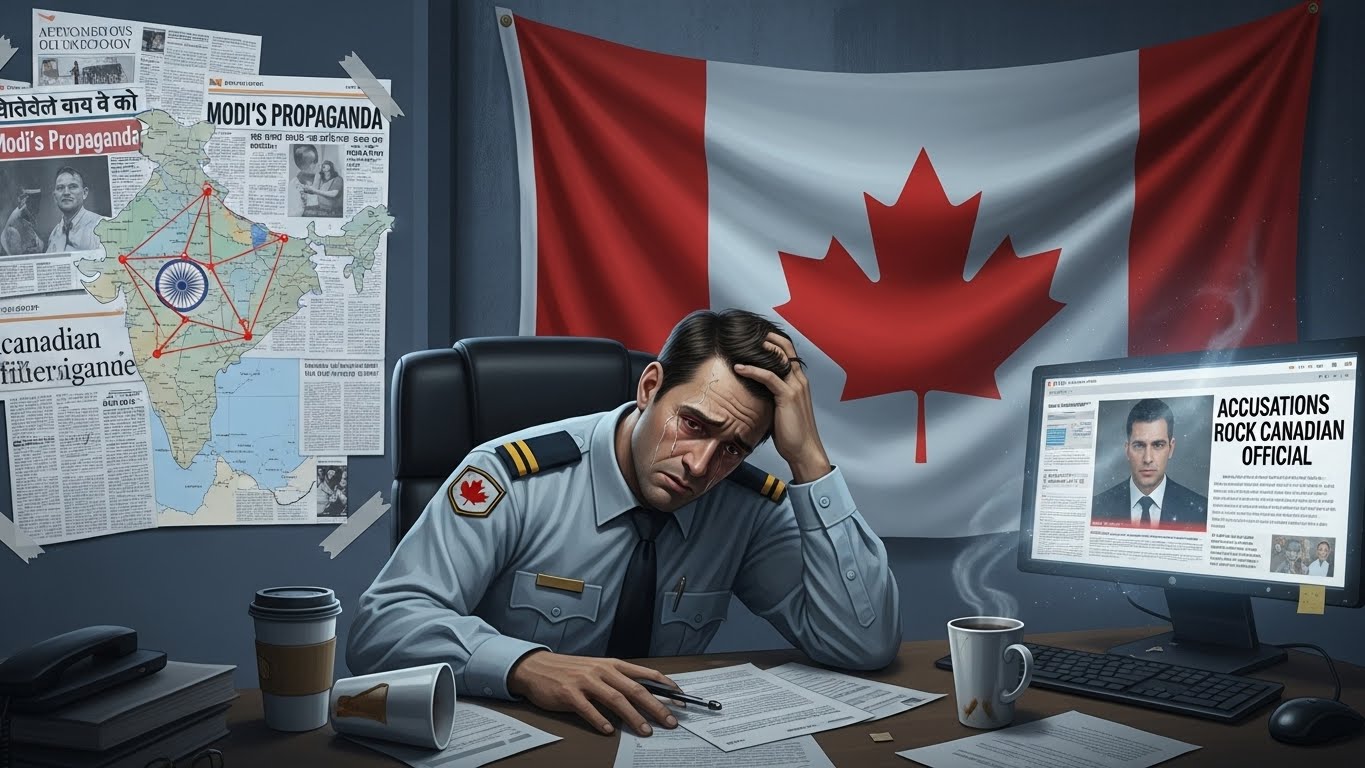
Modi’s Propaganda Machine Ruined a Canadian Officer’s Life
In the age of information warfare becoming a key factor in global politics, the case of Sandeep Singh Sidhu, a long-time career Canadian border services officer, sheds light on the very human cost of...

In the age of information warfare becoming a key factor in global politics, the case of Sandeep Singh Sidhu, a long-time career Canadian border services officer, sheds light on the very human cost of state-supported disinformation and poses some very pressing questions about the actions of the Indian government under Prime Minister Narendra Modi. What could have been considered a marginal diplomatic incident has become a grave charge of transnational repression and reveals how influential nations can use media and nationalistic discourses to damage reputations in other countries.
The Disinformation Playbook of India
India under Modi has long been pushing an agenda that demonizes critics, particularly Sikh diaspora members, as terrorists or a danger to Indian national security. This is not the first campaign to predate the Sidhu lawsuit; it was apparent in the aftermath of the killing of Hardeep Singh Nijjar, a Canadian Sikh activist shot dead in British Columbia in June 2023. After that murder, the Canadian government publicly charged Indian agents with a series of attacks on Canadian soil, and diplomatic expulsions ensued, as did a torrent of Indian media stories that portrayed Canada as a haven for extremists.
Indian news sources, most of which are affiliated with the ruling BJP and the political ecosystem of Modi, took advantage of this and created extremely sensationalized accounts. Within such an atmosphere, fringe media were used to transmit a wider messaging approach to depict Canada, and by proxy its institutions, as morally corrupt and hazardous to homeland security in India.
Sidhu: A Scapegoat of State Propaganda
In comes Sandeep Singh Sidhu, a superintendent at the Canada Border Services Agency (CBSA) and a lifetime resident of British Columbia. Indian news channels and pro-Modi influencers dramatized his character last October, labeling him a fugitive terrorist, calling him a mastermind, and accusing him of crimes he did not commit. Slogans such as “Trudeau’s tax-funded terrorist” and “Kanada rewards assassin” were blasted on banners, even though the Canadian authorities had no information to support allegations of misconduct on his part.
As the lawsuit Sidhu filed in the Ontario Superior Court claims, the fake story did not only misinform, but it also threatened his life. His name, photograph, and even his home address was spread in Indian media and on social platforms with open demands to arrest or kill him. The legal complaint filed by Sidhu believes that such activities were not just careless journalism but a state-sponsored disinformation scheme that the Indian government had organized to bring Canada down politically following the open criticism of New Delhi by the Ottawa government over its violence against diaspora Sikhs. He wants to receive 9 million dollars in damages.
Why This Matters
This is not the personal complaint of a single officer. It is representative of a larger trend of transnational repression whereby governments extend their influence beyond national boundaries to crack down on dissent, distort the truth, and attack those who do not ascribe to their vision of patriotism. Online harassment, legal intimidation, and disinformation have been reported by Human Rights Watch and other observers to be used by states such as India to silence critics in other countries.
Canadian research and reports have noted on numerous occasions that there are advanced attempts by Indian actors to manipulate Canadian mass opinion, politics, and individual reputations using disinformation and proxy networks. Even independent analysts have found online accounts and bots associated with pro-BJP networks that have been involved in organized harassment of Canadian Sikhs.
A Dangerous Precedent
The Sidhu case compels a serious reconsideration. When the media apparatus of a sovereign state is a de facto instrument of government propaganda, particularly one that is consistent with a populist, majoritarian agenda such as that of Modi, the effects go well beyond diplomatic posturing. They destroy the credibility of the media, distort general opinion, and, in this instance, put a person directly in the line of fire simply to make a political spectacle.
To the global community, it is a chilling message that disinformation has victims and that powerful governments are becoming more and more willing to use it to serve geopolitical purposes.
To ensure that liberal democracies can resist this erosion of truth and accountability, they need to insist on transparency, enforce international standards against transnational repression, and provide justice and protection to people such as Sandeep Singh Sidhu, who are victims of state-sponsored character assassination.
Author