


Mideast’s Shadow Dance Intensifies: A Perilous Cycle of Retribution Unfurls
POLICY WIRE — Washington D.C. / Tehran — The Middle East, an old hand at predictable escalations, finds itself once again caught in the vise grip of retaliatory strikes. No grand...

POLICY WIRE — Washington D.C. / Tehran — The Middle East, an old hand at predictable escalations, finds itself once again caught in the vise grip of retaliatory strikes. No grand pronouncements this time, no earth-shattering surprises—just the grim, methodical unraveling of an already frayed peace, a calculated escalation disguised as self-defense. It’s the region’s usual song — and dance, albeit with increasingly lethal choreography.
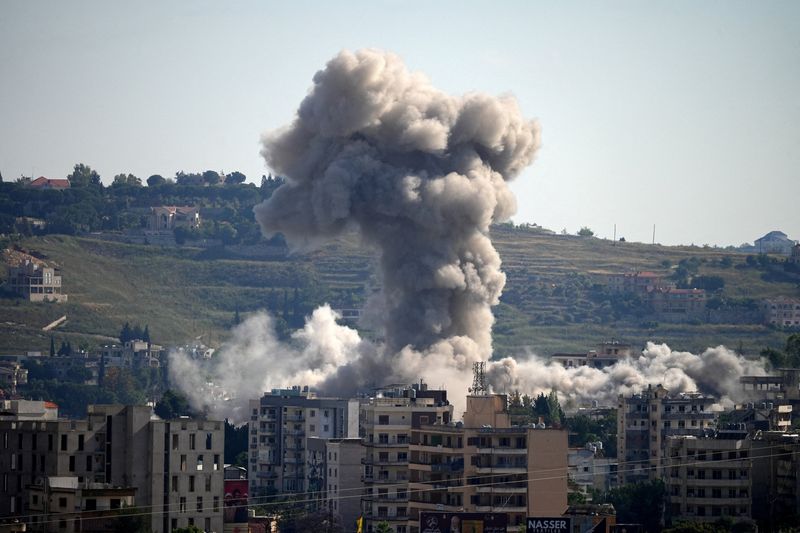
American jets roared into the night, pummeling what the Pentagon dryly termed “Iranian military sites.” And Tehran, never one to let an affront slide, wasted little time returning the favor. A precision strike, they claimed, against an air base. It all unfolds with the wearisome regularity of a monthly bill, only the stakes here involve lives and regional conflagration, not just your Netflix subscription.
“We won’t stand by as our personnel are targeted. This administration has made it abundantly clear: attacks will be met with decisive action,” stated U.S. Secretary of Defense, Lloyd Austin, in a briefing that managed to be both firm — and utterly unoriginal. Because, really, what else could he say? It’s the policy playbook’s oldest page.
But the Iranian riposte wasn’t just bluster. Foreign Minister Hossein Amirabdollahian, usually adept at diplomatic niceties, struck a different chord. “Iran reserves the right to respond to any aggression against its territory or interests. We won’t be intimidated by American bullying tactics,” he declared, a clear message meant for both domestic consumption and a wary international audience. They don’t often mince words, particularly when they feel cornered.
This isn’t some rogue operation, you understand. It’s part of a much larger, uglier chess match, a low-intensity conflict that periodically boils over, threatening to consume everything around it. Proxy groups in Syria, Iraq, — and Yemen act as an extension of Iranian power, frequently taking aim at U.S. forces stationed across the region—forces totaling more than 45,000 active personnel in the wider Middle East and Central Asia, a number that’s hovered robustly in that range for years, according to figures tracked by various defense organizations and policy groups. Each attack, each response, serves to ratchet up the tension another notch, a deadly spiral that neither side seems particularly inclined, or able, to stop.
And while Washington — and Tehran play their dangerous game, the ripples spread. Take Pakistan, for instance, a nation already navigating a volatile geopolitical neighborhood. Islamabad, a critical player in regional stability, often finds itself caught between allegiances, attempting to maintain delicate diplomatic balances. Any significant escalation between its neighbor to the west, Iran, and the global superpower, the United States, places immense pressure on its internal security and economic lifelines. Trade routes through the Gulf? Investment confidence? All suddenly look shaky. Its Western border is always a powder keg. For the broader Muslim world, these incidents feed into a narrative of continuous external interference and internal instability, reinforcing old grievances and complicating efforts towards regional cohesion.
It’s a stark reminder that what happens in the strategic heart of the Middle East never truly stays there. Every strike, every counter-strike, sends shivers across continents. Think about oil prices; think about humanitarian crises; think about the enduring resentment that festers beneath the surface, waiting for its next opportunity to erupt.
What This Means
The latest exchange between the U.S. and Iran signals a deepening commitment by both parties to a confrontational strategy, albeit one meticulously calibrated to avoid all-out war—for now. Politically, it empowers hardliners on both sides who benefit from an atmosphere of external threat, making diplomatic off-ramps increasingly scarce. President Biden, facing an election year, can’t appear soft on perceived aggression, while Iran’s leadership uses such clashes to solidify its narrative of resistance against Western imperialism.
Economically, this dance with danger injects fresh uncertainty into global markets. Energy prices are especially sensitive to Persian Gulf stability, and repeated strikes, no matter how ‘limited,’ keep a floor under oil futures. Foreign investment in already shaky regional economies suffers, hindering development and fueling societal discontent—a cycle that, ironically, often gives rise to the very militant groups both powers claim to be fighting. The region’s strategic waterways, including the Strait of Hormuz, remain points of considerable global economic anxiety. The perennial tension could, at any moment, shift the geopolitical rivalry from its current simmer to a full, dangerous boil.