

Massachusetts Uber/Lyft Union: Gig Labor’s Unexpected Shot Against Automation
POLICY WIRE — BOSTON, United States — The specter of driverless vehicles, a sleek promise of Silicon Valley efficiency, usually looms as an existential dread for ride-hail drivers. But now,...

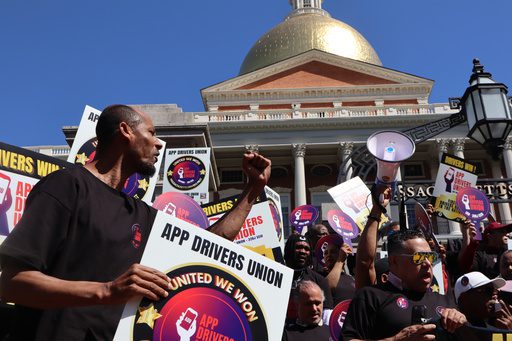
POLICY WIRE — BOSTON, United States — The specter of driverless vehicles, a sleek promise of Silicon Valley efficiency, usually looms as an existential dread for ride-hail drivers. But now, Massachusetts’ Uber and Lyft operators have managed something arguably more disruptive to the tech giants’ business model than any autonomous algorithm: they’ve organized. A Tuesday certification marked this northeastern state as the very first to formally recognize such a union, sending tremors through an industry long accustomed to a compliant, atomized workforce.
This isn’t just another labor spat, folks. No, it’s a direct challenge to the fundamental premise of the gig economy, particularly as automation strides closer. Imagine building your life around an app, only for that app to be piloted by a ghost car someday. That’s a real fear. And it makes this win a whole lot bigger than simply Boston—or even just America.
Jean Fredo, a man who’s been hauling fares for Uber for more than seven years, put it plainly through a translator. He shared a feeling of being used up, of driving endless miles for increasingly dwindling returns. He expressed hope that this union would finally bring him and his colleagues some proper pay, stronger protections when the apps decide to give them the boot without warning, and a bit more stability generally. [QUOTE_PLACEHOLDER] With the union, it won’t feel like we’re working for nothing, [QUOTE_PLACEHOLDER] Fredo said. And he wasn’t done. [QUOTE_PLACEHOLDER] Now the money won’t only stay in the billionaire’s pockets. The money will actually come to the workers who work very hard, [QUOTE_PLACEHOLDER] he observed with the kind of clarity that only long hours behind the wheel can bestow.
Drivers like Fredo have seen it all. They typically shoulder all the costs—gas, maintenance, depreciation of their own vehicle—all while grappling with fluctuating pay. Fredo once valued the app’s flexibility, being able to juggle work — and family. But that flexibility came with a steep, often hidden, price. He now works longer hours, his net earnings diminished by rising expenses. Drivers can lose access to the apps with little warning. And that’s a brutal reality for a parent trying to provide. [QUOTE_PLACEHOLDER] I live with stress — always scared to lose my app. This is not a way to live, [QUOTE_PLACEHOLDER] Fredo lamented, showing a photo of his four children, underscoring the raw personal stakes in this struggle.
This is a model that organizers say will ultimately encompass nearly 70,000 drivers across the state, a hefty slice of the contingent workforce pie. The Massachusetts decision came after voters approved a 2024 ballot measure. That measure created a first-in-the-nation structure permitting ride-hail drivers to unionize and bargain as a collective—yet still remain independent contractors. This dual status is precisely what makes it a novel, and frankly, risky, legal gamble; some business groups and legal experts are already flagging potential antitrust issues under federal law. But it’s done.
Corporate behemoths Uber and Lyft—ever the smooth operators—issued statements vowing to work within the new framework. Uber, for its part, mentioned working with the union and regulators while preserving [QUOTE_PLACEHOLDER] driver flexibility and hard-won benefits, [QUOTE_PLACEHOLDER] whatever that means now. Lyft committed to [QUOTE_PLACEHOLDER] engaging in good faith [QUOTE_PLACEHOLDER] and [QUOTE_PLACEHOLDER] helping drivers succeed while keeping rideshare affordable and dependable for everyone who counts on it. [QUOTE_PLACEHOLDER] Classic corporate-speak, you know? They’re playing nice for now. But don’t be fooled. These companies have poured millions into fighting similar measures elsewhere.
📄 POLICY WIRE WHITEPAPER PUBLISHED: PAKISTAN'S NATIONAL SECURITY POLICY PRIORITIES
👉 READ BY CLICKING HEREBecause here’s the thing: this fight isn’t unique to Boston. Victoria Acosta, another driver for both apps, believes this victory will inspire drivers beyond state lines. But the broader picture shows a gig economy struggling globally. Just look to emerging economies, where platform work provides crucial, if precarious, livelihoods for millions. In places like Pakistan, for instance, where many find their financial footing through apps delivering everything from food to groceries, the implications of such unionization efforts could be transformative. Workers there face similar—if not harsher—conditions, operating without many safety nets. For them, a model like Massachusetts’s could represent a glimmer of hope against rampant exploitation, giving power to individuals who typically have none against tech giants. But it won’t be an easy path, either. They’re up against formidable resistance.
But the biggest, most ominous cloud hanging over all of it remains the looming shadow of autonomous vehicle tech. Waymo already runs driverless taxis in San Francisco and Los Angeles; it’s an expansion that ratchets up driver anxiety significantly. Regulators in Massachusetts, even with these new union developments, are still hashing out ride-hailing rules—everything from safety standards to driver oversight. And the companies? Uber conveniently warned in a blog post that some proposed regulations could raise costs — and reduce driver flexibility. Naturally. Yet, for Julie Blust of the App Drivers Union, the message is clear. [QUOTE_PLACEER] Drivers now have an official organization and can speak with one voice about what’s happening in this industry, [QUOTE_PLACEHOLDER] she said. And they won’t be letting up. [QUOTE_PLACEHOLDER] We cannot let billions of dollars leave Massachusetts — and go to Silicon Valley. That money feeds people’s families, that money pays the rent, [QUOTE_PLACEHOLDER] Blust underscored, pointing to the economic realities facing these families.
What This Means
This move isn’t just about ride prices or driver benefits; it’s a foundational shift in how we might view independent contracting, potentially paving a difficult path for gig companies globally. It creates a new template—however legally tenuous—for collective bargaining without formal reclassification. If upheld, other states will copy it. The victory sets a precedent that individual contractors, long left to fend for themselves, can organize. But the bigger game here is about data — and control. Uber and Lyft have built empires on algorithmic management and contractor status, maximizing profit by offloading costs onto drivers. This union wants to reclaim some of that leverage.
And it’s about much more than just a single state or industry. This is about labor’s evolving response to an economy increasingly dominated by tech platforms and the threat of automation. The core tension—between the desire for worker flexibility and the need for basic protections—is something policymakers across the globe, from Washington to Dhaka, are grappling with. (For another look at economic challenges impacting labor globally, consider this piece on Dhaka’s high-stakes gambit.) The stakes couldn’t be higher: for gig workers in Pakistan who might look to this model, for the shareholders in Silicon Valley, and for anyone who’ll eventually rely on self-driving cars. It’s a messy, necessary evolution, folks, — and Massachusetts just threw a wrench into the algorithm.